
Is It Dangerous to Leave a Hair Dryer Plugged In?
Yes, it can be dangerous to leave a hair dryer plugged in. Even when it’s off, it can draw power, overheat damaged parts, and increase fire risk, especially on soft or cluttered surfaces. In bathrooms, a plugged-in dryer near water raises the chance of electrocution. Kids or pets can also accidentally switch it on. Unplugging after each use is a simple habit that cuts these risks and helps you understand other important safety steps.
Key Takeaways
- Yes, leaving a hair dryer plugged in is risky due to potential electrical faults, overheating, and accidental activation, even when it’s switched off.
- Plugged-in dryers can overheat internally, especially older or damaged models, increasing the risk of electrical fires and nearby items igniting.
- Water exposure—from sinks, tubs, or wet countertops—can turn a plugged-in dryer into a serious electrocution hazard if it falls or gets splashed.
- Children or pets can accidentally switch on a plugged-in dryer, causing burns, overheating, or fire if it runs unattended or blocked.
- The safest practice is to unplug the hair dryer after every use, inspect its cord regularly, and keep it away from water and flammable materials.
How Dangerous Is It to Leave a Hair Dryer Plugged In?
How risky is it to leave a hair dryer plugged in? When you keep it connected all the time, you expose yourself and your home to several hidden dangers, even when you’re not actively using it.
Continuous connection means internal components stay under electrical stress, gradually wearing down and becoming more likely to malfunction. This ongoing strain can also increase energy consumption, even if the impact on your bill seems minimal.
Leaving your dryer plugged in keeps components under constant strain, accelerating wear and increasing the risk of sudden failure
If you leave the dryer near soft surfaces, like beds or couches, blocked air openings during use can cause overheating.
Placement near heated surfaces or letting the cord touch hot items also raises the chance of ignition.
Your electrical system can suffer too. Outlets without RCD protection give you less defense against dangerous faults.
Signs like frequently tripping breakers, burn marks, or arcing sounds around the socket point to serious issues you shouldn’t ignore.
Damaged cords or plugs further increase short‑circuit risk, especially when the hair dryer stays plugged in instead of being safely disconnected.
Key Risks of Leaving a Hair Dryer Plugged In

Ever wonder what really happens when you leave a hair dryer plugged in around the clock? You’re not just keeping it ready; you’re quietly stacking risks.
Because it’s constantly connected, a simple nudge from a pet, a child, or a falling object can hit the power button and start it running when you’re not there to notice. If it’s near a sink, that sudden blast of hot air can quickly create a burn or scalding hazard. Leaving it plugged in also means it may not be protected by an RCD safety device, increasing the risk of electric shock or fire if a fault occurs.
Staying plugged in also exposes the dryer to every voltage spike on your electrical system. Surges can fry internal components, leading to erratic behavior, overheating, or sudden failure the next time you switch it on.
Over months and years, that continuous exposure accelerates wear, especially in older models.
- Accidental activation without your awareness
- Damage and instability from repeated power surges
- Faster internal degradation and shortened lifespan
Electrical Fire Risks of Plugged-In Hair Dryers
Beyond wear and tear, a constantly plugged-in hair dryer can also raise your risk of an electrical fire. Even when it’s switched off, it may draw a small amount of electricity, slowly heating internal components and speeding up their deterioration. Over time, weakened parts are more likely to overheat, short-circuit, or spark.
If your dryer sits on a soft surface, its vents can be blocked, trapping residual heat. A damaged cord or loose plug adds more ignition points, especially if you notice burn marks, melting, or buzzing and crackling sounds.
Accidental activation compounds the danger. A child, pet, or falling object can hit the switch, turning the dryer on when you’re not around. A running dryer that’s covered, touching flammable items, or lying on a bed can ignite nearby materials.
To reduce fire risk, unplug after use, inspect cords regularly, and use RCD‑protected outlets.
Water, Bathrooms, and Electrocution Hazards
Although hair dryers are everyday tools, using or leaving one plugged in near water can turn a routine bathroom into a serious electrocution hazard.
When a plugged‑in dryer contacts bath water, the current looks for the easiest path to ground. Because bath water usually contains minerals, it often conducts electricity better than your body. If you’re submerged and not touching the dryer or anything grounded, the current may mostly travel through the water, not you—but that doesn’t make the situation safe. GFCI outlets have reduced electrocutions from consumer products by about 95% where they are properly installed and used.
The real danger appears when you reach for the appliance or touch metal fixtures. Your body can suddenly become the lowest‑resistance route to ground.
- Even brief contact between energized water and a metal drain or faucet can complete a lethal circuit.
- Voltages above about 30V can be enough to cause dangerous shock.
- Older bathrooms without GFCI outlets leave you far more exposed to these risks.
Accidental Activation: Kids, Pets, and Unattended Hair Dryers

You mightn’t think twice about a plugged-in hair dryer, but curious kids can easily flip a reachable switch and start it when you’re not around. Pets can paw at or knock a dryer, triggering it to power on against bedding, carpets, or other flammable surfaces. In one reported case, a dog accidentally switched on a hair dryer left on a bed, filling a house with smoke and setting the bedding and mattress on fire. When that happens with no one watching, an unattended dryer can quickly overheat and turn into a serious fire risk.
Curious Kids And Switches
How easily can a quiet moment in the bathroom turn risky when a curious child finds a plugged‑in hair dryer? When you leave a dryer plugged in and within reach, the switch becomes a powerful, tempting toy. Millions of older hair dryers still in use today lack modern safety features, so a single moment of curiosity can turn into a life‑threatening emergency.
Children under 10 dominate electrocution statistics because they flip switches, drag cords, or knock dryers off counters without understanding the danger.
Even after safety devices appeared in the late 1980s, about eight children a year still died when activated dryers landed in bathwater. Pre‑1991 models could shock even in the “off” position if they stayed plugged in.
- Federal and industry standards added:
- Bathroom circuit interrupters.
- Immersion‑sensing shut‑off features.
Yet none of these help if you leave a plugged‑in dryer where a child can reach the switch.
Pets Triggering Power-On
When a plugged‑in hair dryer sits within paw’s reach, a curious pet can switch it on in an instant and turn a quiet room into chaos.
Playful dogs paw at buttons, and high‑energy breeds like Huskies are especially prone to “toy-testing” anything that hums or blows. One nose nudge can launch a roaring blast of air, send fur flying, and knock the dryer to the floor.
You also put pets at risk. Sudden 65,000‑Hz whine and strong airflow can trigger sensory overload, panic, or even seizures in seniors.
Falling dryers can injure paws or faces, and repeated accidental starts strain the motor, cord, and outlet.
You prevent all of this by unplugging, storing the dryer high, and supervising grooming.
Unattended Dryers Overheating
Curious paws and small hands don’t just switch a dryer on—they can leave it running where you won’t notice until it overheats. When a dryer runs unattended, dust, hair, and styling products choke the vents, airflow drops, and the heating element bakes in its own heat.
Safety features like thermal fuses and bimetallic strips usually cut power, but they don’t always act before the cord, plug, or nearby objects get dangerously hot.
- Blocked filters and vents stretch drying times, create hot spots on the casing, and make igniting lint or hair more likely.
- A burning smell, rattling, or unusually hot surfaces signal you should unplug and inspect the dryer immediately.
- Regularly clean vents, check the cord, and unplug after every use to prevent quiet, unseen overheating.
What Safety Labels and Rules Mean for Hair Dryers
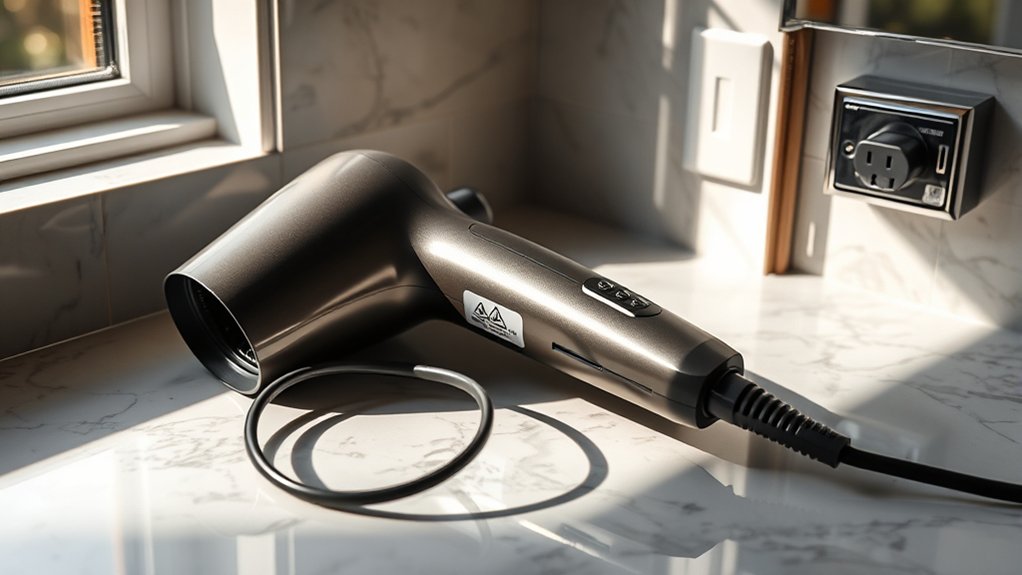
When you pick up a hair dryer, the safety tags and certification marks aren’t just legal fine print—they’re your first line of protection against shocks and fires.
If you understand what required warnings like “Unplug after using” and symbols from groups like UL actually mean, you can judge how safely you’re using the dryer.
Let’s look at how these labels work and what they really tell you about leaving a hair dryer plugged in.
Required Safety Warnings
Although the tiny print on your hair dryer can be easy to ignore, those labels and warnings exist because people have been seriously injured or killed by misuse. UL standards require a permanent marking such as “Danger—Electrocution possible if used or dropped in tub. Unplug after using.” That wording isn’t optional; it’s mandated after CPSC data showed deaths from dryers used near water.
You’ll also see rules about overheating, cord condition, and blocked vents. They tell you to stop using the dryer if it smells like burning, shuts off unexpectedly, or has a damaged cord or plug.
- Never use or grab a dryer that’s fallen into water; unplug it first.
- Keep air openings clear and off soft surfaces.
- Discard damaged or malfunctioning units immediately.
Understanding Certification Labels
Even before you turn a hair dryer on, its certification labels quietly tell you how safe it really is.
When you see a GS Mark, you know the cord carries a permanent warning label that meets strict German ProdSG rules, or the certificate can be cancelled.
A UL Mark shows the dryer passed tests for shock, fire, and mechanical hazards, and that it must display a clear “Danger—Electrocution possible…” warning plus a cord tag.
The Blue Angel label goes further, limiting electric and magnetic fields and requiring an automatic temperature limiter to cut power if it overheats.
Singapore’s SAFETY Mark means the dryer met CPSR checks against fire, shock, and injury, with a traceable registration number on product and plug.
Daily Habits to Use and Unplug Your Hair Dryer Safely

Instead of treating your hair dryer as an afterthought, build simple daily habits that keep you and your home safe every time you use it. Start by reading the instructions and warnings so you know how your specific model should operate.
Each time you dry your hair, switch the dryer off before you unplug it, then set it on a heat‑resistant surface and let it cool completely before storing it.
Make unplugging automatic: if the dryer’s not in your hand, it shouldn’t be in the outlet. This cuts fire risk, accidental activation, and needless electrical exposure.
- Keep the dryer and cord away from bathtubs, full sinks, and other water sources, and never use it while bathing.
- If it ever falls into water, unplug it immediately before touching it or the water.
- Store the dryer unplugged in a dry, stable spot where it can’t be knocked into a tub or sink.
How to Inspect Your Hair Dryer Cord, Plug, and Socket
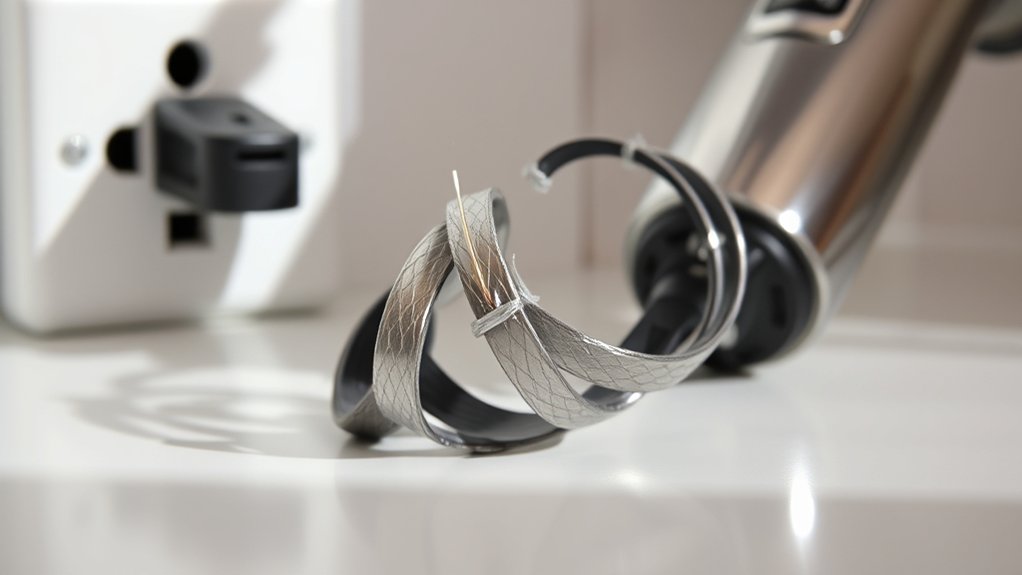
Before you ever turn a hair dryer on, you protect yourself by checking that its cord, plug, and the outlet you’re using are in good condition.
Scan the entire cord for cuts, abrasions, frayed or exposed wires, and any blackened or scorched spots from heat damage. Wiggle the cord gently where it enters the dryer; if power cuts in and out, that connection’s loose. Stop using it if you notice burning smells or see sparks.
Next, inspect the plug. Look for discoloration or scorching on the blades, melted plastic, bent or corroded prongs, and any damage to the grounding pin. The plug should grip the outlet firmly; a gentle tug shouldn’t pull it out easily.
Finally, examine the socket. Burn marks, scorching, melted areas, charring, or discoloration around the slots or ground opening indicate overheating or poor contact, and you shouldn’t use that outlet with any appliance.
When to Replace Your Hair Dryer (And Call an Electrician)
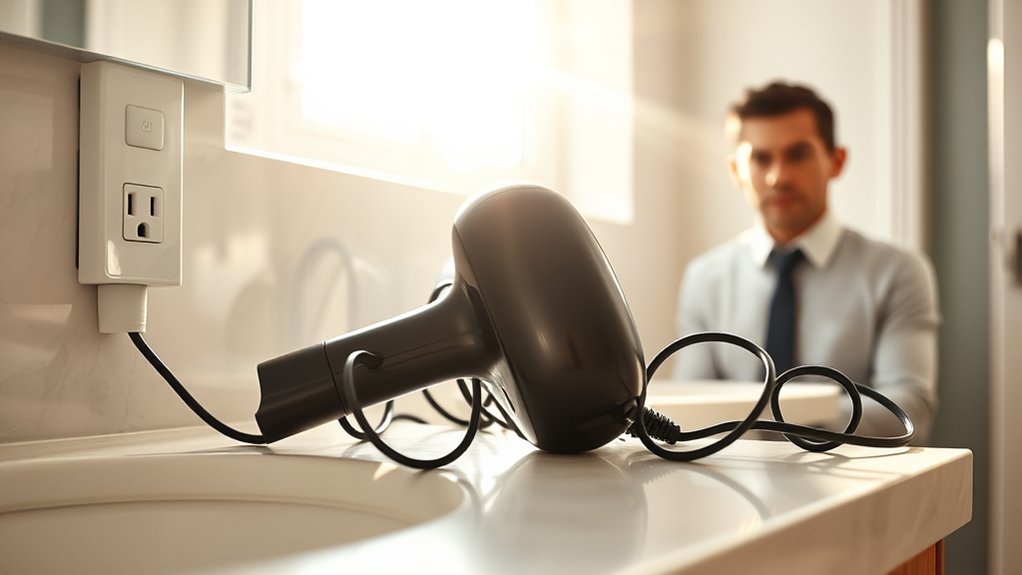
While a hair dryer doesn’t come with an exact expiration date, there are clear points when you should stop trusting it and start thinking about replacement—and sometimes call an electrician.
If you use a cheap dryer daily, expect only about two years before performance drops. Professional models may last 4–7 years, but once you’re past the five-year mark with regular use, you should plan to replace it—especially if you’ve skipped filter cleaning.
Watch for:
- Weak airflow, longer drying times, and frizzier, dull results even on higher settings
- A clogged or unchanged filter, visible dust and lint, or particles stuck on the backside of the vent
- Rattling, peeling exterior, extra‑hot air, or burning smells
Replace the dryer if you notice these issues.
Call an electrician if the dryer repeatedly trips breakers, heats the plug or outlet, or causes buzzing sockets—those point to wiring problems, not just an old appliance.
Frequently Asked Questions
Can Smart Plugs or Timers Make Leaving a Hair Dryer Plugged in Safer?
Yes, they can make it safer. You use smart plugs or timers to cut power completely, add remote shutoff, and limit run time. Still, you shouldn’t rely on them; you unplug, inspect cords, and avoid water.
Is It Safe to Store a Hair Dryer Plugged in Inside a Drawer or Cabinet?
No, it’s not safe. You increase fire and electrocution risks if you store a plugged-in hair dryer in a drawer or cabinet, especially with blocked vents, damaged cords, or nearby water. Always unplug and cool before storing.
Do Surge Protectors Reduce the Risks of Leaving a Hair Dryer Plugged In?
Yes, surge protectors reduce some risks by absorbing voltage spikes and cutting power if overloaded, but they don’t stop hazards from damaged cords, water, or accidental activation, so you should still unplug the hair dryer when not used.
How Do Hotel Bathroom Outlets Affect Hair Dryer Safety When Left Plugged In?
They affect safety a lot: you rely on RCD/GFCI protection, proper grounding, and undamaged sockets. You still shouldn’t leave the dryer plugged in near sinks or tubs, because splashes, spills, or drops can electrify water instantly.
Are Travel Hair Dryers More or Less Risky to Leave Plugged in Than Regular Ones?
They’re not really safer; you face similar risks. You might draw slightly less power, but internal parts can still degrade, short‑circuit, overheat, or accidentally switch on. You should always unplug both travel and regular hair dryers after use.
Conclusion
You don’t need to be afraid of your hair dryer, but you do need to respect it. Leaving it plugged in increases fire, shock, and accidental activation risks, especially in bathrooms and busy households. When you unplug it, inspect the cord, and replace it at the first sign of damage, you dramatically lower the danger. Build simple habits now so your hair dryer stays a tool—not a hazard—in your daily routine.