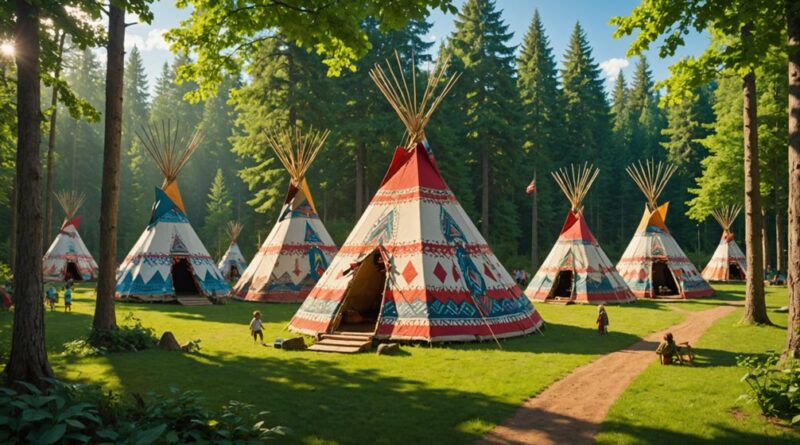
Does Anyone Live in Teepees Today? Modern and Traditional Use
You won’t see many people using teepees as full‑time homes today; most Native people live in modern housing, while teepees are used mainly for ceremonies, cultural events, ranch camps, and teaching. Modern “glamping” tipis update the classic conical design with waterproof canvas, real beds, climate control, Wi‑Fi, and nearby bathrooms, blending comfort with a strong connection to land and sky. If you’re curious how traditional meaning meets these modern uses, you’re just getting started.
Key Takeaways
- Very few people use teepees as full-time homes today; most Plains tribal members live in modern houses, apartments, or mobile homes.
- Teepees are primarily used for ceremonies, social gatherings, and cultural events, often set up alongside regular homes as supplemental or ceremonial spaces.
- Some individuals and Native-run ranches use teepees for short-term, mobile shelter, wellness retreats, or nature-focused travel rather than permanent residence.
- Modern teepees typically feature waterproof canvas, beds, climate control, Wi‑Fi, and nearby bathrooms, blending comfort with traditional conical design and symbolism.
- Teepees today serve as powerful symbols of Indigenous identity and educational tools for teaching history, engineering, land stewardship, and cultural responsibility.
Who Actually Lives in Teepees Today?
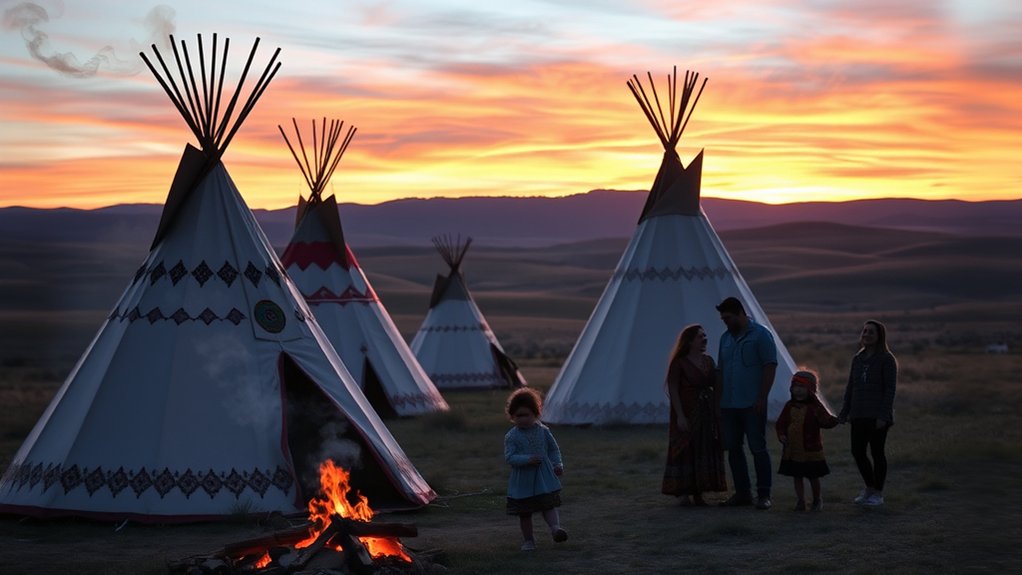
Who Actually Lives in Teepees Today?
Today, almost no one uses a teepee as a full-time home, and even most Plains tribal members live in modern houses, apartments, or mobile homes on and off reservations. You’ll find contemporary structures across 326 reservations, reflecting more than 570 tribes and about 300 living tribal languages, each with its own housing patterns. Historically, tipis represented the heart of Plains culture as the center of social, religious, and creative traditions.
When you picture teepees, you’re mainly seeing the legacy of nomadic Plains nations like the Blackfoot, Cheyenne, Lakota, Dakota, Comanche, Kiowa Apache, and Plains Cree. Historically, they followed buffalo herds and relied on mobile tipis that women built and maintained.
Today, those same communities usually reserve teepees for social, religious, and commemorative events. A few individuals choose to live in them longer term, but that’s uncommon and doesn’t represent tribal norms.
Today, teepees are mostly used for ceremonies and gatherings, not everyday housing for most Plains communities
Other Native nations use different traditional dwellings—Hopi and Pueblo peoples in adobe pueblos, Seminole in chickees, and Ojibwe in winter-ready structures.
Modern Teepees and Glamping Comforts
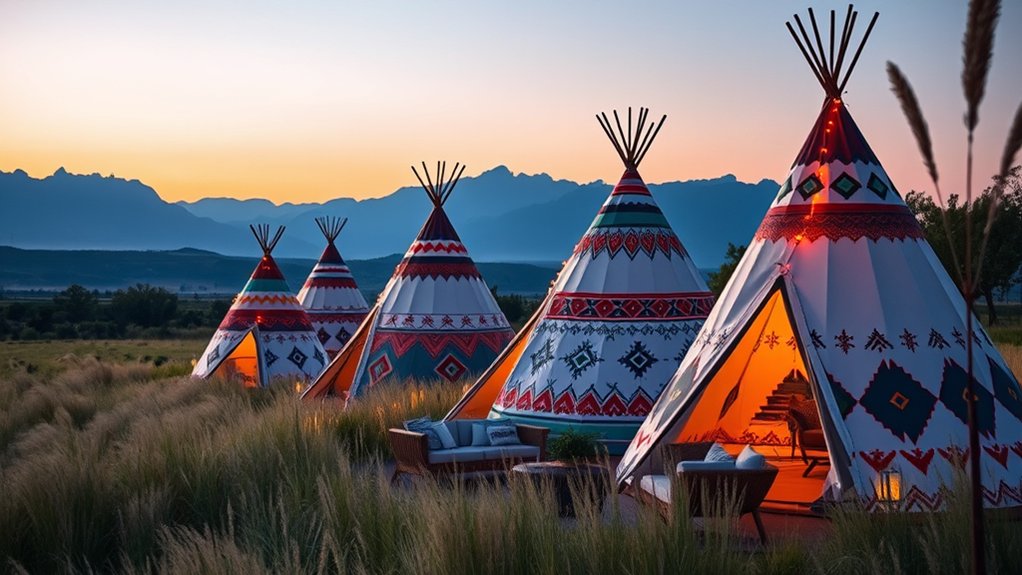
When you step into a modern teepee, you’ll notice how updated materials, stove jacks, and smart ventilation keep the classic cone-shaped form while boosting comfort and safety.
You can stretch out on real beds with quality bedding, soft lighting, and access to bathrooms, spas, and even nearby restaurants, so you don’t sacrifice comfort for scenery. These stays tap into the growing demand for wellness‑oriented travel, drawing visitors who want both comfort and meaningful connection with nature.
At the same time, spaces for yoga, meditation, and reflection help you balance five‑star luxuries with the heritage and simplicity that make teepee stays feel authentic.
Modern Materials And Design
Although teepees trace their roots to hide-covered lodges on the plains, modern designs lean on smart materials and clever engineering to deliver real comfort and durability.
You’ll usually work with waterproof Army Duck Canvas, often pre-washed to handle its 3–5% shrinkage, or heavy-duty canvas tarps—some builders even use 15×12 Harbor Freight tarps for a one-piece cover. Super-duty semi‑reflective tarps resist rot and extend the shelter’s life. Modern teepees often maintain a circular design with an open top for ventilation to echo traditional forms while improving airflow.
For structure, you might choose timber, bamboo, or PVC poles, typically 10–18 feet long, still arranged in the classic three‑pole base pattern.
PVC sleeves, screws, and duct tape add stability. Seam sealers, refreshed urethane coatings, DWR sprays, UV treatments, and a precise 65–70° pole angle all work together to keep you dry and protected.
Glamping Amenities And Comfort
Step inside a modern teepee and you’ll find more boutique suite than backcountry shelter, with plush pillow‑top king beds dressed in fine linens, climate control that keeps the space cozy in winter and cool in summer, and water‑resistant construction that stays warm, dry, and safe in any weather. You sleep on a king bed sized for two adults and a child, with the option to add a camping cot for kids. Drawing on their cultural heritage, some modern teepees are also decorated with subtle patterns or art that echo traditional symbolic designs.
You don’t sacrifice creature comforts, either:
| Comfort | What you get |
|---|---|
| Sleep & climate | Pillow‑top king bed, cozy linens, AC and heating |
| Tech & lighting | Flatscreen TV, Wi‑Fi, fairy lights, Keurig |
| Bath & outdoors | Nearby private bath, fire pit, picnic space |
Just outside, you roast marshmallows, sip coffee, and enjoy Red Rock Cliff views.
Balancing Tradition And Luxury
Glamping teepees don’t just pile on comforts; they blend them with design cues that still feel rooted in tradition. You still sleep under an authentic conical frame that naturally stays warmer in winter and cooler in summer, but modern fabrics keep out rain and wind far better than hides ever did. At Capitol Reef Resort, stand‑alone, water‑resistant teepees with king pillow‑top beds, A/C, Wi‑Fi, and detached private bathrooms bring hotel‑style comfort to a red‑rock desert setting.
You’re off‑grid in places like Tepee, New Zealand, yet you’ve got cozy bedding and fairy lights for atmosphere and ease.
You’ll see this balance play out in different ways:
- Capitol Reef Resort’s teepees add king pillow‑top beds, firepits, and desert cliff views.
- Zion White Bison’s teepees pair Wild West silhouettes with hot tubs and outdoor kitchens.
- Wellness retreats use tipi-style spaces for yoga, meditation, and cultural workshops.
How Traditional Teepee Design Works Year-Round
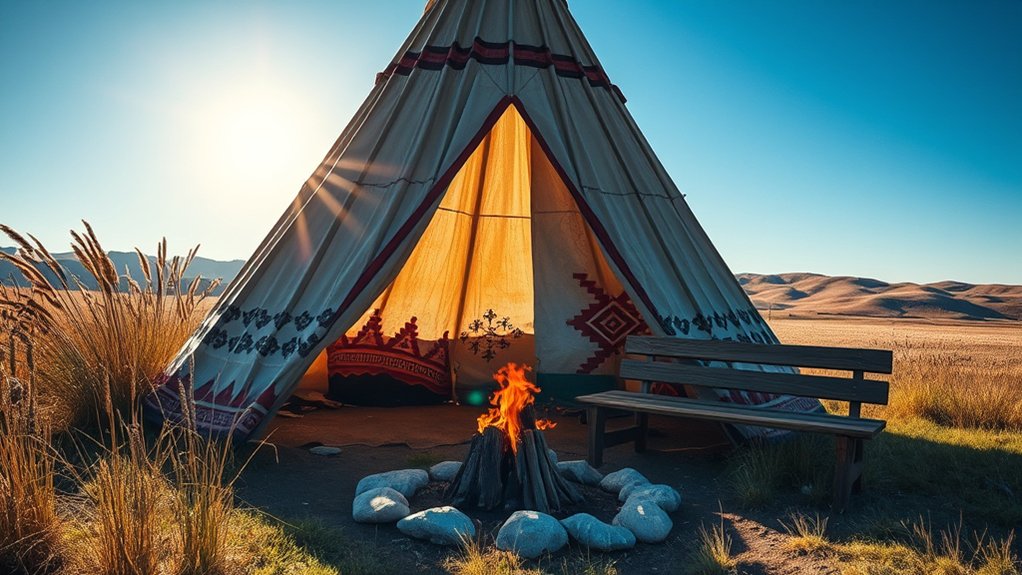
Even in harsh climates and changing seasons, a well-built teepee works as a flexible, year-round shelter because every element of its design manages air, heat, and weather. The cone of lodge poles and tightly stretched canvas sheds wind and snow, while the circular base and tripod anchor keep everything stable.
At the apex, the open top and smoke flaps let you fine-tune ventilation: crack them for a summer breeze, or narrow them to hold winter heat and still vent smoke.
In cold months, you can run a wood or insulated barrel stove with a pipe exiting through the canvas high above eye level. Extra interior pipe holds more heat, while caps outside keep sparks contained.
In deep winter, you stretch the cover to the ground, bank spruce boughs and tarps around the base, and periodically tighten the canvas, turning the teepee into a durable, warm, low-tech climate system.
Contemporary Native Teepee Uses: Home, Ranch, Ceremony
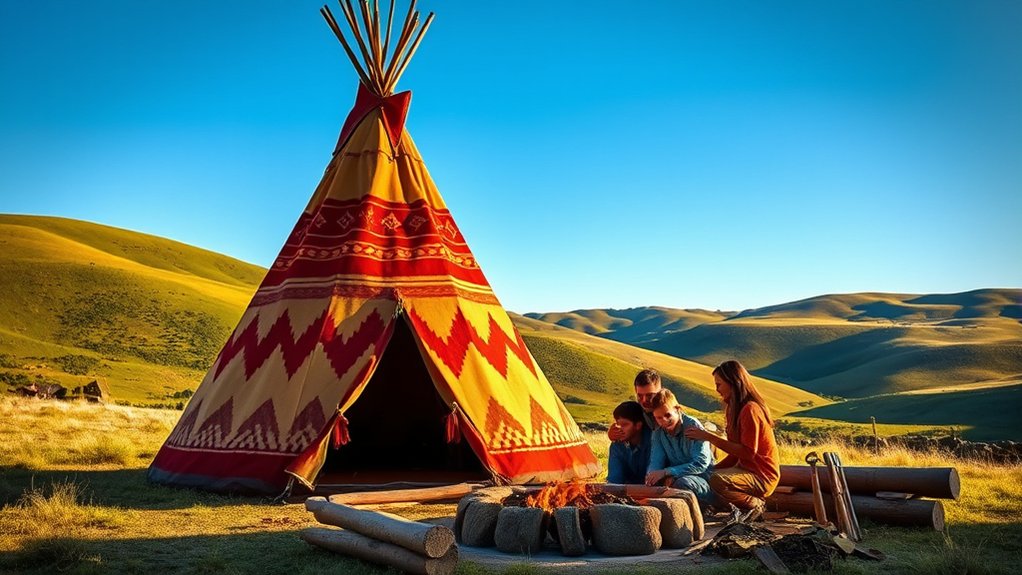
That same year-round, low-tech climate system lives on today in the way Native families still put up teepees at home, on ranches, and at ceremonial grounds.
You won’t see many people living in them full-time, but you’ll notice canvas teepees beside modern houses, ready for guests, a weekend of sleeping outside, or a temporary home while traveling. They’re supplemental dwellings now, not replacements for permanent housing.
On Native-run ranches, you might keep a teepee for workers or family members who need quick, mobile shelter.
Canvas stands up to wind, and you can choose fire-safe woods like cottonwood for interior use. You still adjust the smoke flaps for airflow, just as in the past.
At ceremonies, teepees often become the primary structure.
You’ll see:
- Sacred teepees raised with strict pole arrangements.
- Rows of family teepees at powwows.
- Practical teepees for cooks, singers, or helpers.
Cultural Meaning of Teepees Today: Symbol and Living Tradition
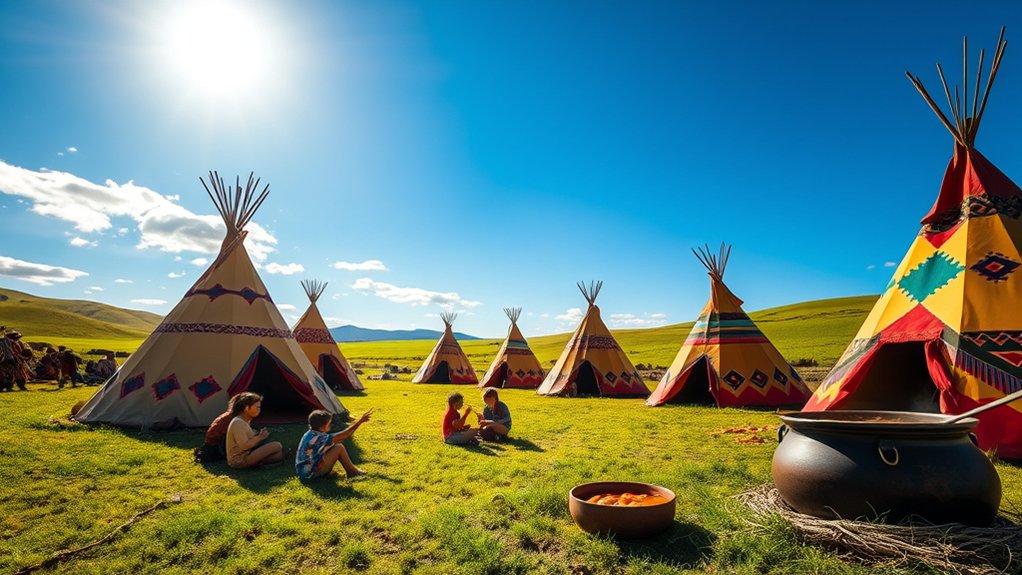
When you look at a teepee today, you see more than a shelter; you see a visible sign of Native nations’ enduring presence on their homelands.
You also see how a once strictly practical structure now carries sacred meanings, shaping ceremony, community, and identity.
As a teaching tool for younger generations, the teepee’s design, stories, and use invite you to understand relationships to land, family, and responsibility in a living, everyday way.
Symbol Of Enduring Presence
A teepee today stands as a living symbol of Indigenous presence, carrying spiritual meaning, cultural identity, and communal memory into the present.
When you see its conical shape touching sky and earth, you’re witnessing a statement: Native nations are still here, practicing living traditions.
The circular base and central fire echo cycles of birth, loss, and renewal, reminding you that community and spirit endure despite disruption.
You can recognize this enduring presence when you notice how teepees:
- Anchor contemporary gatherings, protest camps, and cultural events as visible markers of sovereignty and survival.
- Carry tribal designs that assert identity, land connection, and ancestral continuity.
- Inspire modern conversations about sustainable living, reciprocity, and respect for the natural world.
From Shelter To Sacred
Although teepees once functioned primarily as mobile homes on the Plains, today they hold a distinctly sacred and symbolic role that reaches beyond simple shelter. When you step inside one, you enter a space where architecture, ceremony, and language all point to relationship—between people, land, and spirit. The Lakota word itself, often translated as “they dwell,” reminds you this isn’t just a “tent,” but a lived connection.
At powwows, home sites, and ranches, families still raise teepees with careful attention to pole placement, canvas tension, and smoke flaps. The design’s elegance carries layered meaning:
| Aspect | What You Notice Today |
|---|---|
| Shape | Cone pointing skyward, open top inviting prayers. |
| Circle | Floor ring echoing community and continuity. |
| Fire | Central hearth warming ceremony and story. |
Teaching Tool For Generations
Even as fewer families live in teepees year‑round, these lodges still work hard as teaching tools, carrying knowledge from one generation to the next.
When you help raise a tipi at a powwow or family gathering, you’re not just setting up shelter; you’re learning architecture, engineering, and ceremony all at once.
A single lodge can teach you:
- Science and design – Poles, liner, vents, and smoke flaps show heat control, airflow, and weather protection, proving why the conical form endures.
- History and survival – Quick setup and takedown recall nomadic life, seasonal movement, and Plains survival skills.
- Culture and spirit – The circle layout, artwork, and central fire connect you to community, ancestors, and the natural and spiritual worlds.
Could You Live in a Teepee? Practical Tips and Respect
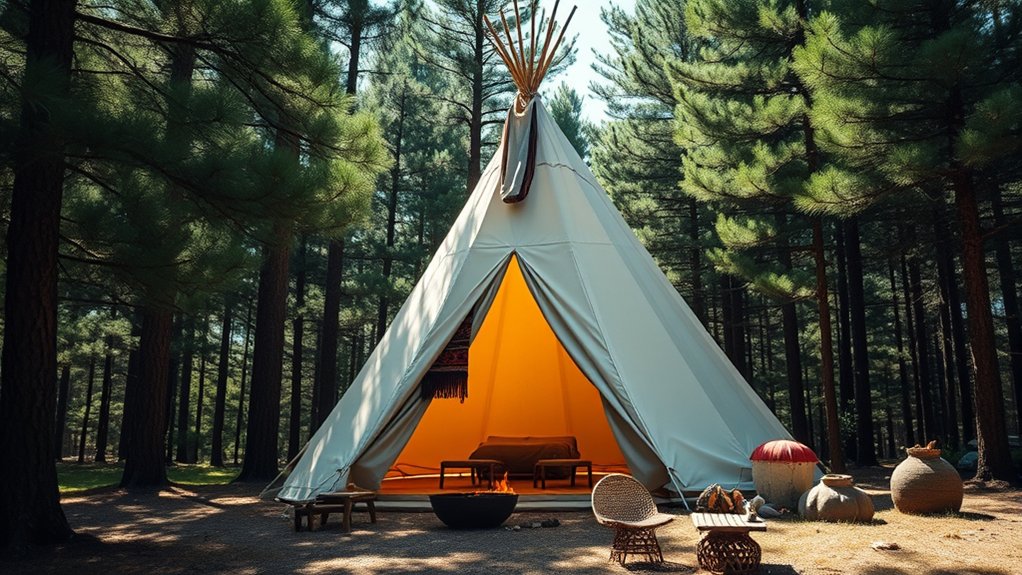
Wondering if you could actually live in a teepee, not just camp in one for a weekend? You could, but you’d need to balance practicality with cultural respect. Modern canvas tipis, often made from durable Army Duck Canvas, can handle rain, wind, and sun year‑round. Their conical shape, smoke flaps, and inner liner help keep you warm in winter and cool in summer.
Still, very few Native people use tipis as full‑time homes today. They’re primarily ceremonial spaces and powerful symbols of Native presence and identity, especially at powwows and gatherings. If you’re drawn to tipi living, think of it as glamping or a seasonal retreat, not a reenactment of Plains history.
| Practical Tipi Living | Respectful Practice |
|---|---|
| Learn traditional setup methods. | Acknowledge Indigenous origins. |
| Use it for camping or studio space. | Avoid claiming it as “authentic” Native life. |
| Maintain it carefully year‑round. | Support Native makers and educators. |
Frequently Asked Questions
How Do Teepees Differ From Other Indigenous Dwellings Like Wigwams or Longhouses?
You distinguish teepees by their portable conical frames, smoke flaps, and hide or canvas covers, while wigwams and longhouses use bark over dome or rectangular frames, stay semi-permanent, and usually house more than one family.
What Are Common Misconceptions About Historical Teepee Use by Native Peoples?
You often think all Native peoples used teepees year‑round, everywhere, as crude hide tents and mere shelters. You overlook their Plains focus, sophisticated ventilation and insulation, varied materials, ceremonial roles, and deep spiritual, scientific, and psychological teachings.
How Were Traditional Teepee Materials Sourced and Prepared Without Modern Tools?
You’d carefully select straight pine or cedar poles, hunt buffalo for hides, scrape and dry them, twist sinew into thread, stitch a semicircular cover with bone needles, then lash poles and secure everything using rawhide ropes.
Are There Environmental Benefits to Teepees Compared to Tiny Homes or RVS?
You do get environmental benefits: you use fewer materials, avoid concrete slabs, and leave minimal soil disturbance. You rely on natural ventilation and fire heating, cut manufactured insulation and metal use, and lower transport emissions through lightweight, portable components.
How Are Children Taught Teepee Knowledge and Protocols in Native Communities Today?
You learn teepee knowledge through stories, hands-on pole setting, and ceremony participation. Elders correct your movements, explain each pole’s teaching, and guide painting rules, fire protocols, and respect for designs, so you absorb protocols by doing.
Conclusion
When you picture teepees today, you’re really seeing a living bridge between past and present. Modern setups add comfort, but the core design and meaning come from Indigenous knowledge and tradition. If you’re drawn to teepee living, you can learn from that wisdom, tread lightly on the land, and honor the cultures that created it. In doing so, you don’t just camp differently—you join a deeper, ongoing story.