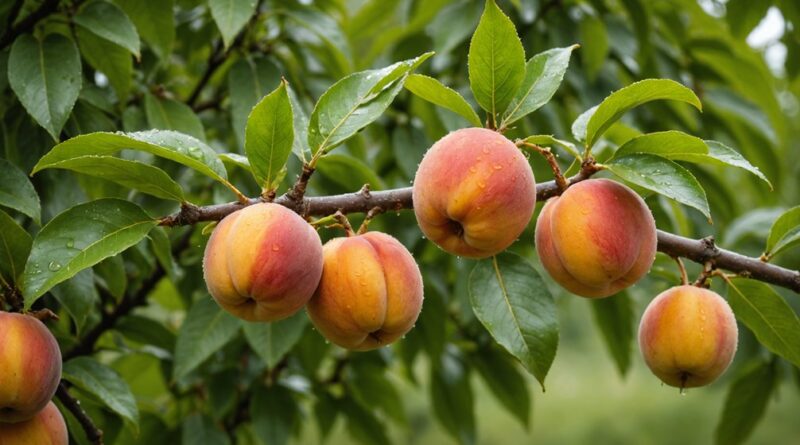
Why Do Peaches Split on the Tree? Causes and Prevention
Peaches split when sudden swings in water, temperature, or growth put more pressure on the fruit than the skin and pit can handle. Rapid uptake after drought, heavy rain, freezes, or low calcium all weaken developing fruit, especially in prone varieties. To prevent this, you’ll keep soil moisture steady, water deeply but not excessively, thin fruit properly, and avoid heavy nitrogen. Choosing split‑resistant varieties and adjusting care through the season lets you greatly reduce splitting and understand why it happens.
Key Takeaways
- Peaches split when sudden soil moisture changes cause rapid water uptake, increasing internal pressure that cracks the skin or pit.
- Weather extremes—heavy rain after drought, freezes, and sharp temperature swings—disrupt pit and flesh development, making fruit more prone to splitting.
- Certain cultivars, especially cling-type peaches and those with elongated stones, are genetically more susceptible to pit and skin cracking.
- Prevention relies on consistent water management: deep, even irrigation and avoiding sudden soaking rains or overwatering, especially as harvest nears.
- Proper thinning, balanced fertilization (avoiding excess nitrogen), and choosing split-resistant varieties greatly reduce splitting and improve overall fruit integrity.
What Causes Peaches to Split on the Tree?
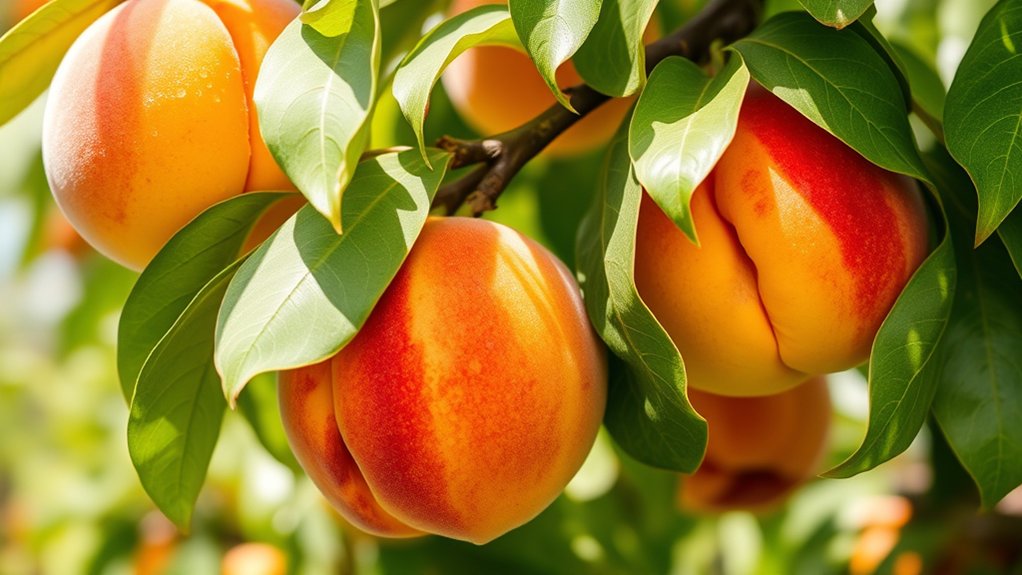
Although peach splitting can look sudden and mysterious, it usually traces back to how the fruit grows and responds to its environment. When soil swings from dry to soaked, the fruit takes up water faster than its skin can stretch. Internal pressure spikes, the flesh swells rapidly, and the skin or pit gives way, especially after heavy rain following drought or light watering.
Inside the fruit, split pits often start about 20 days after bloom, while the stone’s still soft. As the peach enters its final swell, the enlarging flesh pulls hard on the pit. Cling-type peaches and varieties with elongated or flat stones handle this stress poorly, so they crack more. In orchards where growers avoid excessive nitrogen, split pit problems can sometimes be reduced because fruit growth is less aggressively pushed.
Weather extremes add more strain. Freezes, cool springs followed by heat, and excessive rain around bloom all increase pit breakage.
Cultural choices like heavy thinning, high nitrogen, girdling, and strong irrigation spur rapid fruit enlargement, further raising splitting risk.
How to Prevent Peaches From Splitting on the Tree
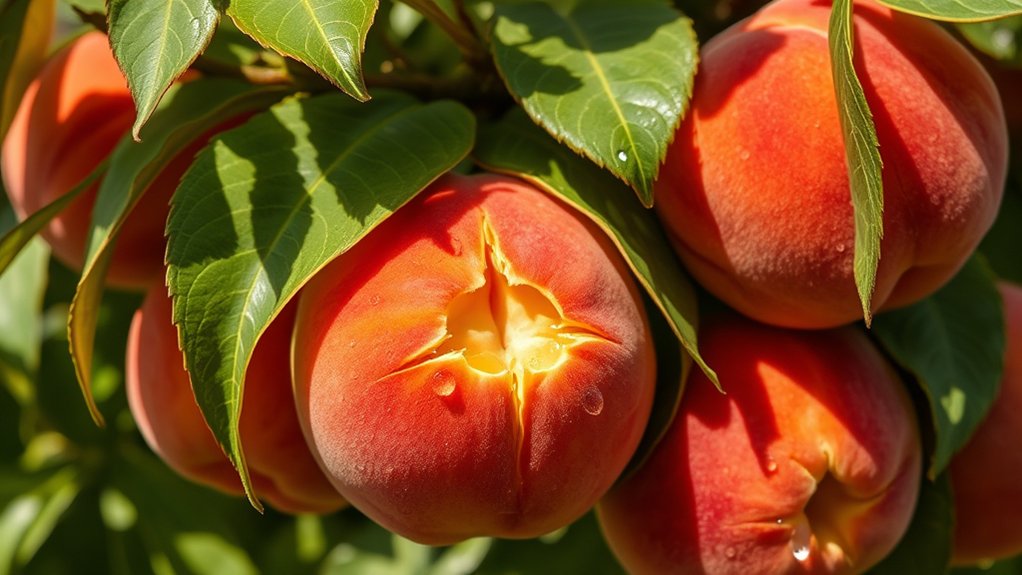
To keep peaches from splitting, you’ve got to control how quickly they take up water and how heavily they’re loaded with fruit. Consistent irrigation during dry spells, instead of heavy watering after drought, helps avoid the rapid water uptake that leads to fruit splitting.
When you manage irrigation thoughtfully and keep soil moisture steady, you prevent the sudden growth spurts that tear skins.
Then, by thinning fruit and timing fertilizer correctly, you let each peach grow at a safer, more even pace.
Manage Water And Irrigation
When you manage water carefully, you tackle one of the main causes of peach splitting: sudden swings in soil moisture. Keep the soil evenly moist so fruit never goes from drought to deluge. Water deeply but infrequently once trees establish, stretching intervals in heavier clay and shortening them slightly in sandy soils. Proper irrigation also supports balanced nutrient uptake, which helps maintain stronger cell walls and reduces the risk of splitting under pressure.
Use drip irrigation to deliver steady moisture right to the roots and avoid abrupt uptake after rain or a dry spell.
| Practice | Purpose |
|---|---|
| Even, deep irrigation | Prevents sudden internal fruit pressure |
| Drip or sub‑irrigation | Reduces fluctuations and improves control |
| Gypsum on clay soils | Improves drainage and limits wicking |
As harvest nears, gradually reduce irrigation so ripening peaches don’t swell too fast and split.
Time Thinning And Fertilizer
Well‑timed thinning and sensible fertilizing work together to keep peaches from swelling too fast and splitting on the tree. Thinning also improves fruit quality by reducing overcrowding and allowing better air circulation around the remaining peaches.
Start thinning in spring once fruit set, ideally when peaches are ¾ inch across and the pits still cut easily. Don’t wait more than about 30 days after petal fall or you’ll lose most of the sizing benefit, though late thinning still protects limbs.
Aim for one strong peach per 30 leaves and keep fruit well spaced to limit competition.
- Leave peaches 4 inches apart on stems, 6–8 inches along branches
- Remove twins and side‑by‑side fruit with a twist or sharp knife
- Use pruning to shed short, weak shoots and crowded clusters
After thinning, feed moderately; avoid heavy nitrogen that drives excess crop load.
How Pit Development Inside the Peach Causes Splitting
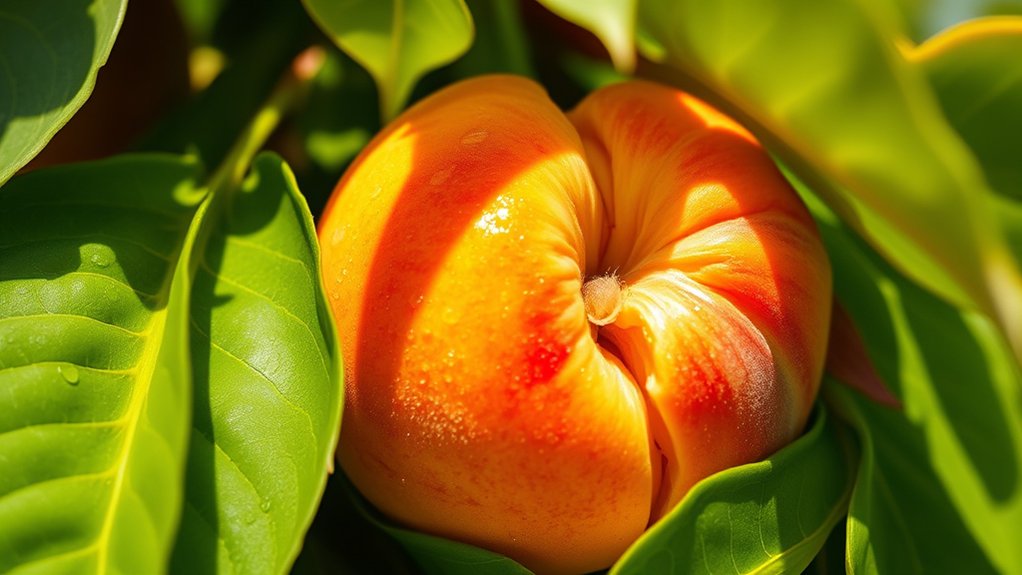
Although you mostly notice split pits from the outside as cracks near the stem end, the problem actually starts with how the pit (endocarp) forms and hardens inside the peach. Around 20 days after bloom, the young pit is still soft, so any rapid fruit enlargement can tear it before lignin fully stiffens the shell. If the endocarp fails to close cleanly along the suture, a split pit is fundamentally built in from the start. Because sub-freezing temperatures during flowering can disrupt normal pit formation, cold snaps in early spring may set the stage for more severe splitting later in the season.
Later, during final swell, the expanding flesh pushes hard against that weak seam. Clingstone types, with strong flesh‑pit attachment, transfer even more stress to the immature pit, making breaks likelier and creating hollow centers.
| Stage/Factor | What Happens Inside the Pit | What You See on the Fruit |
|---|---|---|
| Early pit soft | First internal fractures | Nothing visible yet |
| Incomplete suture closure | Permanent structural weakness | Higher risk of later stem-end split |
| Fast pre-hardening growth | Pit can’t lignify evenly | Larger fruit, hidden cracks |
| Final swell pressure | Existing fractures forced wider | Visible stem-end opening |
| Clingstone attachment | Extra pull on pit surface | More frequent, severe splits |
Weather Patterns That Trigger Peaches Splitting on the Tree
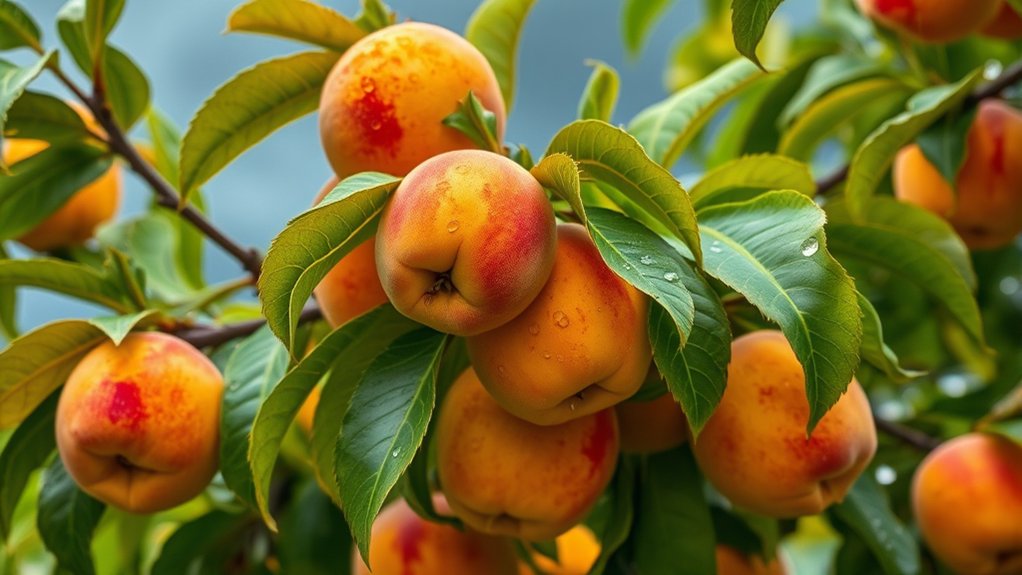
Even before you touch a hose or see a crack, the weather’s rhythm around your trees can load each peach with enough internal stress to split it open.
Peaches respond quickly to swings in moisture, temperature, and turgidity, so short weather events can undo months of good care.
Brief, sharp shifts in moisture or temperature can undo months of careful peach-tree management.
Sudden rain after a dry spell, especially during the rapid fruit-expansion and final ripening stages, forces water into the fruit faster than the skin and pit can stretch.
Rapid temperature shifts add stress by making pit tissues expand or contract unevenly.
Winter cold and mild winters both set the stage for later deformities and split pits.
Key weather patterns to watch include:
- Drought followed by heavy rain or foggy, still days
- Prolonged early-season rain that shapes squat, weak-fleshed fruit
- Rapid temperature swings during pit hardening and ripening
- Winter cold events or low-chill winters that disturb ovary and pit development
Orchard Watering, Thinning, and Fertilizing Mistakes That Worsen Split Pits
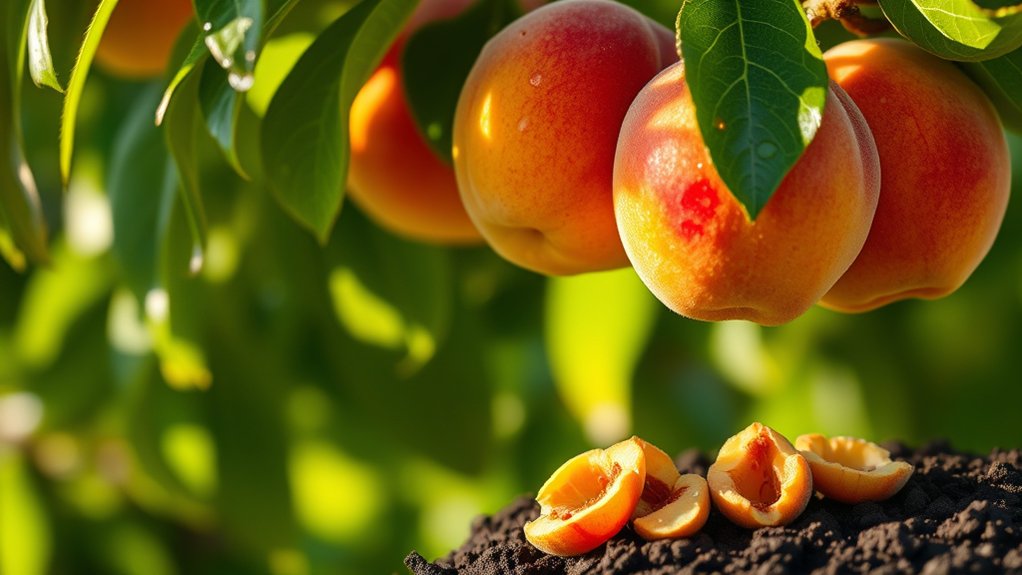
While weather sets the stage for split pits, your day‑to‑day decisions with water, thinning, and fertilizer often decide which fruits actually crack. When soil swings from dry to saturated during pit hardening, peaches absorb water too fast, internal pressure spikes, and pits split.
Deep, infrequent irrigation around the drip line stabilizes moisture and avoids trunk rot, nutrient leaching, and weakened pits.
Thinning mistakes also matter. If you thin too early—before pits harden or fruit reaches about 1 inch—you disrupt endocarp development and trigger rapid, uneven growth. Instead, thin after pit hardening and the short pit “resting” stage, keeping fruit 6–8 inches apart, or up to 10 inches when the crop is very heavy.
Fertilizer can help or harm. Excess nitrogen during pit hardening overstimulates internal tissues, softens fruit, and attracts pests.
Balanced programs, including adequate calcium, strengthen cell walls and reduce cracking.
Which Peach Varieties Are Less Likely to Split on the Tree?
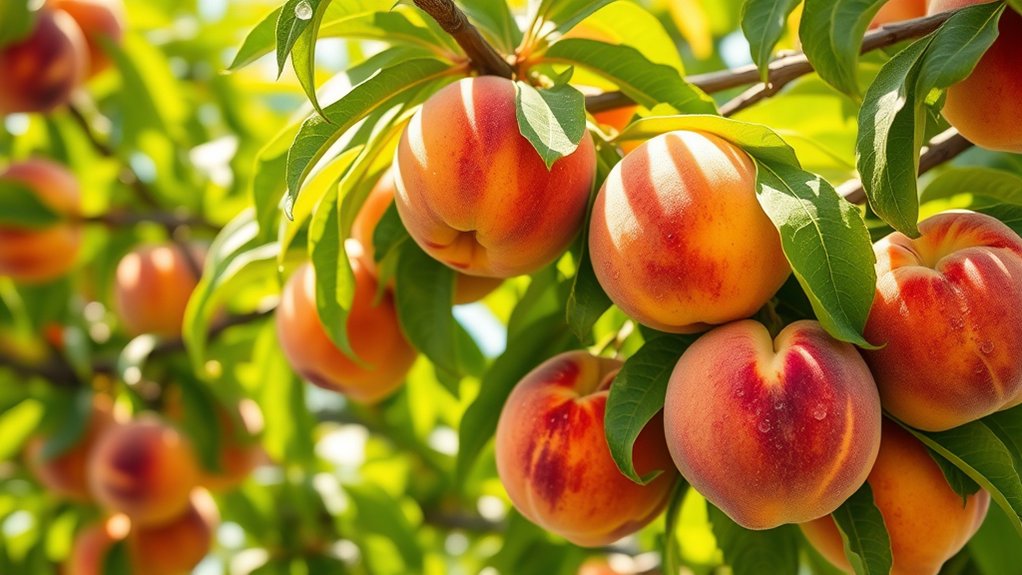
When you’re tired of watching peaches crack open, it pays to start with varieties that naturally resist split pits.
In this section, you’ll look at the fruit and tree traits that signal better resistance, see specific cultivars like Hamlet, Clayton, Ellerbe, and Troy that hold up well, and note problem types like Scarletpearl.
You’ll also learn how to match these varieties to your climate so you don’t trade split resistance for issues with cold hardiness or disease.
Traits Of Resistant Cultivars
Because some peach trees handle stress far better than others, choosing the right cultivar is one of the most effective ways to reduce fruit splitting before it starts.
You’re looking for trees that stay healthy, set reliable crops, and keep fruit skins intact under weather swings.
Resistant cultivars usually share several useful traits:
- Disease resistance: Types like Curlfree, Allstar, Blazingstar, and PF 24-007 shrug off leaf curl or bacterial spot, so fruit isn’t weakened by chronic stress.
- Hardiness and vigor: Hardy trees and buds (as in Blazingstar or Crimson Rocket) bounce back from cold and still crop well.
- Protective fruit skin: Tough-skinned peaches, like Indian Free, better resist insects and surface damage.
- Good handling and storage: Varieties that pick dry and store well typically have firmer, less split-prone flesh.
Recommended Low-Split Varieties
Instead of gambling on how the weather will treat your crop, you can stack the odds in your favor by planting peach varieties that rarely split on the tree.
Start with freestones like Crest Haven, which gives firm, sweet‑tangy fruit, or Juneprince and dwarf Bonfire if you want earlier or smaller trees.
Semi-cling types also balance flavor and lower split risk.
Sureprince, Gala, Caroking, and Redhaven all offer sweet yellow flesh and semi-free stones.
For white flesh, Saturn and PF 8 Ball provide good sweetness, productivity, and bacterial spot resistance, while firm clingstones Scarlet Rose and July Rose stay solid on the tree.
Early-season options like Coronet, BuenOs, BuenO II, and Galaxy help you harvest quality fruit before peak splitting pressures hit.
Choosing Trees For Climate
Although weather plays a big role in peach splitting, you can prevent a lot of damage simply by matching your tree to your climate and choosing varieties with low split‑pit tendencies.
In cold northern or intermountain areas, you’ll do best with late‑blooming, hardy cultivars like Contender, Reliance, Veteran, or Crimson Rocket, which shrug off spring frost.
On high plains sites, you’re working against early bloom and wind, so lean on proven performers such as Elberta, Hale Haven, Haven, Polly, and Reliance.
For split‑pit resistance, look closely at variety descriptions:
- Choose Hamlet for Redhaven‑level hardiness with very few split pits
- Plant Clayton for fruit highly resistant to split pits
- Add Ellerbe where split‑pitting is chronic
- Avoid Rubired and Scarletpearl in crack‑prone orchards
Are Split Peaches Safe to Eat, and What Should You Do With Them?
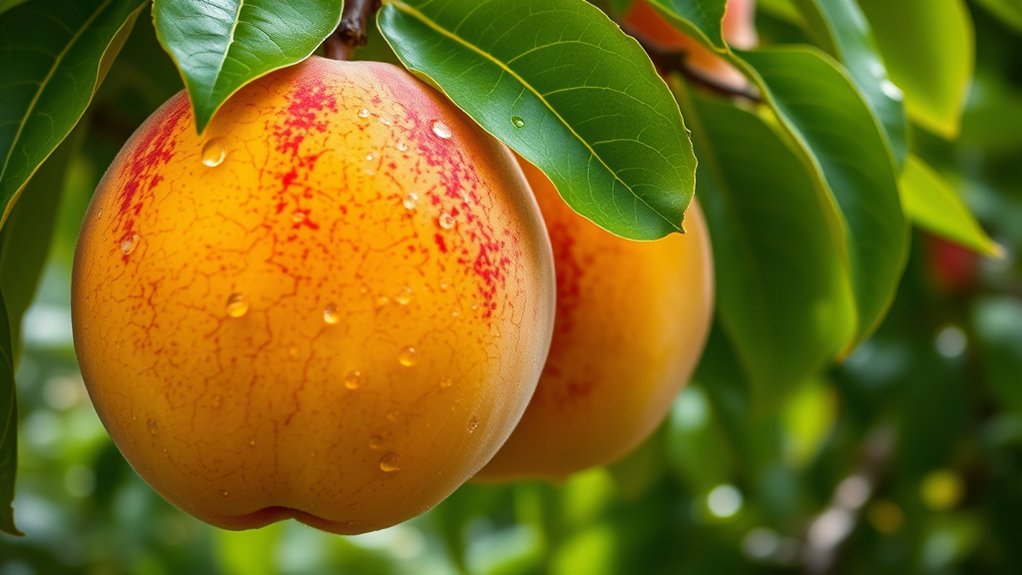
So, are split peaches actually safe to eat, or should you toss them right away? It depends on maturity and damage. Split peaches rot faster and easily pick up fungi, insects, and water inside the pit, so handle them carefully and keep them away from sound fruit.
First, check if the peach is mature. If it’s still hard, greenish, or clearly under‑ripe, discard it. Immature split peaches aren’t good for eating or processing.
If it’s mature, inspect the split closely. Look for mold, rot, insects, or a hollow, moldy seed. If you see extensive cracking, waterlogging, or deep decay, toss it.
Otherwise, cut the peach open, trim away all exposed and discolored flesh, and avoid using it fresh if the core was open to contamination.
Use sound sections right away in cooked recipes—jams, pies, sauces, or preserves—where heat processing and added sugar help offset minor defects.
Frequently Asked Questions
Can Container-Grown Peaches Split More Often Than In-Ground Trees, and Why?
Yes, container-grown peaches can split more often. You’re dealing with faster drying, sudden rewatering, and tight root zones, so moisture swings hit harder, driving rapid fruit expansion, pit fracture, and skin cracking.
Do Rootstocks Influence How Prone a Peach Tree Is to Split Pits?
Yes, rootstocks influence split-pit risk indirectly. You’ll see cultivar genetics matter most, but vigorous rootstocks push larger, faster-scaling fruit that’s more likely to crack; dwarfing, size-controlling stocks and balanced nutrition help reduce that vulnerability.
How Does Tree Age Affect Long-Term Risk of Peach Splitting?
Tree age doesn’t drastically change split risk; cultivar genetics and practices matter more. As trees mature, stable cropping and lighter vigor can slightly reduce splitting, but if you keep susceptible early cultivars, you’ll still see problems.
Can Pruning Timing During the Growing Season Increase Chances of Split Pits?
Yes, pruning timing can raise split pit risk. If you thin too early or heavily, you boost fruit size before pits harden. Combine that with late rain, extra irrigation, or nitrogen, and you’ll stress pits into fracturing.
Are Organic Sprays or Growth Regulators Helpful in Reducing Peach Splitting?
They can help, but you shouldn’t rely on them alone. You’ll use growth regulators to slow final swell and harden pits, while organic sprays mainly protect already-split fruit from rot, especially during wet, rapid-growth periods.
Conclusion
When you see split peaches on your tree, don’t panic—use them as feedback. Adjust your watering, thinning, and fertilizing so the fruit develops steadily, and pay attention to weather patterns that push rapid growth. Choose varieties less prone to split pits, and harvest damaged fruit quickly to avoid pests and rot. With a few changes, you’ll lose fewer peaches to splitting and enjoy more perfect, juicy fruit from your own tree.