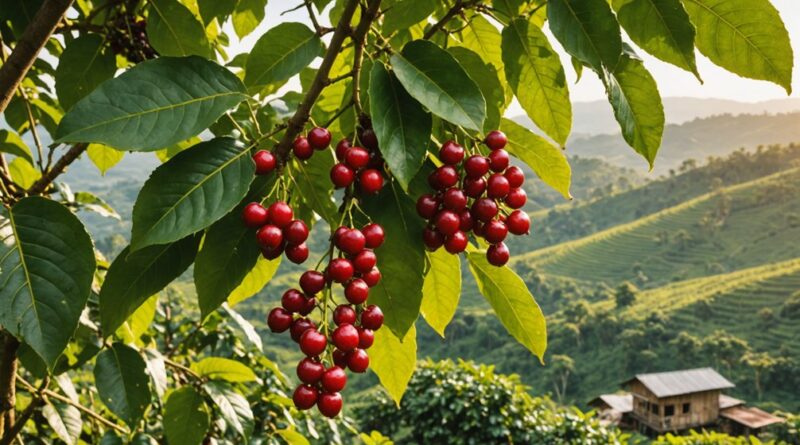
Where Does Sanka Coffee Come From? History and Origins
Sanka Coffee comes from early-1900s Germany, where coffee merchant Ludwig Roselius developed one of the first commercial decaf methods after a batch of beans was accidentally soaked in seawater. Building on this discovery, he founded Kaffee HAG in Bremen and later launched Sanka in France, from the phrase “sans caféine.” Sanka reached the U.S. in the 1910s–1920s, became famous for its bright orange label, and its journey only gets more interesting from there.
Key Takeaways
- Sanka Coffee originated from early 1900s Germany, based on Ludwig Roselius’s pioneering decaffeination experiments in the port city of Bremen.
- The brand’s name comes from the French phrase “sans caféine,” meaning “without caffeine,” emphasizing its identity as a decaffeinated coffee.
- Commercial decaf production began with Roselius’s company Kaffee HAG (founded 1906), which refined a process removing about 97% of caffeine while preserving flavor.
- Sanka was first marketed in France as a true decaf brand, then entered the U.S. in the 1910s–1920s, initially via coffee houses before grocery distribution.
- General Foods acquired Sanka in 1932, and its bright orange packaging made it a widely recognized supermarket staple and cultural shorthand for decaf coffee.
What Sanka Coffee Is and How It Started
Sanka is an instant decaffeinated coffee brand, one of the earliest decaf varieties to be sold worldwide and now distributed in the United States by Kraft Heinz. You recognize it by its bright orange label, a color that came to signal “decaf” on restaurant coffee pots across America.
You’re not just drinking a random decaf; you’re drinking a product whose name comes from the French phrase “sans caféine,” meaning “without caffeine.” The brand traces back to early decaf innovations by Ludwig Roselius, who helped pioneer decaffeinated coffee in Germany in the early 1900s.
Sanka began as part of a broader European decaf movement in the early 1900s, first gaining traction under other names before settling on “Sanka” in France. There, it positioned itself as a premium brand and held that status into the 1970s.
When Sanka arrived in the United States in the early 20th century, it first appeared in specialty Sanka Coffee Houses before quickly moving into grocery stores, where it evolved into a nationwide decaf staple.
The Accidental Discovery of Decaf Coffee
Long before Sanka appeared on American shelves, decaf coffee itself began with a shipping mishap that a determined German coffee merchant refused to ignore. You’d later know his legacy in your cup, but it started around 1902–1903, when a storm soaked one of Ludwig Roselius’s coffee shipments in seawater. Instead of discarding the beans, he tested them and noticed something unusual: the flavor remained, but much of the caffeine had leached out. This laid the groundwork for modern methods in which beans are soaked and rinsed to remove caffeine while preserving much of their original character.
Roselius already blamed his father’s death—at 59, which the family doctor tied to heavy coffee drinking—for his obsession with safer coffee. The damaged shipment gave him the clue he needed: caffeine dissolved in water.
You can picture him pushing experiments further, steaming green beans with acids and bases, then flushing them with benzene or similar solvents. The taste wasn’t perfect, the chemicals later proved hazardous, but Roselius had done it: he’d created the first commercially viable decaf coffee.
From Bremen to Kaffee HAG: Sanka Coffee in Europe
Roselius didn’t leave his seawater discovery on the docks; he turned Bremen into the birthplace of commercial decaf. In this North Sea port, you can picture him reworking that ruined 1903 shipment into a methodical experiment. Using brine-soaked beans that behaved differently in the roaster, he refined a process that, by 1906, stripped about 97% of the caffeine while keeping aroma and flavor intact.
In Bremen’s roaster rooms, brine-soaked beans quietly became the world’s first true commercial decaf
Bremen’s role as a coffee hub let him test and scale his idea quickly. This early success helped decaffeinated coffee become a recognizable part of everyday life in mid-20th century America.
You then see Roselius formalize this breakthrough by founding Kaffee HAG in 1906. From its Bremen base, the company focused on commercial decaffeination that didn’t feel like a compromise. In Germany, you’d encounter the coffee under the Kaffee HAG name.
But when the product reached France, it carried a new brand: Sanka, from “sans caféine.” With its emerging orange accents, Sanka soon became Europe’s shorthand for true decaf coffee.
Sanka Coffee Crosses the Atlantic to America
As you follow Sanka’s journey across the Atlantic, you see it first appear in New York in the 1910s and early 1920s, quietly testing American tastes.
You then watch it move from exclusive Sanka Coffee Houses to widespread retail shelves, turning a niche European decaf into an everyday option. Consumers commonly requested “Sanka please” in restaurants, reflecting how deeply the brand had embedded itself in American coffee culture.
Finally, you trace how a powerful partnership with General Foods pushed Sanka into the national spotlight and set the stage for its rise as a household name.
Early New York Debut
When the bright orange Sanka cans finally appeared in New York, they carried a distinctly French pedigree across the Atlantic. You were buying a coffee whose very name, “Sanka,” echoed *sans caféine*—without caffeine. It had already proven itself as a refined, affordable decaf in Europe, and now it needed a fresh identity in America. As it settled into the U.S. market, Sanka quickly became a staple during the Great Depression, promising calmer nerves and more restful nights for budget-conscious families.
| Year | Key New York Milestone |
|---|---|
| 1914 | Roselius forms Kaffee Hag Corporation in NYC |
| 1917–18 | U.S. confiscates Kaffee Hag; trademark lost |
| 1923 | Sanka Coffee Corporation launches in New York |
After the wartime seizure stripped Ludwig Roselius of his Kaffee Hag trademark, you no longer saw that name on cans. In 1923, New York’s new Sanka Coffee Corporation introduced Sanka as the reborn, French-branded decaf for American drinkers.
From Cafés To Retail
Long before you spotted its bright orange cans on a grocery shelf, Sanka lived a quieter life in European cafés, poured as a refined alternative for drinkers who wanted coffee *sans caféine*.
You would’ve found it in France, the Netherlands, Belgium, Germany, and Switzerland, where it began as a premium decaf offshoot of Kaffee Hag.
When it crossed the Atlantic in the 1910s, you might’ve first heard it called “Dekafa” or “Dekofa.”
After World War I, the name Sanka stuck, and New Yorkers encountered it in two Sanka Coffee Houses before they ever saw it in stores.
General Foods Partnership
Those orange cans didn’t reach every corner of American grocery stores on charm alone; General Foods put its full weight behind Sanka’s Atlantic crossing.
After Ludwig Roselius launched Sanka in the U.S. in 1923 through the Sanka Coffee Corporation and two New York coffee houses, distribution stayed local. General Foods secured U.S. distribution rights in the 1920s and used its existing infrastructure to push Sanka beyond Manhattan counters into national retail.
You’d have noticed the shift. A 1927 radio push, including *Sanka After-Dinner Hour* on WEAF, signaled serious backing.
In 1932, General Foods bought Sanka outright, turning an independent decaf into a corporate brand. That move cemented Sanka as the country’s default decaf, its orange label soon echoed in orange-handled restaurant pots.
Who Really Owned Sanka Coffee?
The story of who really owned Sanka Coffee jumps from a German lab bench to American boardrooms and, eventually, global food giants. You can trace it back to 1903, when Dr. Ludwig Roselius created his decaffeination method in Bremen and launched it through his Kaffee HAG company.
In Europe, Sanka started as a lower‑priced companion to the premium Kaffee HAG line.
When Roselius pushed into the U.S. around 1910, he first used names like “Dekafa,” then formed the Kaffee Hag Corporation in New York in 1914. During World War I, the U.S. government seized that company and sold it off, so Roselius lost the Kaffee Hag trademark.
To regain a foothold, he backed the Sanka Coffee Corporation in New York in 1923. Just five years later, General Foods stepped in, first distributing Sanka in 1928, then fully owning it from 1932.
Today, Kraft Heinz controls the SANKA trademarks.
How Sanka’s Orange Branding Took Over Decaf
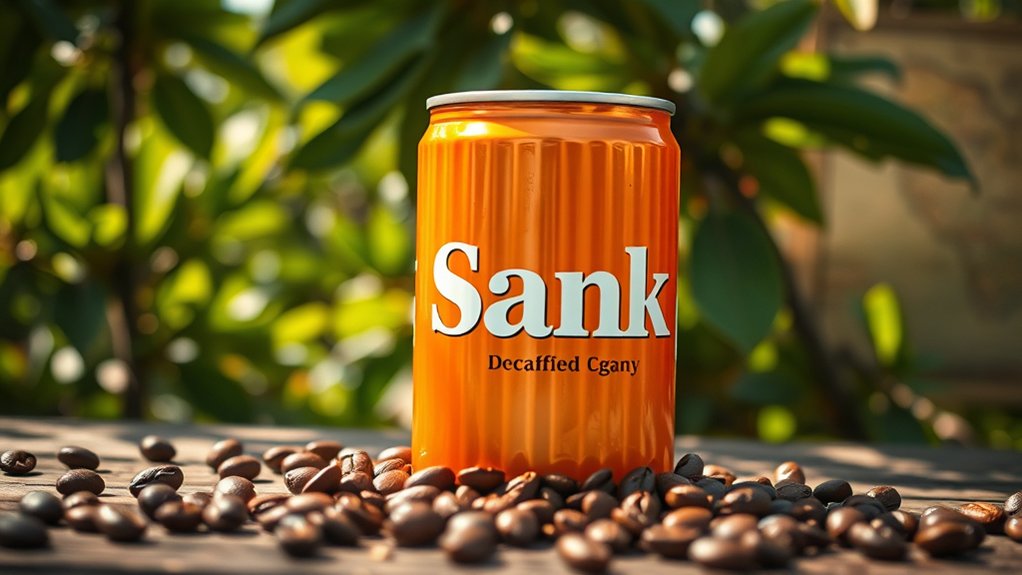
Color turned Sanka from just another decaf into an icon. When you first see that bright orange, you’re looking at a legacy that started in Europe, where “sans caféine” inspired Sanka’s name and standout label.
By the time Sanka hit New York in 1923, that vivid orange package already functioned as a visual shortcut: if you wanted decaf, you grabbed the orange tin.
By 1923, orange packaging turned Sanka into shorthand for decaf: spot the orange, grab the decaf
Once General Foods took over distribution in 1928, it pushed the color everywhere. The company sent restaurants orange-handled coffee pots so you could instantly spot which pot held decaf.
Those handles became the industry code. Even if a diner poured some other brand, you still asked for “the orange pot” when you wanted decaf.
Rivals had to react, adopting their own color cues—like green—for differentiation. But orange stayed welded in your mind to Sanka and, more broadly, to decaf itself.
Sanka Coffee’s Decline and Lasting Legacy
Even after Sanka spent decades as America’s best‑known decaf, its reign faded slowly instead of collapsing overnight. You watched it move from an unavoidable supermarket staple to something you’d have to hunt for on a bottom shelf—if it was there at all. Newer decaf brands, fresher brewing methods, and the rise of gourmet and specialty roasters all chipped away at Sanka’s dominance, while instant coffee itself slipped out of fashion.
Corporate ownership changes didn’t help. Each new parent company shifted focus to trendier products, cutting marketing budgets and shelf space until Sanka became a niche item, often limited to an 8 oz jar at Walmart or an online listing.
| Shift Over Time | What You’d Notice |
|---|---|
| Peak dominance | Sanka on every supermarket aisle |
| Growing competition | More gourmet and specialty decafs |
| Marketing cutbacks | Fewer ads, less in‑store visibility |
| Distribution contraction | Only select retailers carrying jars |
| Nostalgic legacy | Older drinkers recalling Sanka by name |
Frequently Asked Questions
Is Sanka Coffee Still Produced or Sold Anywhere in the World Today?
Yes, you can still buy Sanka coffee today. You’ll find it mainly as an instant decaf brand, especially in the United States through Kraft Heinz, and it’s reportedly still sold in various markets worldwide.
What Did Early Sanka Decaffeination Taste Like Compared to Modern Decaf Methods?
You’d taste a harsher, slightly briny, flatter cup; early Sanka’s Roselius process stripped more nuance and antioxidants. Modern Swiss Water and CO₂ methods give you cleaner, sweeter, more aromatic decaf that’s closer to freshly roasted regular coffee.
How Did Sanka’s Decaf Process Influence Today’s Commercial Decaffeination Techniques?
Sanka’s solvent-based Roselius process shows you caffeine can be selectively removed while preserving flavor, so you now expect tasty decaf. Its success pushed industry toward more precise, gentler methods like supercritical CO₂ and Swiss Water.
Were There Any Health Claims or Controversies Around Sanka’s Low-Caffeine Formula?
Yes. You’re told Sanka’s 97%-caffeine removal made it safe for daily, even “indulgent,” use, especially if you’re caffeine‑sensitive. You wouldn’t find major health scandals, only skepticism about flavor and comparisons with later chemical decaf methods.
Can Vintage Sanka Tins or Advertisements Be Valuable to Collectors Now?
Yes, they can. You’ll find 1950s tins bringing $20–$50, rare 1920s–30s or French variants reaching $150–$400+. You’ll maximize value by preserving lids, bright orange graphics, and keeping everything rust-free and documented.
Conclusion
When you trace Sanka’s journey, you see more than a decaf brand—you see how a quirky lab discovery reshaped coffee culture. You’ve followed it from German chemists to American kitchens, from Kaffee HAG to orange-label dominance and eventual decline. Even if you don’t drink it, you still feel Sanka’s imprint every time you see an orange decaf pot or order a caffeine‑free cup. Sanka proved decaf could matter—and it still does.