Is the Benzini Brothers Circus Real or Fictional?
The Benzini Brothers Circus in *Water for Elephants* is fictional, so you won’t find real route books or archives for it. However, you’re stepping into a world built from the very real grit, danger, and glamour of 1920s–30s American traveling circuses like Ringling Brothers. The low pay, brutal conditions, train life, and makeshift circus “families” all come straight from authentic history, and there’s a lot more behind how that world was stitched together.
Key Takeaways
- The Benzini Brothers Circus is entirely fictional, created by Sara Gruen for her novel *Water for Elephants*.
- No historical records, route books, or founding documents exist for a real Benzini Brothers troupe.
- Gruen based Benzini Brothers on real 1920s traveling circuses, especially Ringling Brothers–style shows.
- The novel’s gritty details—train logistics, harsh working conditions, circus hierarchy—reflect meticulous research into actual circus history.
- Key events in the book, including the 1931 disaster and major character deaths, are invented and have no documented real-world counterparts.
Is the Benzini Brothers Circus Real?
Curiously, despite how authentic it feels in *Water for Elephants*, the Benzini Brothers Circus isn’t real—it’s a fictional circus Sara Gruen created for her novel.
Within the story, it’s billed as the “Benzini Brothers Most Spectacular Show on Earth,” but you won’t find any historical records, route books, or founder documents for it. It exists only on the page. Drawing on the 1920s traveling circus tradition, Gruen uses Benzini Brothers to capture the era’s restless sense of expansion and motion.
You follow Jacob as he jumps a circus train during the Great Depression and joins Benzini’s ragged mudshow world, working with Rosie the elephant and Marlena’s horses under Uncle Al’s chaotic management.
Dramatic set pieces—the deadly stampede, the circus’s shutdown, and Jacob’s eventual departure—serve as plot devices, not recorded history.
If you see fan claims online tying Benzini Brothers to Ringling Brothers or a “Benzini Bros. Circus Tragedy of 1931,” you’re looking at speculation, satire, or error, not evidence of a real circus.
Real Circus Inspirations Behind Benzini Brothers
As you look closer at the Benzini Brothers Circus, you’ll see how it borrows its basic template from real outfits like the Ringling Brothers. You’re not just reading about a made‑up show; you’re seeing authentic circus worker struggles, from spotty pay to harsh bosses, echo real accounts. You also move through the same Depression‑era world of traveling shows, where constant motion and economic desperation shaped every performance. This tension between the circus’s glamorous façade and its harsher truths reflects the story’s larger theme of reality vs. illusion.
Ringling Brothers As Blueprint
Ringling Brothers Circus functions as the clearest real-world blueprint for the fictional Benzini Brothers operation in *Water for Elephants*. When you picture Benzini’s train snaking across Depression-era America, you’re fundamentally seeing a scaled-down, rougher version of Ringling’s documented practices. Gruen draws on Ringling’s established model of train-based travel, town-to-town “mudsow” setups, and complex logistics involving performers, animals, and equipment. Her extensive research into historical circuses and their operations grounds these parallels in real practices rather than pure invention.
You also see Ringling’s shadow in the way the novel treats circus hierarchy and professionalism. Ringling Brothers was the gold standard of its era, so other shows—like the fictional Benzini outfit—naturally feel like imitations or competitors.
Authentic Circus Worker Struggles
While Benzini Brothers borrows its structure from giants like Ringling, the heart of the novel comes from the real struggles of circus workers who kept those shows moving.
When you look past the posters, you see exhausted veterinarians scrambling to treat injured horses one minute and stressed big cats the next, all while rattling across the country in cramped railcars. You see people taking any job they can, accepting erratic pay and rough sleep because there’s nothing else. Drawing from traveling circuses of the Great Depression, the story mirrors how workers constantly chased the next town and the next paycheck just to survive.
You also see how power works: owners and bosses control hiring, wages, and living conditions, leaving you vulnerable if you complain.
Yet amid that imbalance, workers build makeshift families—mentoring newcomers, sharing food, and helping each other endure the constant motion and uncertainty.
Depression-Era Traveling Shows
Though Benzini Brothers exists only on the page, its world comes straight out of the real Depression-era train circuses that crisscrossed the United States. You see the same rail-based caravans: performers, roustabouts, animals, and canvas all packed into rolling stock, chasing one more town, one more crowd. During the Great Depression, the real-life Ringling Bros. and Barnum & Bailey rail circus became the industry benchmark that fictional outfits like Benzini Brothers are measured against.]
In the 1930s, trains let mudshows expand across America even as money vanished.
When you read about Benzini’s shabby outfits and near-collapses, you’re looking at second-rate shows that struggled beside giants like Ringling Brothers.
Ringling’s massive rail operation, dazzling variety acts, and animal spectacles form the gold standard the novel constantly evokes.
Because Sara Gruen grounded her fiction in these real traveling shows, Benzini’s disasters, stampedes, and management chaos echo documented circus history.
How Water for Elephants Built Its Fictional Circus
As you look at Benzini Brothers on the page, you’re meant to feel like you’ve stepped into a real 1930s mudshow, even though the circus never existed.
Gruen grounds this invented outfit in authentic details—from train jumps and animal acts to Depression-era hardships—so the world feels historically anchored.
You’ll see how she blends those researched facts with imaginative flourishes to build a circus that’s both convincing and unmistakably fictional.
Crafting a Convincing Circus World
Even knowing the Benzini Brothers Circus is entirely fictional, you still feel like you’re stepping onto a real 1930s lot because Sara Gruen builds her world on a backbone of meticulous research. You move through muddy back lots, past roustabouts, performers, and the cookhouse, sensing a believable hierarchy and routine.
You feel the circus train lurch, hear couplers clang at night, and understand why workers risk dangerous jumps just to stay employed.
Gruen anchors you in daily work: feeding animals, treating injuries, rigging tents, handling crowds.
Rosie’s act, the roughneck gossip, and the constant motion of jump after jump make the show’s glamour and its seamy edges feel inseparable.
Every detail pushes you to inhabit Benzini Brothers as if it once toured American rails.
Blending History And Imagination
While the Benzini Brothers Circus never existed outside Sara Gruen’s imagination, it feels anchored in history because she fuses hard facts with inventive storytelling. You move through the book believing this second‑rate mudshow once rattled across Depression‑era America because its details echo real circuses like Ringling Brothers.
Gruen blends history and imagination in ways you can trace:
- She borrows real circus structures—trains, hierarchies, routing—and layers a fictional company and founders on top.
- She grounds Rosie and other animal acts in documented training practices and abuses.
- She threads in worker anecdotes, 1930s tragedies, and economic instability to shape plot turns.
- She lets characters “graduate” to Ringling Bros., tying your invented memories to an actual circus legacy.
Benzini Brothers Circus: Fact vs. Fiction
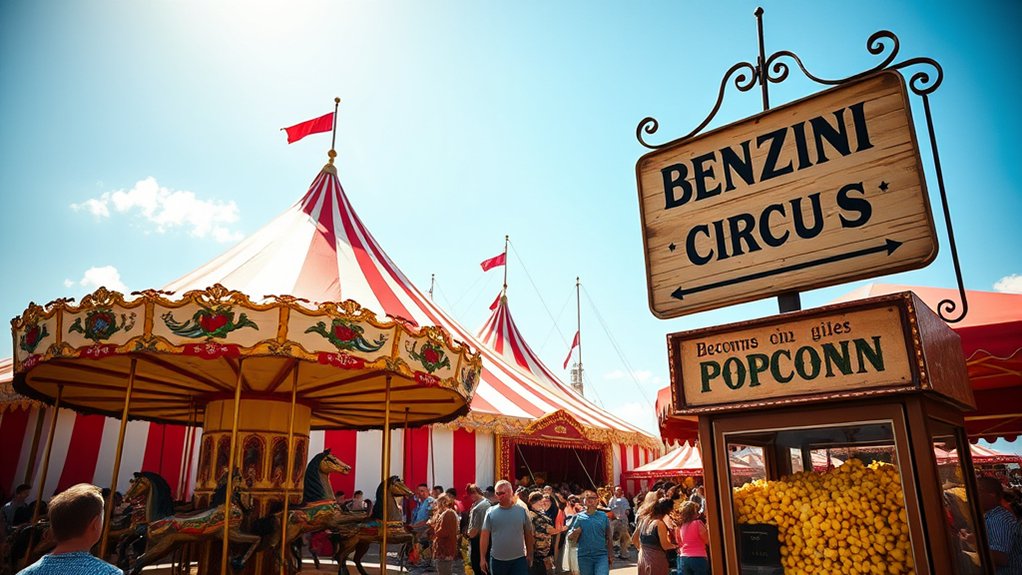
Though it feels richly detailed and historically grounded, the Benzini Brothers Most Spectacular Show on Earth exists purely as a fictional circus created for Sara Gruen’s novel *Water for Elephants*.
You’re not dealing with a lost historical outfit, but with a made‑up show set against the very real backdrop of the 1930s Great Depression.
You can trace multiple factual threads: traveling mudshows, harsh labor conditions, seedy back‑lot culture, and animal acts that echo real circuses like Ringling Bros.
The Depression‑era setting, circus trains, and Jacob Jankowski’s work as a veterinarian all reflect documented practices and experiences.
But the central circus itself—its name, owners, and most dramatic twists—belongs to fiction.
There’s no archival record of a Benzini Brothers troupe or a “Benzini Bros. Circus Tragedy of 1931.”
Plot points like August’s death by Rosie, Uncle Al’s garroting, and the invisible fortune teller are narrative inventions, not historical incidents.
Why Benzini Brothers Feels So Historically Authentic
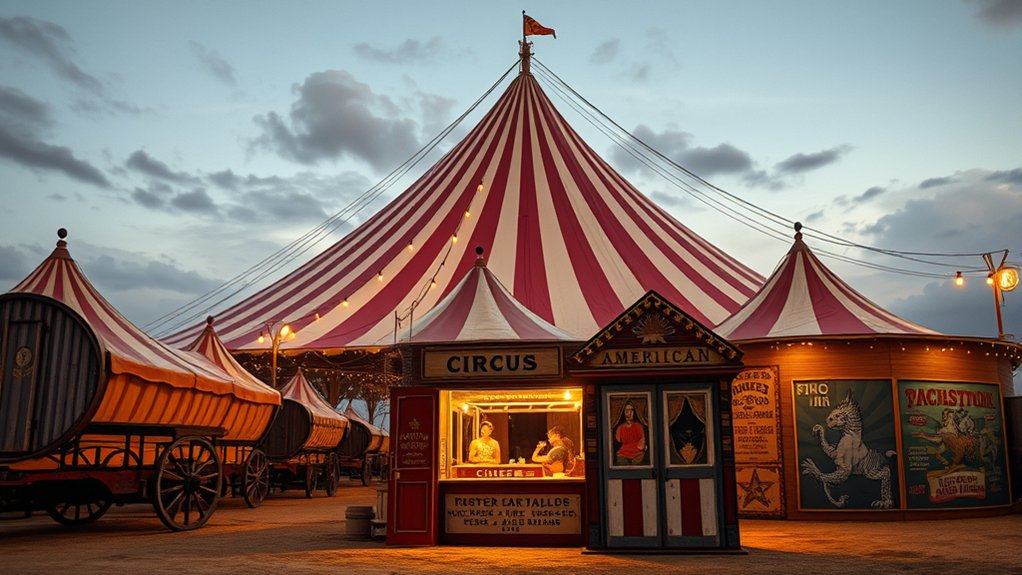
Because Sara Gruen roots her story in real 1930s circus life, the fictional Benzini Brothers circus reads like a genuine historical outfit rather than a pure invention.
Gruen’s 1930s circus feels startlingly real, blurring the line between fiction and documentary history.
When you follow Jacob onto the circus train, you’re stepping into a world closely modeled on documented practices from the Great Depression.
You feel that authenticity because Gruen builds Benzini Brothers on four solid historical pillars:
- Train-based logistics – You see workers, animals, and tents crammed onto railcars, mirroring how Ringling and other real circuses actually traveled and operated.
- Dark underbelly – Murders, men thrown from trains, and animal abuse echo real cases from period circuses.
- Depression-era desperation – Joining a circus becomes a believable survival move when regular jobs vanish.
- Work roles and hierarchy – Jacob’s veterinary duties, rigid chains of command, and brutal labor conditions track with accounts from actual circus employees.
Books and Films If You Loved Benzini Brothers
If Benzini Brothers pulled you into its gritty train cars and stormy love story, you’ll likely want more novels and films that blend romance, danger, and behind-the-scenes spectacle.
Start by reading Sara Gruen’s Water for Elephants if you’ve only seen the 2011 film. You’ll get the full Depression‑era brutality: “redlighted” workers releasing animals, Rosie’s shocking role in August’s death, and Uncle Al’s off‑page strangling—details the PG‑13 movie softens or drops.
Then watch the adaptation to see how Hollywood reshapes the material. The film combines Uncle Al and August into one villain, trades Rosie’s stake blow for a stampede trampling, and polishes the circus into something closer to Ringling’s “family‑friendly” image.
From there, explore other historical circus tales and backstage dramas—stories where performers risk everything under the big top and love has to fight through sawdust, sweat, and spotlight glare.
Conclusion
You walk away knowing the Benzini Brothers Circus isn’t real, but it still feels like it is. By blending meticulous research with vivid storytelling, Water for Elephants lets you step into a gritty, glittering big-top world that could’ve existed. You can appreciate how closely it mirrors real Depression-era circuses, then keep exploring that atmosphere through other books and films that capture the same mix of danger, romance, and wonder.