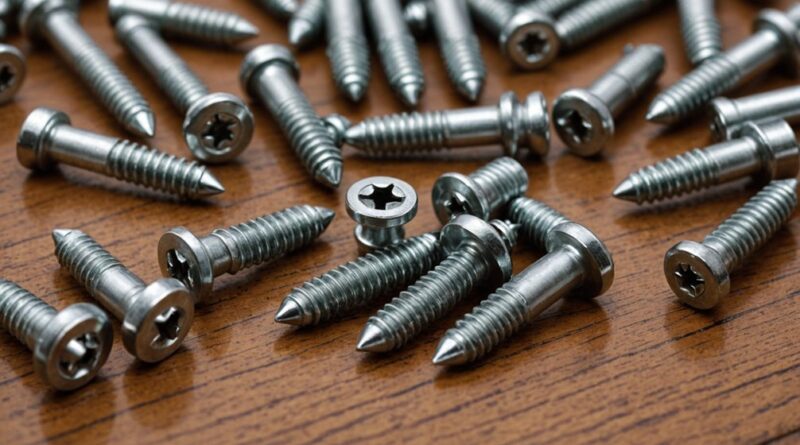
What Are the Advantages and Disadvantages of Screws?
Screws give you superior tensile strength, holding power, and long-term durability, especially where loads and tension are constant. You also get versatility across wood, drywall, and metal, plus precise placement and easy removal or adjustment. However, screws cost more than nails, install slower, can strip if misused, and aren’t always ideal where high shear strength is critical, like some structural framing. If you’re choosing fasteners wisely, there’s more you’ll want to know next.
Key Takeaways
- Screws provide superior tensile holding power and long-term resistance to pull-out, especially in applications under constant tension or load.
- They allow precise placement, depth control, and easy removal or adjustment without significant damage to surrounding material.
- Screws are slower to install than nails and often require power drivers, proper bits, and more careful technique to avoid stripping.
- They generally cost more per box than nails, though reduced maintenance and replacements can offset the higher upfront price in some projects.
- Screws excel in multi-material use and corrosion-resistant options, but nails usually outperform them in shear strength and structural framing applications.
Screws vs Nails: Strength and Durability
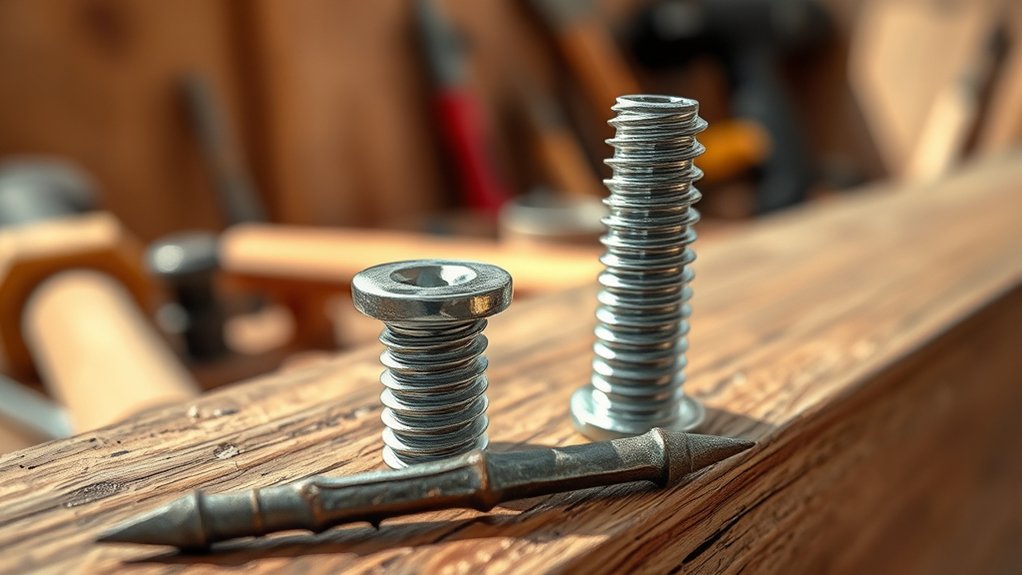
Although both fasteners can be strong in the right context, screws and nails excel in different ways when it comes to strength and durability. When you need tensile strength and holding power, screws clearly lead. Their threads bite into wood, so in pull-out tests they hold over 900 lbs in 2×8 lumber, while 8d nails fail around 15–30 lbs.
In many tests, the wood fails before the screw does, and the screw stays straight instead of deforming.
You’ll also see screws outlast nails where constant tension or load matters—think drywall, tray bottoms, or other pull-prone connections. Because of their higher tensile strength, screws generally provide more secure fastening in applications where pull-out resistance is critical.
Nails, however, shine in shear strength. Their flexibility lets them bend under side loads instead of snapping, which makes them better for structural and metal framing where lateral forces dominate.
Over time, nails can move with seasonal wood changes, while some high-strength screws risk brittle failures under repeated shear.
Screws vs Nails: Installation and Ease of Use
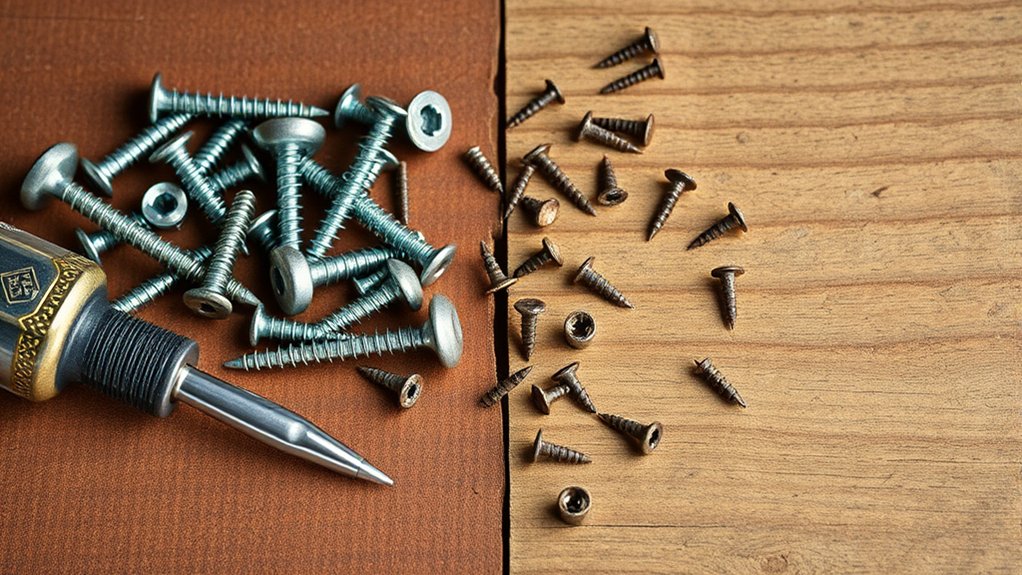
When you compare screws and nails on the job site, the biggest difference you’ll feel is in how fast and simply they go in—and come back out.
Nails win on pure speed: with a hammer or nail gun, you can drive them rapidly, which matters on big framing jobs or when you’re racing a deadline. Nails don’t need rotation, and basic tools handle most tasks. Some construction sites may temporarily block access to product information pages if a security service detects suspicious activity, similar to how websites protected by Cloudflare can deny access when certain actions or data patterns trigger their defenses.
Screws slow you down because every fastener needs rotational force. Even with an electric driver, you spend more time per screw and you risk stripping heads if you push too hard or use the wrong bit. You also have to match the driver to the screw head.
Where screws shine is removal and adjustment. You can back them out cleanly with a driver, which reduces collateral damage in remodels and makes changes, corrections, or selective demolition much more controlled and efficient.
Screw Versatility Across Materials and Projects
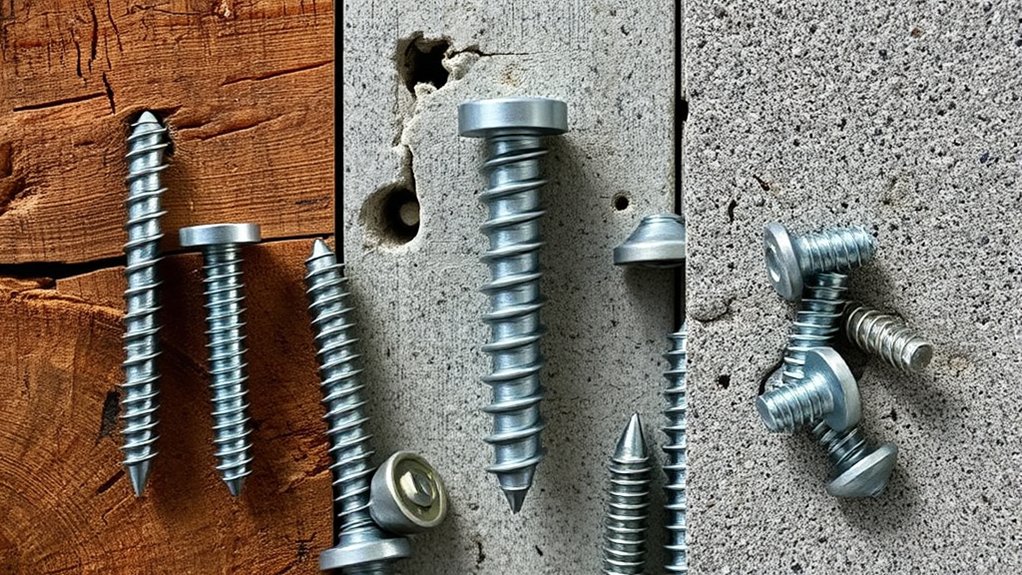
Beyond the difference in speed and installation, screws stand out for how many materials and project types they can handle. With multi‑material designs like Power Pro® ONE™, you can drive a single screw into wood, drywall, plastic, masonry, composite, and even thin metal without pre‑drilling. That flexibility lets you simplify your hardware selection and move quickly between tasks. With Power Pro® ONE™, one screw for every material helps eliminate the need to buy and store multiple fastener types, keeping your projects and toolbox more efficient.
You also choose screw materials to match the environment and demands. Steel screws give you high tensile strength for structural construction, especially when coated or zinc‑treated for moisture protection.
Stainless steel resists corrosion in outdoor and marine settings, while brass and bronze serve electrical work where conductivity and low sparking matter more than brute strength. Titanium’s strength‑to‑weight ratio suits aerospace, medical, and other high‑performance uses.
Across all these options, advanced coatings—like black epoxy on multi‑material screws—extend durability and make one fastener style usable in many job conditions.
Using Screws for Precise and Fine Work
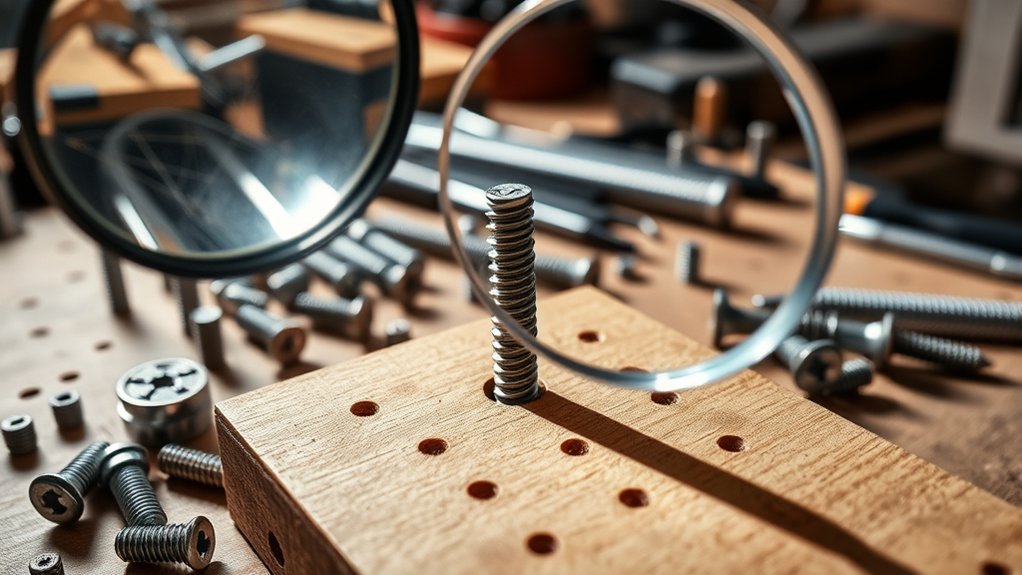
Using the right screws turns delicate, detailed work into a controlled, repeatable process. When you choose precision screws, you get tightly controlled diameters and lengths, so every fastener behaves the same.
Fine threads give more contact points in thick gauge material, boosting pull‑out resistance while needing less driving effort because the minor and major diameters are closer. Drill screws eliminate a separate pilot‑drilling step, speeding up installation while still providing consistent, reliable fastening performance.
In fine woodworking and trim, traditional screws let you place each fastener exactly where you want and stop at a precise depth, then reverse them for adjustments without weakening the joint.
For metal framing or light-gauge steel fixtures, fine drywall screws and other self-threading fine screws cut in quickly, grip tightly, and often eliminate pre‑drilling.
High-strength, corrosion‑resistant alloys and the tight bond around the shaft protect delicate assemblies from wear and moisture.
Just remember: these precision fasteners cost more, require careful handling, and demand accurate alignment to avoid damage.
Screws vs Nails: Cost, Load, and Other Limits
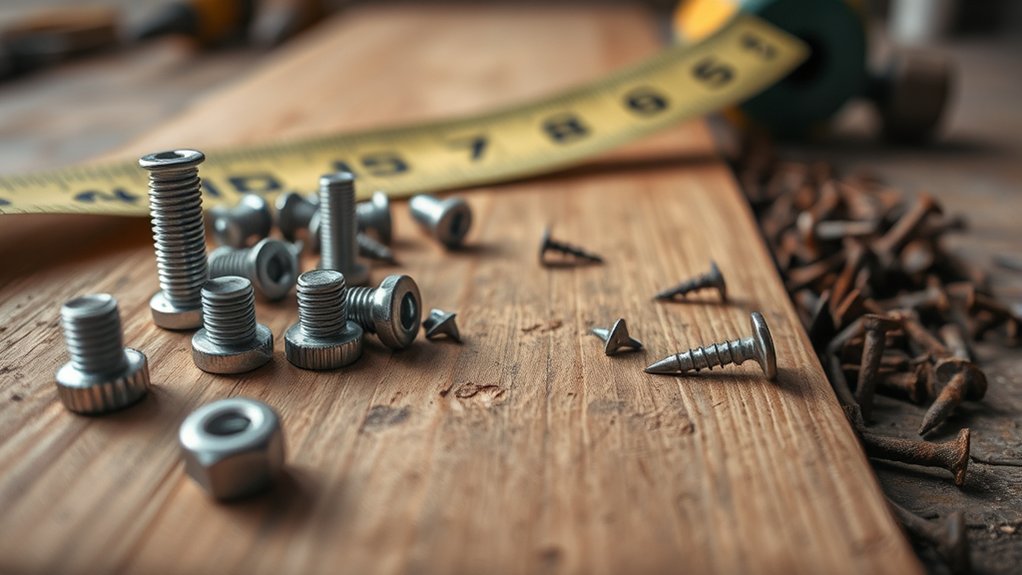
Precision work highlights what screws do best, but big projects force you to weigh them against plain nails regarding money, strength, and speed.
Screws usually cost about twice as much per box; a 5 lb box of deck screws runs about $30, while similar nails cost around $17. On a 360 sq ft deck, you’d spend roughly $60 on screws versus $34 on nails; for 500 sq ft, nails can save you around $13 or more. Because they offer higher longevity, quality deck screws can reduce long-term maintenance compared with nailed decks.
In return, you get much stronger tensile performance from screws. Their threads bite into the wood, resist pull-out, and shine in railings, cabinetry, and any joint under tension.
Nails, however, win on shear strength and code-approved structural framing, where members must slide slightly under wind or seismic loads. Nails also install far faster with guns, rarely need predrilling, and split wood less, while screws stay put longer and remove more cleanly.
Conclusion
When you choose between screws and nails, you’re really choosing what matters most for your project: strength, speed, precision, or cost. Screws give you superior holding power, easy removal, and fine control, especially in delicate or multi-material work. Nails offer lower cost and faster installation where sheer speed and impact resistance matter most. If you balance budget, loads, and long‑term durability, you’ll know exactly when to reach for screws—and when nails make more sense.