What Was the Effect of the Taiping Rebellion on China?
You see the Taiping Rebellion shatter Qing authority, kill 20–30 million people, and devastate China’s richest regions. The court loses military and fiscal control to powerful provincial commanders, laying groundwork for warlordism. Taiping Christianity challenges Confucianism, while radical land and gender reforms briefly expand equality. Ruined farmland, labor shortages, and shifting local economies push China toward factories, schooling, and military modernization. If you go further, you’ll notice how this chaos quietly redirected China’s path.
Key Takeaways
- It devastated central and southern China, killing an estimated 20–30 million people and destroying farmland, cities, and infrastructure.
- The Qing dynasty’s central power weakened as provincial commanders raised their own armies and gained lasting political and fiscal autonomy.
- China’s traditional Confucian order was challenged by Taiping Christianity, along with radical land redistribution, bans on opium, and greater rights for women.
- The economic heartland’s destruction shifted labor markets, raised wages for survivors, and pushed some regions toward factories, schooling, and modern industries.
- To survive, the Qing relied more on foreign-managed customs, new internal taxes, and military modernization, paving the way for later warlordism and reforms.
Major Impacts of the Taiping Rebellion
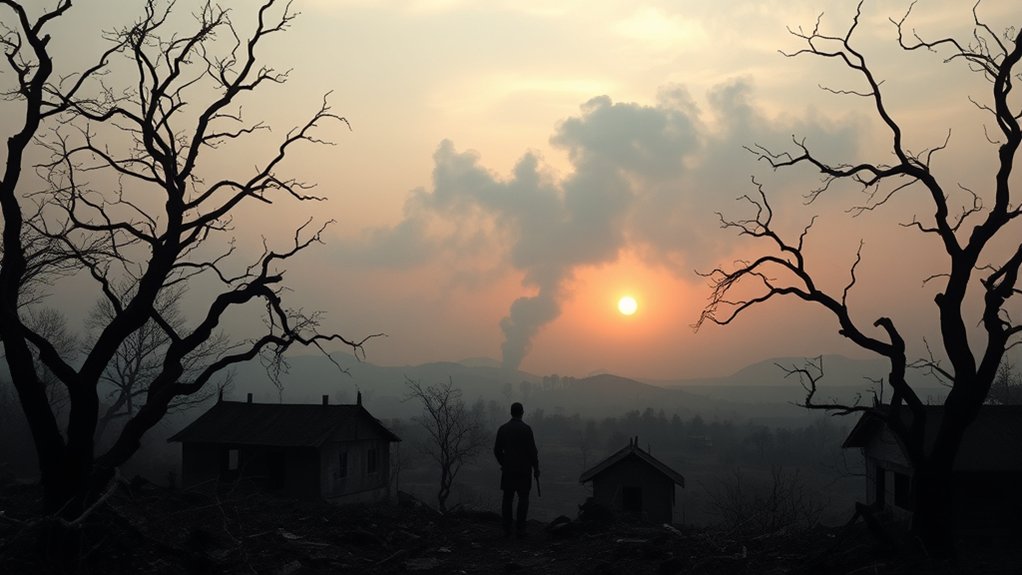
Although the Taiping Rebellion ultimately failed to overthrow the Qing, it violently reshaped China’s political order, religious life, social structure, and demographic landscape. You see the Qing court lose its grip on central China as power shifts to provincial commanders, a decentralization that foreshadows the Warlord Era. This shift in power came as the rebellion’s massive death toll of 20–30 million people and widespread devastation critically undermined the Qing dynasty’s economic and political viability.]
The Taiping Rebellion shattered Qing central power, empowering provincial strongmen and prefiguring China’s later Warlord Era
Fiscal control fractures too: instead of relying on traditional land taxes, the state leans on foreign-managed maritime customs and the sale of offices, forcing tighter administrative organization around shrinking revenue.
Ideologically, you’d watch Taiping Christianity displace Confucianism and other traditions in occupied areas, with Hong Xiuquan’s claim as Jesus’s younger brother anchoring a millenarian project to replace Manchu rule and remake society.
That religious vision justifies sweeping reforms: women fight, sit for exams, and hold office; foot binding ends; land is socialized; private trade is suppressed.
These changes challenge long-standing hierarchies and show how fully the rebellion reconfigured governance and everyday life.
Demographic and Economic Shocks Across China
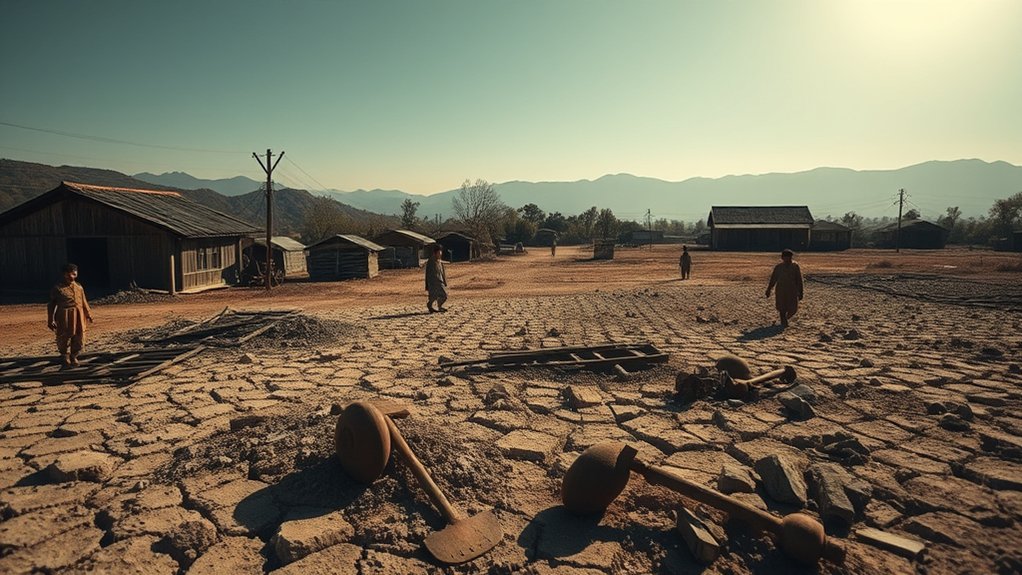
Even if you set aside debates over exact numbers, the Taiping Rebellion hits you as a demographic and economic earthquake that China hadn’t seen in centuries. You’re looking at perhaps 20–30 million deaths, maybe more, concentrated in the middle and lower Yangtze. In the very long run, scholars find that population in the hardest‑hit prefectures remained far below trend, with rebellion areas still markedly underpopulated even 150 years later.
Battle, famine, plague, and mass flight turned whole counties into near‑empty shells; some reports say only a few percent of residents survived. The war dragged on into the 1870s, so the shock never let up.
You’d also see how unevenly this catastrophe fell. Core economic zones—Jiangsu, Anhui, Hubei, Jiangxi, Zhejiang—lost people, crops, and infrastructure on a massive scale.
Labor suddenly became scarce relative to land, reversing the old pattern of land hunger and surplus peasants. In this new environment, surviving workers could demand more, while old landlord elites shrank.
Massive refugee movements and postwar resettlement then redrew China’s internal population map.
How the Taiping Rebellion Broke Qing Power
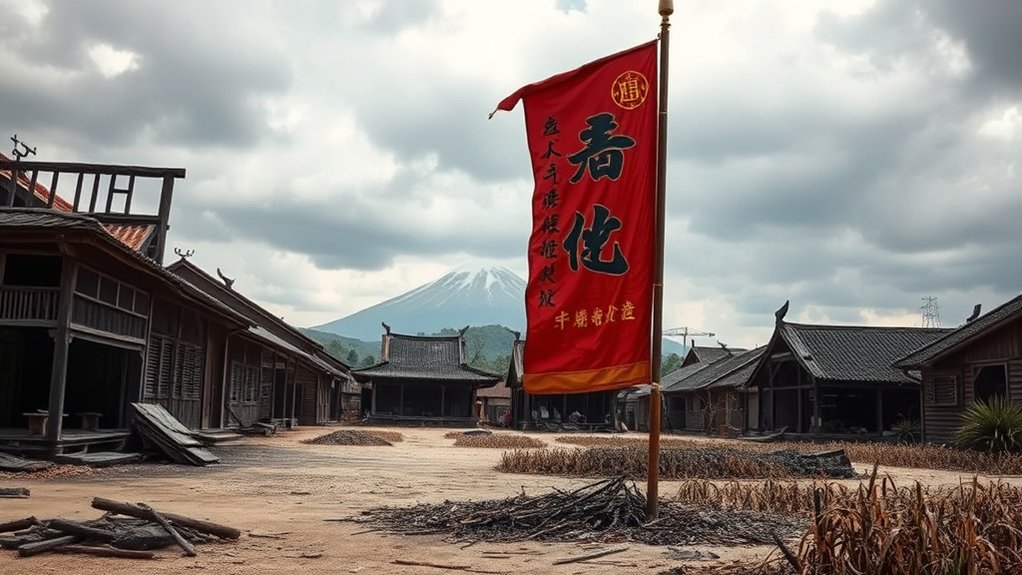
While the Taiping Rebellion didn’t topple the Qing outright, it broke the machinery that had let the dynasty rule a vast empire from Beijing. You see the shift most clearly in the military. The Manchu banners failed, so the court let provincial elites raise their own armies. These gentry-led forces beat the Taipings, but they answered more to local commanders than to the throne, planting the seeds of later warlordism. The rebellion also left fertile regions devastated, turning once-productive farmland into wasteland and permanently weakening the agrarian tax base.
Financially, you watch Beijing lose its grip. Provinces kept more revenue, land taxes collapsed in ravaged regions, and the court leaned on maritime customs, office sales, and new internal taxes like likin.
Provincial officials and Han Chinese elites gained leverage, while the central bureaucracy shrank in real authority.
Imagine this transformation:
- Once-unified banners replaced by regional armies
- Governors hoarding taxes in battered provinces
- Gentry brokers funding their own troops
- Foreign powers dictating “reform” terms
- A capital ruling mostly on paper
Social Reforms, Gender Roles, and Radical Ideas
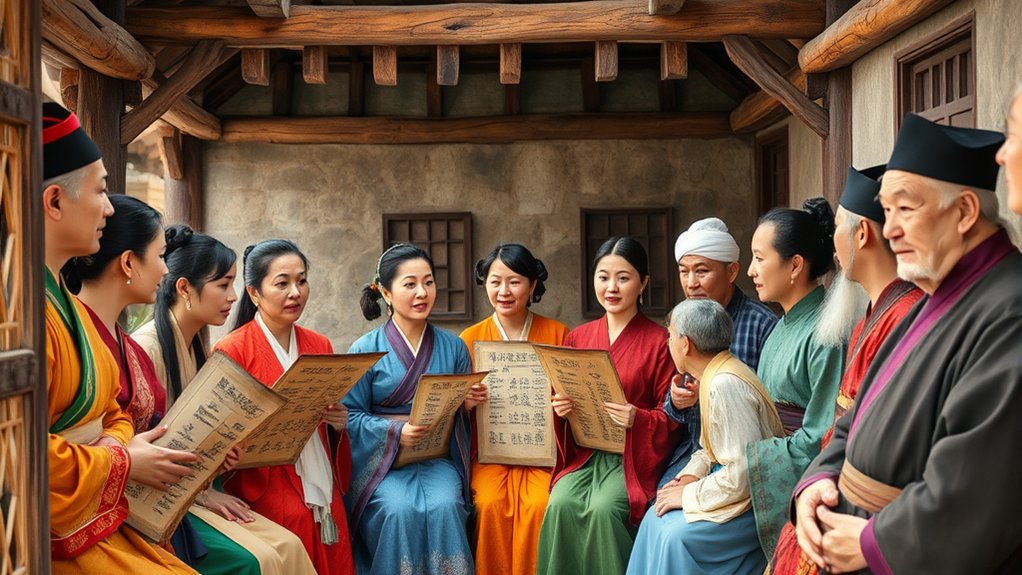
If you step inside the Taiping Heavenly Kingdom, you don’t just see a new regime; you see an attempt to rebuild everyday life from the ground up. You no longer own land as private property; instead, officials redistribute fields so each family farms according to its capacity. Granaries replace merchants, rent disappears, and you live in a society organized for use, not profit. Parasitic figures—landlords, gamblers, concubine traders, opium sellers—vanish under harsh enforcement. These sweeping changes unfolded against a backdrop of Qing decline, as the dynasty struggled with foreign invasions, internal rebellions, and the early stirrings of reform.
| Reform Area | Old Qing Order | Taiping Change |
|---|---|---|
| Property & Land | Landlord rents, private estates | Common land, equal allotment |
| Gender Roles | Foot binding, seclusion | Equality, labor in fields |
| Morality | Opium, gambling widespread | Total ban, strict codes |
| Religion | Confucian hierarchy | Taiping Christianity |
As a woman, you unbind your feet, work collectively, and claim equal standing in God’s family, while bans on prostitution and slavery protect your body and labor.
From Taiping Rebellion to China’s Modernization and World Role
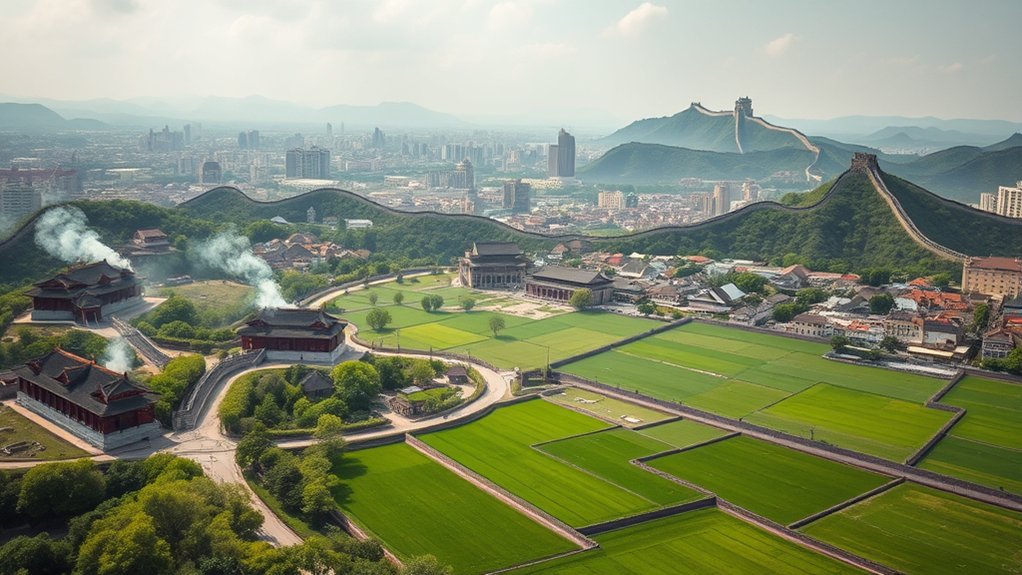
Although the Taiping Rebellion ended in defeat, it jolted China onto a different path that shaped its modernization and place in the world. In the devastated regions, you see agriculture destroyed, population thinned, and land suddenly abundant. That shock pushes local economies away from subsistence farming toward factories, machines, and schooling. Qing military modernization accelerated as the court, shocked by both internal rebellion and foreign pressure, began importing Western weapons and training to strengthen its armies.
Manufacturing’s share of GDP rises; average education climbs; capital replaces cheap labor as the driving force.
At the same time, you watch the Qing court surrender power to provincial commanders who raise their own armies and finances. This decentralization weakens the old empire, but it also opens space for experimentation, new taxes, and modern institutions.
Meanwhile, Western treaty ports and banks plug these regions into global markets, amplifying the shift.
- Smoke from new mills replacing rice paddies
- Quiet villages overshadowed by treaty port skylines
- Warlord headquarters buzzing with tax clerks
- Steam engines echoing along riverfronts
- Schoolyards full of first-generation students
Frequently Asked Questions
How Did Ordinary Villagers Experience Daily Life During the Taiping Rebellion?
You’d endure fear, hunger, and chaos daily; flee scorched villages; dodge massacres and disease; lose land, kin, and stable work. You’d scramble for food, shelter, and safety as armies shattered farming, taxes, and traditional village order.
What Role Did Religion and Prophecy Play in Motivating Taiping Followers?
Religion and prophecy drove you to join, promising salvation, equality, land, and a heavenly kingdom. You saw Hong’s visions as divine truth, justified holy war, endured hardship, and risked death, believing obedience guaranteed redemption and utopian transformation.
How Did Foreign Missionaries and Diplomats View the Taiping Movement at the Time?
You’d see missionaries split: some admired Taiping Christianity, others condemned its heterodoxy and violence. Diplomats, prioritizing trade and stability, treated it warily as a destabilizing force, ultimately backing the Qing once the movement threatened treaty ports and foreign interests.
In What Ways Is the Taiping Rebellion Remembered in China’s Popular Culture Today?
You encounter the Taiping Rebellion mostly in textbooks, museums, and occasional TV dramas, not daily pop culture. You see it framed as tragic civil war, proto-revolutionary struggle, and cautionary tale about religious extremism and rebellion.
How Do Historians’ Interpretations of the Taiping Rebellion Differ Internationally?
You see Chinese historians stress internal revolution and state-building, Western scholars highlight comparative civil war scale and Christianity, and Japanese or Taiwanese historians emphasize regional power shifts, nationalism, and proto-modernization. Interpretations differ over ideology, modernity, and Qing legitimacy.
Conclusion
You’ve seen how the Taiping Rebellion reshaped China’s path. You can trace its scars in lost lives, shattered economies, and a weakened Qing state that couldn’t fully recover. You also see how radical ideas on society and gender cracked old hierarchies and forced new thinking. When you look at China’s later reforms, revolutions, and rise as a global power, you’re really seeing the long shadow of Taiping-era upheaval stretching into the modern world.