What Metal Cannot Be Soldered? A Complete Guide
You can’t truly name a metal you “can’t solder” until you understand its surface oxides, melting point, and hardness. Tin, copper, brass, and silver solder easily, while steel, nickel, aluminum, and stainless need more heat and aggressive flux. Titanium, magnesium, tungsten, and molybdenum are often called unsolderable but can bond with special solders and techniques. If you want to know which metals are safe, risky, or mythically “impossible,” the next sections clear that up.
Key Takeaways
- No common structural metal is truly “unsolderable,” but some are so difficult that special fluxes, solders, or processes are required.
- Metals with tenacious oxide films—aluminum, stainless steel, titanium, magnesium, tungsten, and molybdenum—are often labeled as impossible to solder with standard methods.
- High thermal conductivity and hardness in metals like aluminum and some steels prevent normal solders from wetting and flowing without aggressive flux and precise heat control.
- Precious metals such as gold and silver are technically solderable but can form brittle intermetallics, making joints unreliable for high-stress or high-cycle applications.
- When soldering is impractical on difficult metals, conductive or structural adhesives and hybrid mechanical–adhesive joints provide effective alternatives.
Which Metals Can You Actually Solder?
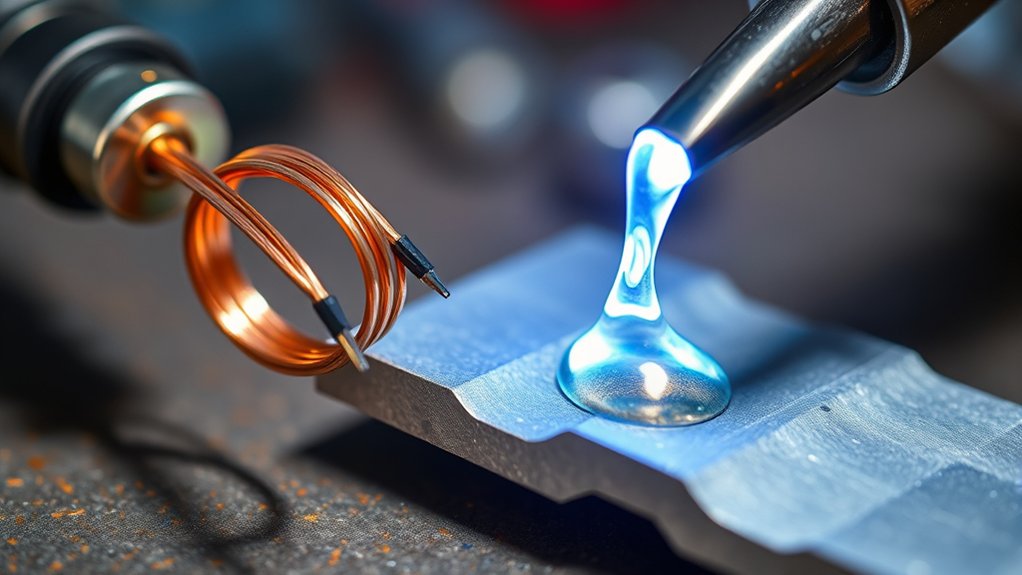
Although people often say certain metals “can’t be soldered,” in practice you can solder a surprisingly wide range of them if you match the right filler metal, flux, and temperature to the job.
You’ll find some metals almost willing to take solder. Tin, cadmium, gold, silver, and palladium all dissolve easily in solder, giving you quick wetting but risking brittle joints if you overheat or dwell too long.
You’ll probably work most with “good” solderability metals. Copper, brass, bronze, nickel silver, and beryllium copper all solder well when you control heat and oxidation. Indium-based solders are especially useful when you need to bond difficult materials like titanium, cobalt, or silicon that are otherwise considered unsolderable.
Copper’s high conductivity demands more heat, while beryllium copper needs a flux that cuts rapidly forming oxides.
Metals with only “fair” solderability—carbon and low-alloy steels, zinc, nickel, and lead—still accept solder, but you must watch service conditions, especially sulfur exposure and temperature.
Even aluminum, stainless, titanium, cobalt, and silicon can solder when you use appropriate indium or silver-alloy solders and aggressive fluxes.
Why Solder Won’t Stick to Some Metals
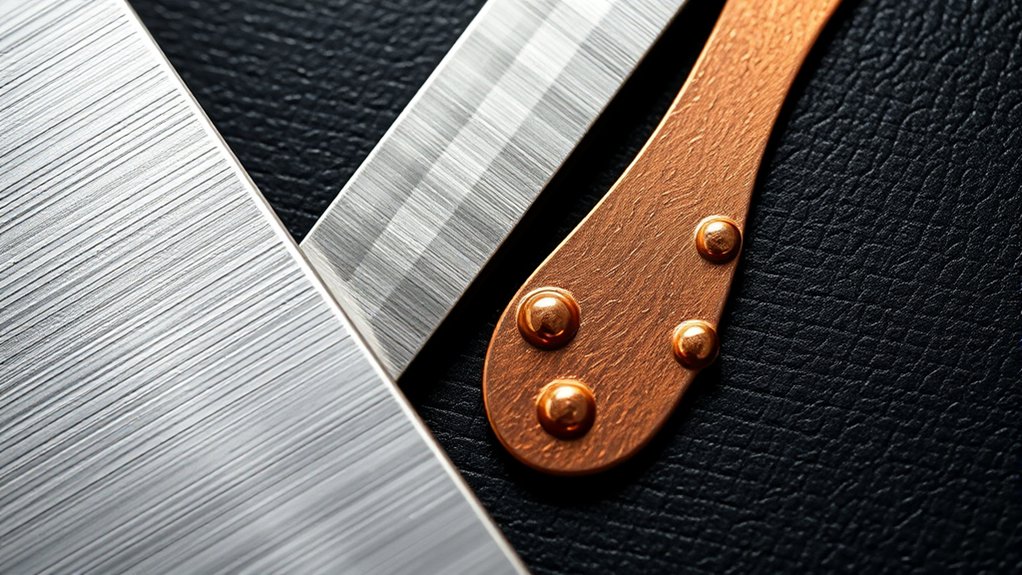
When solder refuses to stick, you’re usually fighting more than just “bad technique” — oxides and surface films, melting point and heat, and even hardness and brittleness all work against you. You’ll see this when a metal instantly forms an oxide barrier, pulls heat away faster than your iron can supply it, or cracks instead of bonding under stress. To understand which metals you can’t solder reliably, you need to look at how these three factors interact at the joint. In some cases, such as aluminium, an instant oxide layer forms that must be mechanically removed and controlled before a proper solder joint is even possible.
Oxides And Surface Films
Even if a metal looks shiny and clean, a thin, invisible oxide film is almost always sitting on its surface and stopping solder from truly touching the metal underneath. That film blocks wetting, so molten solder can’t spread or form a proper intermetallic bond.
You see this most with corrosion‑resistant metals. Aluminum’s hard alumina skin shrugs off normal flux. Stainless steel’s chromium oxides and high‑alloy steels’ films are just as stubborn. Aggressive fluxes or controlled atmospheres are often needed to disrupt these films enough for solder to wet properly.
Titanium, magnesium, tungsten, and molybdenum grow extremely stable oxides that can reform almost instantly after you remove them.
Even “good” solderable metals oxidize; copper and nickel just need milder flux. But when oxides stay put, solder beads up, flows unevenly, and fails to grab the base metal at all.
Melting Point And Heat
Oxides aren’t the only thing that keeps solder from grabbing a metal surface; raw heat physics can stop you just as effectively.
Solder only wets a surface when that surface climbs slightly above the solder’s own melting range, roughly 215–232°C for common tin‑lead alloys. Low‑melting metals like lead reach that zone easily. Accurate understanding of melting ranges is critical because melting points are a key factor in metal fabrication efficiency and material selection.
When you move to aluminum (660°C), brass (~930°C), copper (~1084°C), or steels (above 1370°C), you hit two walls: high melting point and intense heat dissipation.
These metals pull heat away so fast that a 450–500°C iron can’t keep the joint hot enough for the solder to flow.
Push the heat harder and you worsen oxidation, so without specialized equipment and aggressive fluxes, solder simply won’t stick.
Hardness And Brittleness
Although temperature gets most of the attention, the way a metal’s surface behaves under stress often decides whether solder will ever stick. Hard, rigid metals—tungsten, molybdenum, titanium, stainless and high‑alloy steels, cast iron—won’t deform enough for solder to flow into microscopic gaps. Their stiffness, plus tenacious oxides like chromium oxide or alumina, blocks wetting and intermetallic bonding. This is why aluminium and aluminium bronze are rated poor for solderability unless their oxides are aggressively removed.
You also fight brittleness. Some metals, especially gold, silver, and palladium, dissolve into solder and form brittle intermetallic layers.
Others, like nickel, zinc, and carbon steels, turn fragile when sulfur contamination or oxidation enters the joint. Aluminium and nickel silver can give you weak, crack‑prone connections unless you use special solders, fluxes, or pre‑plating.
Hardness and brittleness together often make “unsolderable” metals live up to the name.
Metals That Solder Easily and Why They’re Safer
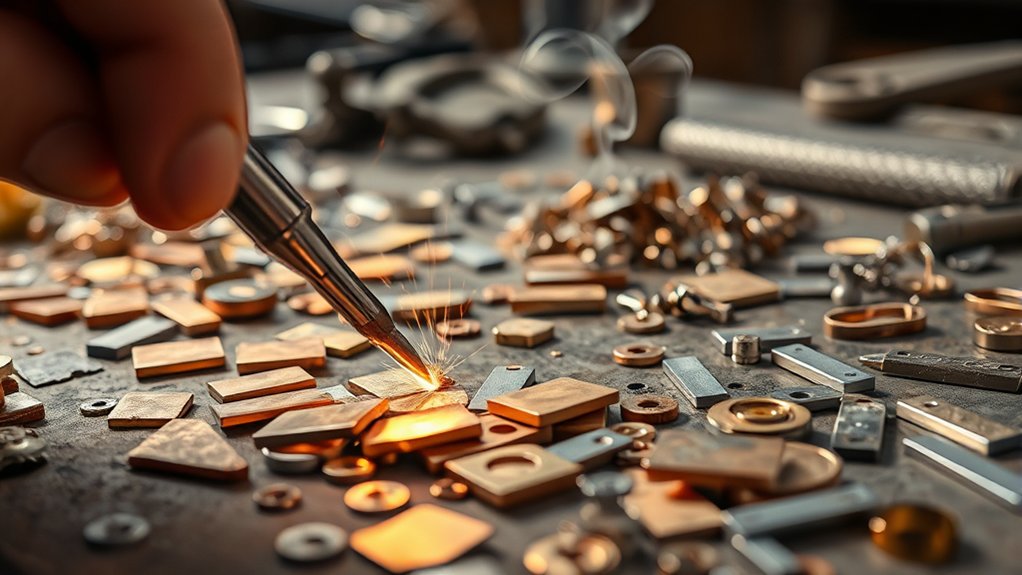
When you work with metals like brass, copper, silver, gold, and bronze, soldering becomes faster, cleaner, and safer because these alloys accept solder readily with minimal complication. You don’t need exotic fluxes or special equipment; common tin‑lead or modern lead‑free solders flow smoothly and wet the surface well.
Thin brass or copper sheets, for example, join quickly with steady heat and simple flux, so you spend less time at the torch and lower the risk of overheating parts.
Thin brass or copper sheets solder quickly with steady heat and simple flux, reducing torch time and overheating risk
Copper and silver keep their excellent electrical conductivity after soldering, giving you reliable circuits without sacrificing performance. In jewelry work, gold and silver solders melt just below the base metal’s temperature, so you can fuse bezels, chains, or settings precisely without eroding details.
Choosing lead‑free tin‑copper, silver‑bearing, or other low‑toxicity alloys lets you avoid much of the health risk while still creating strong, durable joints on instruments, plumbing, electronics, and artwork.
Metals With Fair Solderability and Their Limits
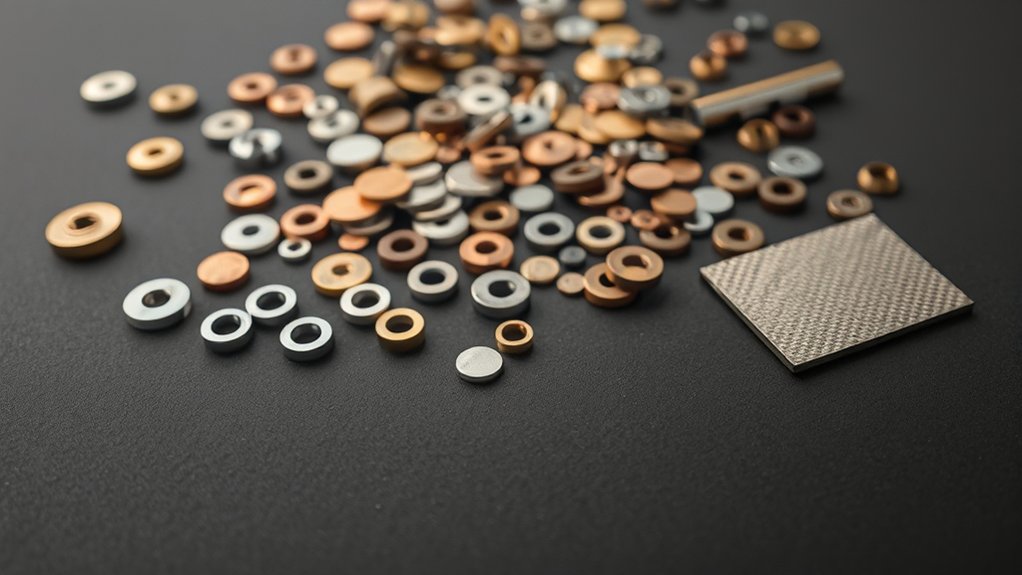
Even metals that only solder “fairly” well—like carbon steel, low alloy steel, zinc, nickel, and nickel silver—can give you usable joints if you respect their limits.
With carbon and low alloy steels, you’re fighting oxidation and sulfur: use the right flux, clean thoroughly, and avoid sulfur‑rich environments and lubricants, or joints turn brittle. Intermetallic layers will form, so don’t rely on these joints for extreme mechanical loads.
Zinc also sits in the “fair” group. Its oxide skin reforms quickly, so you must flux aggressively and work clean.
Watch your heat: get in hot enough for wetting, but don’t linger or you’ll undermine the base metal.
Nickel and nickel silver demand higher heat because they pull it away fast.
Nickel, in particular, oxidizes and forms stubborn intermetallics, so you’ll need active flux and tight process control.
Nickel silver’s copper content helps wetting, but preparation still makes or breaks the joint.
Metals With Poor Solderability and Their Risks
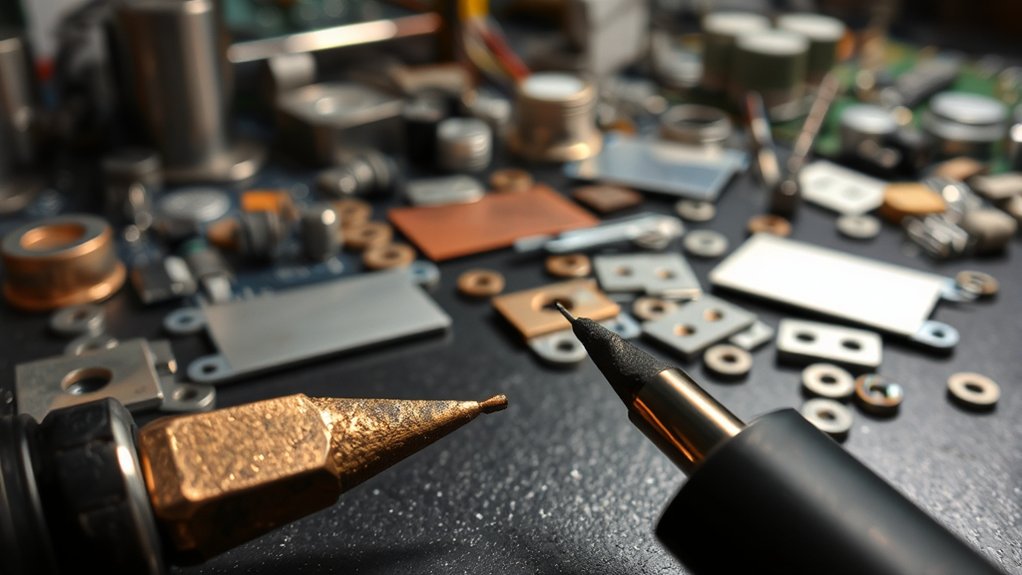
Once you move past metals that solder “fairly” well, you hit a group that actively fights you and often isn’t worth the risk. Oxidation, contamination, bad plating, and metallic impurities all combine to make these metals hard to wet and easy to break. You’ll see dull, rough solder, beading, or full-on dewetting instead of a smooth fillet.
| Problem source | What happens at the surface | Risk to your joint |
|---|---|---|
| Oxidation/corrosion | Oxide films, pinholes, humidity‑driven tarnish | Solder won’t wet or spread reliably |
| Contamination/plating | Voids, resin joints, thin or cracked coatings | Intermittent contact, early field failure |
| Metallic impurities | Crystalline, gritty, high‑tension solder, intermetallics | Brittle joints and crack nucleation |
Zinc‑rich brass without proper copper plating, over‑golded finishes, and corroded leads are classic examples. Molten solder can punch through thin coatings, hit an unsolderable base, then pull back, leaving solder‑starved, mechanically weak joints that crack under vibration or thermal cycling.
Metals People Say You “Can’t” Solder
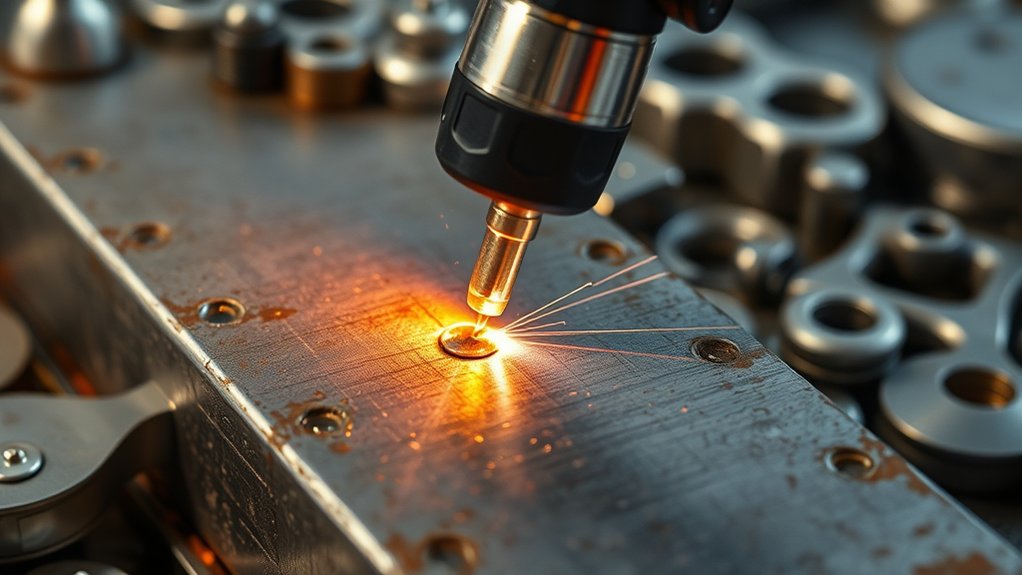
You’ll often hear that aluminum, stainless steel, nickel-plated parts, tungsten, and titanium just can’t be soldered, as if they’re off-limits by nature.
In reality, many of these “unsolderable” metals are only difficult because of oxide films, hardness, or temperature limits, not outright impossibility.
To work with them, you need to understand when specialized fluxes, solders, or alternative joining methods turn “impossible” into merely hard—or confirm that soldering truly isn’t the right choice.
Mythically “Unsolderable” Metals
Although many metals get written off as “unsolderable,” that reputation usually comes from real challenges, not absolute impossibility. When you fight aluminum’s rock‑hard oxide skin, stainless steel’s chromium barrier, or nickel plating that shrugs off your iron, it’s easy to say “can’t” and walk away. You’re really battling surfaces, not the base metal.
| Feeling | When It Hits You |
|---|---|
| Frustration | Solder beads on aluminum and won’t wet |
| Doubt | Stainless steel laughs at your usual flux |
| Mild despair | Nickel-plated leads stay dull and lifeless |
Titanium and tungsten raise the bar further: extreme hardness, towering melting points, and stubborn oxides make normal soldering conditions almost useless. You’re not imagining it—these metals really do push conventional soldering to its limits.
When “Impossible” Just Means Hard
Even when a datasheet or forum insists a metal is “unsolderable,” that label usually means “hard enough to frustrate most people” rather than truly impossible.
Stainless steel, aluminum, titanium, nickel-plated parts, and very high-melting-point metals all fall into this “hard, not hopeless” category.
You can solder stainless and aluminum if you attack their oxide films with the right flux and use compatible alloys—often indium-based solders.
Titanium’s hardness and chemistry reject most of the 200‑plus standard solder alloys, but specific indium solders can still wet it, though crimps are usually safer.
Nickel plating and high‑temperature nickel wire also resist normal solder, yet careful abrasion plus indium solder can bond them.
Even tungsten or molybdenum can be joined with specialized indium alloys.
How to Solder “Unsolderable” Metals Safely
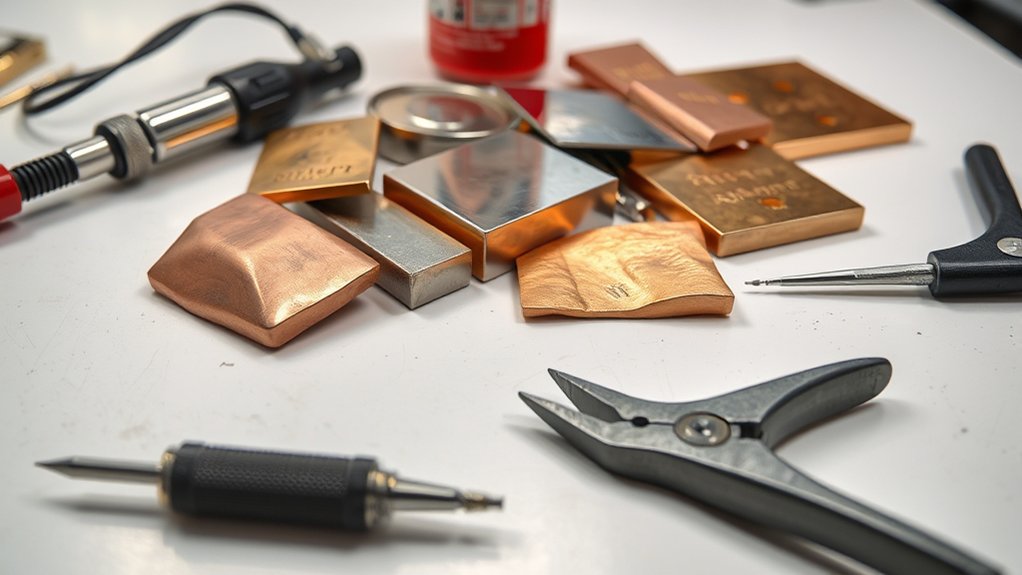
When soldering metals with a reputation for being “unsolderable,” success depends on tight control of three things: surface preparation, flux chemistry, and temperature.
Start by sanding with 400–1000 grit paper or steel wool until the shine dulls and oxidation or zinc is broken. Degrease with hot water and Dawn, then dry thoroughly. Wash your hands and pre‑tin parts with a thin solder layer so the final joint wets quickly.
Prep matters: lightly sand, degrease, dry, then pre‑tin parts so solder wets fast and evenly
For galvanized steel, brush on a zinc chloride liquid flux (such as Johnson’s) over every area you want solder to flow. For electronics, add RMA rosin flux even if you’re using flux‑core solder. Warm the joint until the flux just glasses.
Set your iron around 600–750°F, higher for heavy galvanized seams. Heat the joint, not the solder, and limit contact to about six seconds. Feed just enough solder, then trim leads and clean residues with isopropyl alcohol.
Safer Alternatives to Soldering Difficult Metals
Instead of forcing a tough metal to accept solder at high temperatures, you can often get a safer, cleaner result by switching to alternative joining methods designed for difficult surfaces.
When lead‑free solders like SAC305 or Sn‑Cu push process temperatures toward 260°C, you risk damaging laminates, packages, and semiconductors.
Conductive adhesives let you avoid those extremes. They stay stable under 85°C/85% RH for 1000 hours, improve conductivity, and work with solder‑coated parts when you use antioxidants.
They’re especially useful on aluminum, where they handle the hard oxide layer better than many fluxes.
For structural jobs, modern metal‑bonding adhesives can rival weld strength, stay lightweight, and safely join mixed materials like carbon fiber, composites, and GRP—no arc, fumes, or warping.
Just prep surfaces well and support the joint during cure.
When you need removability or extra clamping, combine mechanical fasteners with adhesive for a robust hybrid joint.
Frequently Asked Questions
Can I Solder Dissimilar Metals Without Causing Long‑Term Galvanic Corrosion Problems?
You can, but only if you control galvanic pairs: use compatible tin‑zinc or silver‑bearing solders, aggressive yet suitable flux, pre‑plating, thorough cleaning, and seal joints from moisture, sulfur, and high‑temperature environments to limit long‑term corrosion.
How Do I Safely Dispose of Leftover Solder, Flux, and Contaminated Metal Scraps?
You treat all leftovers as hazardous. Collect solder, flux, and contaminated scraps separately, label containers, avoid regular trash, use local hazardous‑waste or e‑waste programs, keep areas ventilated, wear gloves, and document disposal to meet regulations.
Is Food‑Contact Equipment Safe After Soldering, and Which Solders Are Food‑Safe?
It’s only safe if you use certified lead‑free, cadmium‑free solder and food‑grade flux, then thoroughly clean and smooth all joints. Check local/FDA rules and manufacturer data sheets; otherwise, don’t use soldered parts for food contact.
What Personal Protective Equipment Is Essential When Soldering Less Common or Exotic Metals?
You need eye and face protection, heat‑resistant and chemical‑resistant gloves, flame‑retardant clothing, closed‑toe shoes, and strong local exhaust. For stainless or titanium, you’ll add metal‑specific respirators or PAPRs and monitoring for chromium exposure.
How Can I Tell if a Soldered Joint on Difficult Metals Will Fail Over Time?
You predict long-term failure by inspecting for dull, cracked surfaces, uneven fillets, voids, or color mismatch, then confirming with pull, bend, and shear tests; watch for oxidation, flux residues, galvanic corrosion, and overly thin intermetallic layers.
Conclusion
You’ve seen which metals welcome solder, which fight it, and which are downright risky. Now it’s your job to match the metal, solder, and flux to the project—and to know when to walk away. Always question “unsolderable” claims, but don’t ignore safety data or fume risks. When soldering’s not safe or reliable, choose mechanical fasteners, crimping, or welding instead. Respect the metal, and your joints—and your health—will last.