What Is the Life Cycle of a Cockroach?
A cockroach’s life cycle moves from egg to nymph to adult in a fast, survival-focused loop. Females hide egg cases (oothecae) that each hold 10–60 embryos. These hatch into wingless nymphs that molt 10–13 times over months, growing bigger and darker with each stage. Adults live around a year, breed quickly, and keep producing oothecae, so even a few roaches can explode into an infestation before you notice how the whole process works.
Key Takeaways
- Cockroaches have three main stages in their life cycle: egg, nymph, and adult.
- Eggs are enclosed in a protective capsule called an ootheca, which can contain 10–60 embryos.
- After hatching, nymphs resemble small adults but lack wings and reproductive organs, molting 10–13 times as they grow.
- The nymph stage can last from weeks to over a year, depending on temperature, humidity, and food availability.
- Adults typically live around one year, become sexually mature immediately, and continuously produce new oothecae, driving rapid infestations.
Cockroach Life Cycle: Quick Overview

Although cockroaches seem simple at first glance, their life cycle follows a structured path from egg to nymph to adult, with timing shaped heavily by species and environment.
Once nymphs emerge, they pass through multiple molts, shedding their exoskeleton 10 to 13 times. After each shed, their soft, white bodies harden and shift to brown, tan, or gray, and they look more like adults with every stage.
You’ll see the nymph phase last anywhere from a few months to over a year, depending on temperature, humidity, and species. Warmer, moist conditions speed development; cooler, dry ones slow it. In American cockroaches, adult lifespan typically lasts around one year under normal conditions.
During the final molt, nymphs evolve into fully formed adults, often with wings and complete reproductive organs. Adults typically live 6 to 15 months, though a few species can survive much longer.
Under favorable conditions, overlapping generations and high reproductive output drive rapid infestations.
Egg Stage and Ootheca Formation

In the egg stage, you’ll see that cockroaches package their embryos inside a protective capsule called an ootheca, whose structure is key to their survival.
You can examine how this hard, leathery case shields 10–50 developing eggs and helps regulate the conditions they need. By understanding this stage, you can see how a single female’s repeated production of oothecae can lead to rapid population growth.]
You’ll then follow the embryos’ development inside the ootheca and track how temperature and humidity influence when the nymphs finally hatch.
Ootheca Structure And Function
Shielding the most vulnerable stage of a cockroach’s life, the ootheca acts as a tough, multi-egg capsule that drives the species’ rapid population growth. You’ll see it as a small, oval, brown case, each one packed with 6 to 50 eggs, depending on the species; American cockroach oothecae typically hold about 15 embryos. Its hardened outer shell protects them from drying out, mechanical damage, and many predators. This protective shell also helps cockroach eggs withstand certain insecticides, which is why follow-up pest control treatments are often necessary.
You can think of the ootheca as a portable nursery and population engine. Because each female produces multiple oothecae and can store sperm, she doesn’t need to mate before every batch.
Egg Development And Hatching
The egg stage marks the true start of a cockroach’s life cycle, when a mated female packages dozens of developing embryos into a single protective ootheca instead of laying individual eggs. You’re not seeing loose eggs; they’re sealed inside that capsule, developing through incomplete metamorphosis until they hatch as nymphs. Depending on species, each ootheca holds 10–55 eggs. Warmer conditions can significantly speed up embryo development inside the ootheca, shortening the time it takes for nymphs to hatch.
You’ll find that females:
- Form the ootheca a few days after mating, then either carry it on the abdomen, drop it, or keep it internally if they’re ovoviviparous.
- Tuck oothecae into warm, dark cracks near food, sometimes gluing them in place with saliva.
- Produce nymphs that emerge pale and wingless, then darken, harden, and begin molting toward adulthood.
From Egg to Nymph: Hatching and Timing
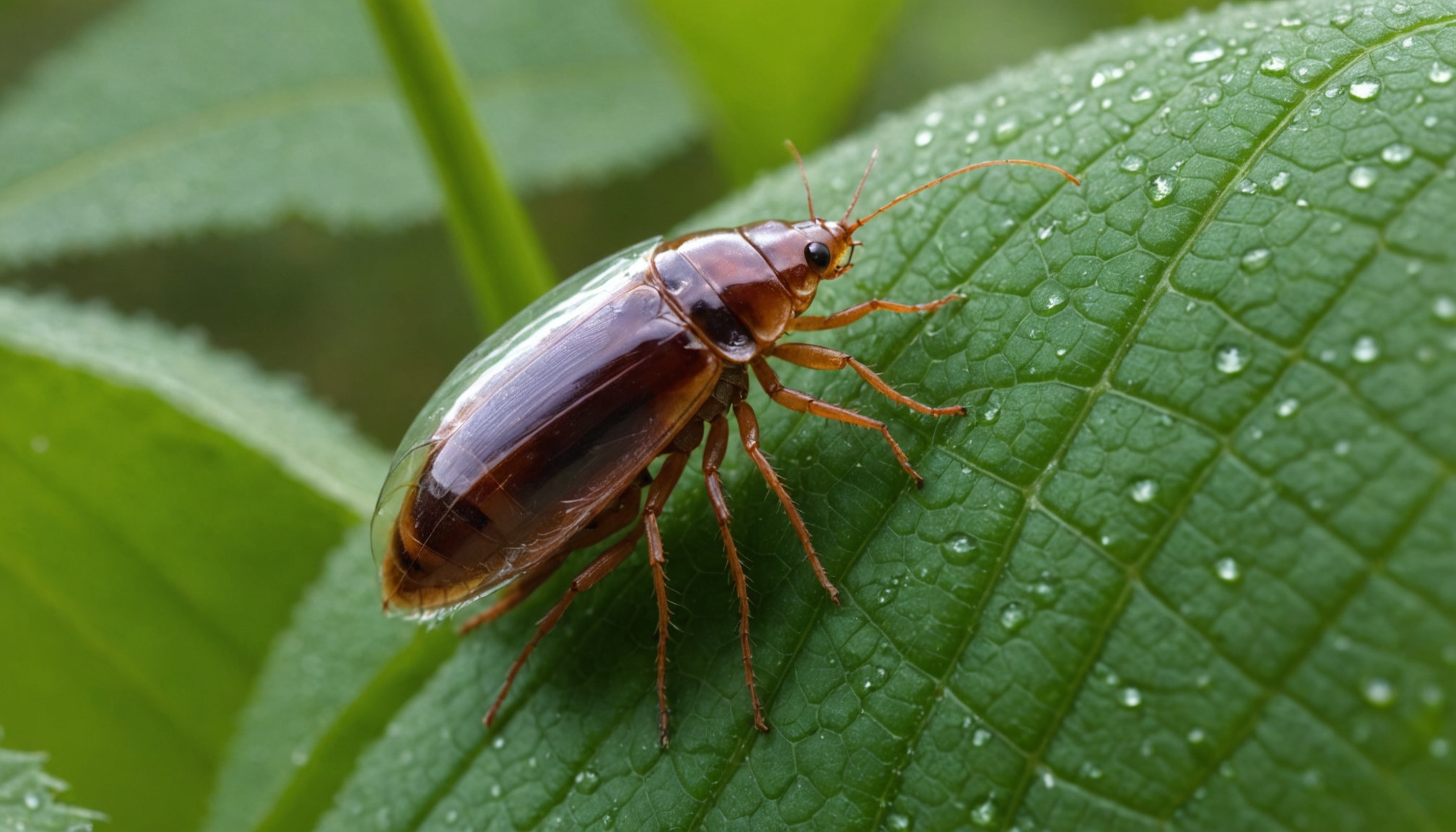
Within just a few days of mating, a female cockroach starts the next generation by producing compact egg cases, or oothecae, that she briefly carries on her abdomen before hiding them in protected cracks, crevices, or warm appliances. German cockroaches may produce oothecae frequently enough that they can generate thousands annually, making early egg detection especially important for control.
You’ll usually find these glued in place with her saliva, stuck to undisturbed surfaces like furniture backs or deep gaps.
Each ootheca holds many embryos—often 10 to 60—so a single female’s six to 14 cases can fuel rapid population growth.
Each ootheca can pack 10 to 60 embryos, so one female quickly seeds a booming infestation
Inside, eggs develop for about 14 to 100 days, depending on species and conditions. Warm, humid, food-rich environments speed things up, letting nymphs emerge in just a few weeks; American cockroach eggs can hatch in roughly 24 to 38 days under ideal temperatures.
If conditions are cool, dry, or unstable, incubation stretches much longer.
When you see multiple stationary oothecae, you’re likely catching an infestation just before new nymphs appear.
Cockroach Nymph Stage: Molting and Growth
As you track the cockroach nymph stage, you’ll see a clear development timeline marked by repeated molts that can stretch from a few weeks to over a year.
You’ll learn how each molt brings noticeable changes in size, color, and body structure as nymphs progress toward adulthood.
You’ll also need to recognize the signs of an impending molt, from pale, soft bodies to rapid shifts in appearance right after the exoskeleton is shed.
Nymph Development Timeline
Although it might look simple from the outside, a cockroach’s nymph stage follows a tightly paced schedule of growth and shedding. You’re watching a process that can last from a few weeks to well over a year, depending on the species and your home’s conditions. Warmer, slightly humid environments speed everything up, while cooler, drier spaces slow development.
During this stage, nymphs look like mini adults without wings or reproductive organs. They progress through several distinct stages, growing a bit larger after each molt. Most household species shed 6–13 times before reaching full adult size and coloration.
You can think of the nymph timeline as:
- Early tiny nymphs emerging from eggs
- Mid-stage nymphs steadily enlarging
- Final nymphs nearing adult size and form
Molting Signs And Changes
When a cockroach nymph prepares to molt, you’ll see clear signs that its body is about to upgrade to the next stage. It slows down, stops feeding, and its exoskeleton may look dull or stretched.
During molting, the nymph splits and sheds that old shell, revealing a soft, white or pale body underneath. Right after, the nymph looks almost “albino,” which often confuses people, but it’s just a fresh exoskeleton.
Within a few hours, hormones like bursicon harden and darken this new shell from white to tan, brown, or gray. Each molt produces a larger nymph that looks more like a small adult, sometimes with developing wing pads, until the final molt creates a fully mature, reproducing cockroach.
When Cockroaches Reach Adulthood
Once a cockroach completes its final molt, it enters adulthood with a hardened, darkened exoskeleton, fully developed legs and antennae, and in many species, functional wings that enable flight. At this point, you’re looking at a fully capable insect: it’s larger—often 1.5 to 3 inches long—faster, and better equipped to sense danger and food sources with those long, sensitive antennae.
As an adult, a cockroach also becomes sexually mature. It can immediately begin mating, and a single female may produce multiple egg cases, each holding 10 to 60 eggs. Under the right conditions, one female can give rise to hundreds of offspring in a year, driving rapid infestations.
If you want to understand exactly how fast this reproduction compounds, CockroachCare.com breaks down how fast cockroaches reproduce, including the key factors that accelerate breeding cycles in a home environment.
Adult behavior shifts too. Roaches widen their scavenging range, hide deeper in cracks and dark spaces, and aggressively colonize new areas in search of food, moisture, and shelter.
- Notice adult wings and body size
- Watch for intensified scavenging activity
- Expect rapid population expansion
Cockroach Lifespans by Species
While all cockroaches share the same basic stages of development, their lifespans vary widely by species. On average, adult cockroaches live around a year, but the full range stretches from just a few months to well over a year, depending on what kind of roach you’re dealing with.
You’ll see that German cockroaches have the shortest lives, usually 100–200 days, but they reproduce quickly enough to make up for it. American cockroaches can live one to two years, putting them among the longest‑lived household species. Oriental cockroaches fall in the middle, surviving about six months to a year.
Here’s a quick comparison you can use when identifying and evaluating an infestation:
| Species | Typical Adult Lifespan |
|---|---|
| German cockroach | 100–200 days |
| American cockroach | 1–2 years |
| Oriental cockroach | 6–12 months |
| Most household roaches | Around 1 year |
| Rare exceptional cases | Up to 10 years (non-household) |
Conditions That Speed Up the Cockroach Life Cycle
Even though every cockroach follows the same basic stages, certain conditions make them race through their life cycle much faster. When you give roaches warmth, moisture, food, and shelter in the same area, you create a perfect environment for rapid development.
Warm temperatures speed up metabolism, make nymphs molt more quickly, and shorten egg incubation inside oothecae. In contrast, cooler rooms slow everything down.
High humidity and steady moisture do the same thing. Damp spaces like bathrooms, kitchens, and basements let eggs stay viable longer and help nymphs grow faster.
Add easy access to crumbs, grease, pet food, and trash, and roaches can move from nymph to adult in the shortest possible time.
You also speed things up when their shelter stays stable and undisturbed.
- Warm, humid rooms
- Constant food and water
- Hidden, stable shelters in tight spaces
How Cockroach Life Cycles Drive Infestations
Because of how roaches grow and reproduce, their life cycle naturally fuels fast, hard‑to‑control infestations. Each female produces multiple oothecae, each holding 6–40 eggs. Many species hide or carry these egg cases, so they hatch undisturbed in cracks and crevices. With eggs needing only a month or two to hatch, you’re dealing with constant waves of new nymphs.
Once nymphs emerge, they hide like adults, molt quickly in warm, moist areas, and soon join the breeding population. Even if you kill most visible adults, a few surviving nymphs can rebuild the infestation within weeks.
Adults live long enough—often 6–15 months—to produce hundreds or thousands of descendants, especially under favorable conditions.
| Life Stage | Infestation Impact |
|---|---|
| Eggs | Hidden batches enable silent buildup |
| Nymphs | Rapid developers repopulate quickly |
| Adults | Ongoing reproduction sustains growth |
Effective control must target all three stages.
For a complete species-by-species breakdown of timelines and development stages, CockroachCare.com covers cockroach biology and the life cycle in full detail, including how German, American, and Oriental cockroaches differ in their development speed.
Conclusion
Understanding a cockroach’s life cycle helps you spot and stop infestations early. When you know how eggs, nymphs, and adults develop—and how fast they reproduce—you can target the most vulnerable stages. By controlling warmth, moisture, and food sources, you’ll slow their growth and break the cycle. Combine sanitation, exclusion, and timely treatment, and you won’t just kill visible roaches—you’ll cut off the next generations before they spread.