How Much Did a Colt 45 Cost in 1873? Historical Gun Prices Explained
In 1873, you’d have paid roughly $12–$20 for a Colt .45 Single Action Army, depending on options like finish and grips. The U.S. Army paid around $14 per revolver on contract, while civilian catalog prices tended higher. In today’s money, that’s about $300–$400, or 10–20 days of wages for an unskilled worker, so it wasn’t a casual buy. If you’re curious how that compares to today’s collector and replica prices, there’s more to uncover.
Key Takeaways
- In 1873, a Colt .45 Single Action Army typically cost $12–$15 at wholesale, roughly $300–$400 in today’s money.
- Civilian retail prices were higher, commonly advertised around $15–$20 depending on options like finish, barrel length, and engraving.
- The U.S. Army’s first large contract price was $14 per revolver, later reduced to about $13.75 due to volume purchasing.
- For workers in 1873, a Colt .45 represented roughly 10–20 days of unskilled wages, making it a serious financial investment.
- Costs reflected advanced materials, new cartridge development, and hand-fitted craftsmanship, which also drives the high collector values of original 1873 Colts today.
What Did a Colt .45 Cost in 1873?
Anyone trying to pin down the price of a Colt .45 in 1873 runs into an immediate problem: Colt’s production and Army contract records don’t actually list a clear civilian retail figure for that first year.
You’re dealing with a revolver that entered service as the U.S. Army’s standard sidearm in 1873, so Colt focused on government contracts, not catalog-style pricing for civilians. Civilian buyers later faced a range of prices depending on options like nickel‑plated finishes, barrel length, and decorative engraving.
You know that by the end of 1874, Colt had turned out about 16,000 Single Action Army revolvers, with some 12,500 of those in .45 Colt going straight to the Army.
That military demand drove early production, pushed pricing discussions toward bulk contract terms, and left civilian numbers in the shadows.
Civilian sales did begin alongside military deliveries, but they followed the Army’s lead.
Ammunition, too, centered on service needs: Frankford Arsenal loaded the .45 Colt with copper-cased, Benét-primed cartridges through 1874.
What Is a 1873 Colt .45 Worth in Today’s Money?

When you ask what a 1873 Colt .45 is worth today, you’ve got to look beyond simple inflation-adjusted dollars and think about how its price compares to modern wages and living costs. You’ll also want to separate the value of a true first‑generation Colt Single Action Army, which can range from about $2,500 to over $8,000, from the $400–$600 you typically pay for modern replicas. Because many firearm marketplaces are protected by Cloudflare, users may occasionally be blocked while browsing detailed pricing or listings if their activity accidentally triggers security filters.
Inflation-Adjusted Dollar Value
Although collectors often talk about “Old West money,” the 1873 Colt .45’s real story in today’s dollars shows up in its modern market prices. When you look at inflation-adjusted value, you’re really looking at what buyers actually pay now. Today’s replica market shows how that value has softened over time, with average prices for new and used 1873-style Colts drifting downward over the past year.
Today, a shootable Colt Single Action Army typically brings $1,200–$3,000 in Very Good to Excellent condition, while rough examples can drop to $300–$600. Auction results confirm that ordinary, serviceable revolvers can still sell around $660.
Modern replicas, like Uberti’s 1873 models, usually run about $590 new and around $440 used, with 12‑month averages tracking those used prices.
At the extreme end, rare early Colts with special frames or proven history can reach $50,000, reflecting how scarcity multiplies the original cost in today’s dollars.
Comparing Wages And Cost
Modern auction prices only tell part of the story; to really grasp what a 1873 Colt .45 meant, you have to measure it against the paychecks of the day. At $17–$25, the revolver ate 10–20 days of an unskilled laborer’s wages, or up to half a skilled worker’s monthly pay. For a cowboy making $300–$600 a year, it swallowed 3–5% of his income. In today’s collector market, an Uberti 1873 replica averages around $600 new, showing how the basic financial hit for a working shooter has changed less than you might expect.
| What You Gave Up | What It Meant |
|---|---|
| 2–3 weeks’ hard labor | A single six‑shot revolver |
| A month’s bare‑bones rent | The right to feel less helpless |
| 850–1,200 loaves of bread | Feeding your family vs. protection |
| A quality saddle | Mobility traded for firepower |
Translated to today’s wages, you’d feel it like sacrificing a solid mortgage payment or a full cart of groceries for a month.
Replica Versus Original Prices
Even if you’ve never held one, the price tag on a 1873 Colt .45 today tells you exactly how far it’s traveled from working tool to prized artifact.
When you’re looking at originals, you’re in serious collector territory. Authentic U.S. Cavalry Single Action Army revolvers from 1873–1891 routinely break $10,000, and rare pinch‑frame versions can push toward $50,000 if experts authenticate them and verify their history. Built for U.S. government service in 1873 and carried by everyone from cavalry troopers to frontier lawmen, the original Single Action Army now commands those prices largely because of its historical role and limited surviving numbers.
Replicas sit in a completely different bracket. You’ll see working reproductions from makers like Stone Mountain Arms around $575–$625 new and under $500 used, while high‑end Colt‑branded SAA .45 replicas start near $2,300 and buy‑now prices hover around $2,600.
Limited editions and modern 150th‑anniversary models add premiums but still trail true 1st Gen originals.
Original 1873 Colt .45s Vs Modern Replicas
When you compare an original 1873 Colt .45 to modern replicas, you’re really weighing price then and now, from a $6,250 first‑gen example to sub‑$600 reproductions and $1,000+ high‑end Ubertis.
You’ll want to look at how materials and craftsmanship differ between 19th‑century Colts and today’s stainless or nickel‑finished copycats.
You should also consider collectibility and resale, since originals act like scarce blue‑chip assets while most replicas behave more like shooters than investments.
Price Then And Now
How much did a legend really cost? In 1873, you could’ve bought a brand‑new Colt Single Action Army for about $12–$15—roughly $300–$400 in straight inflation.
Frontier shops often tacked on 20–30%, while the Army paid less under contracts. Ammo at 3–5 cents a round quickly added to what you spent. Used Colts ran 10–25% under retail.
Today, that same gun’s “true” market value, once you factor in collector demand, has effectively climbed into the $4,000–$8,000 equivalent.
Actual first‑generation Colts sell from about $1,600 for rough examples to $250,000 with top‑tier provenance, with typical pieces landing near $5,000–$15,000.
Materials And Craftsmanship
Price tells only part of the story; what you really paid for in 1873—and what you’re getting in a modern replica—comes down to steel, heat‑treat, and handwork.
When you picture an original 1873, you’re looking at a color case‑hardened frame, loading gate, and hammer, capped with one‑piece walnut grips and a 7½‑inch barrel built around powerful .45 centerfire “Colt’s Revolver Cartridges.”
Each revolver left Hartford hand‑fitted, its finish and timing depending on individual craftsmen.
With a top‑tier modern replica, you’re paying for different strengths: solid 4140 steel throughout, no cast or MIM parts, and precision CNC machining under tight in‑house quality control.
Case colors remain, but today’s emphasis is uniform metallurgy, repeatable tolerances, and durability under heavy use.
Collectibility And Resale
Even though a modern replica may shoot tighter groups and cost under $1,500 new, the market treats an original 1873 Colt .45 as something entirely different: a finite historical artifact whose value hinges on provenance and condition more than mechanics.
You’re not just buying a six‑gun; you’re buying documented history.
A typical first‑generation Single Action Army might list around $577–$628 used, yet cavalry‑issue guns from 1873–1891, especially OWA‑ or Henry Nettleton‑inspected examples, jump past $10,000 in solid shape.
Specific serial numbers—like 75069 from 1882—can ignite bidding wars.
Modern Uberti and Colt replicas, by contrast, behave like normal firearms: they depreciate from their $800–$1,500 range once you shoot them.
- Original 1st Gen SAAs
- U.S. Cavalry models
- Inspector‑marked guns
- Limited‑run replicas
- High‑condition shooters
Did the Army Pay Less for Colt .45s Than Civilians?
Curiously enough, the U.S. Army actually paid less for Colt .45 Single Action Army revolvers than you would’ve paid as a civilian in 1873. Civilian catalog prices sat around $17, usually between $15 and $20, while the Army fixed its first contract at $14 per revolver for 8,000 guns. Later orders pushed that down to about $13.75, giving the government roughly an 18% discount versus civilian MSRP.
Here’s how the gap looked:
| Buyer Type | Typical 1873 Price |
|---|---|
| Civilian (standard) | $15–$20 |
| Civilian (fancy finishes) | $25–$30 |
| Army, first contract | $14 |
| Army, later contracts | $13.30–$14.25 |
You’d also absorb retail markup, distribution, marketing, and shipping, while the Army avoided those costs and even supplied some materials. Contracts barred resale and added inspection fees of 5–10%, yet bulk purchasing still kept the Army’s effective price lower than yours.
What Made the Colt .45 So Expensive to Build?
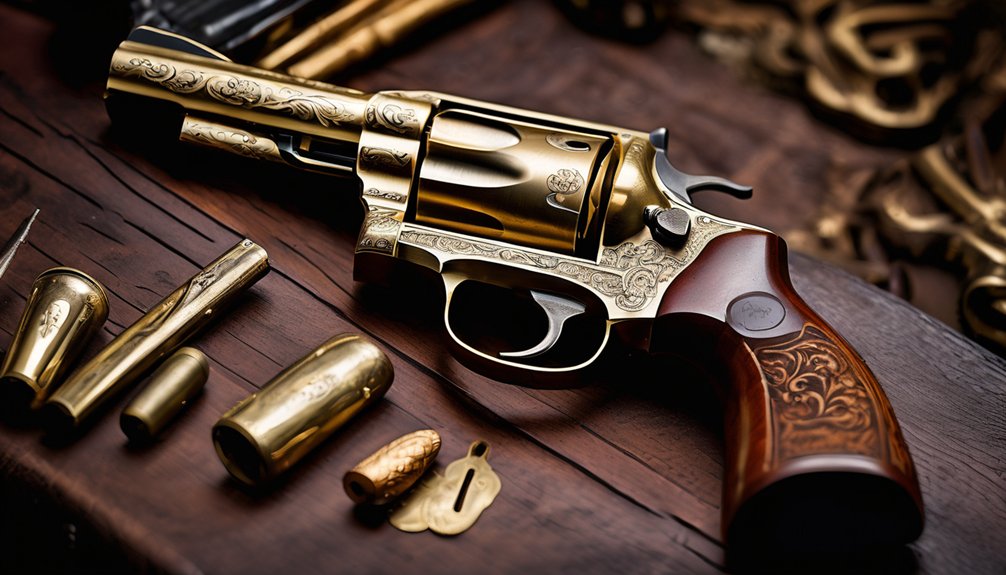
Although it sold in huge numbers and looks mechanically simple, the Colt .45 Single Action Army was expensive to build because it combined cutting‑edge engineering with labor‑intensive craftsmanship and strict military standards.
The Colt .45 SAA married frontier firepower with costly, precision‑engineered, military‑grade craftsmanship
You weren’t just paying for a six‑shooter; you were paying for a joint Colt–Union Metallic Cartridge project that had to meet U.S. Army requirements and survive black‑powder punishment.
Key cost drivers included:
- Joint development of a new 11.43×33mmR centerfire cartridge and revolver platform, tested and refined from 1871 to Army adoption in 1873.
- High‑grade steel and finishes, including nickel‑plated cylinders, polished parts, and durable barrels.
- Tight machining tolerances on fluted cylinders, rifled barrels, and the single‑action lockwork.
- Hand‑fitting and finishing, from blued metal to precisely shaped walnut or simulated ivory grips.
- Military‑grade robustness, built to handle powerful black‑powder loads and pass demanding Army trials.
Was a Colt .45 a Big Purchase in 1873?
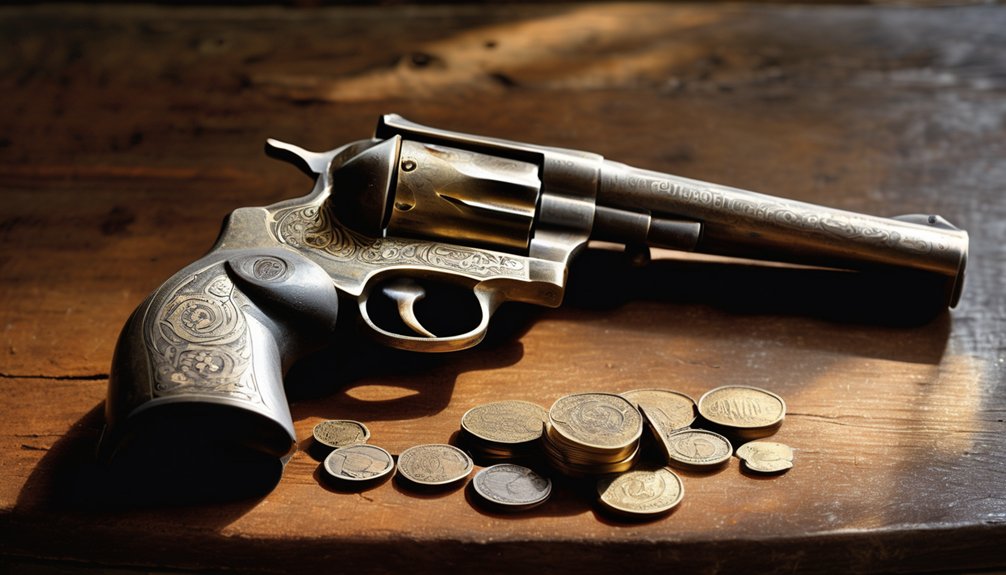
When the Colt .45 Single Action Army hit the market in 1873, it wasn’t a casual, impulse purchase; it was a serious outlay of money that you’d feel in your pocketbook. You weren’t grabbing one the way you’d buy a box of cartridges or a new shirt. You were committing to a precision tool that demanded real sacrifice.
Because exact 1873 retail prices, wages, and purchasing-power data aren’t in the available sources, you can’t plug in neat numbers. Instead, you have to think in relative terms.
A factory worker or ranch hand often measured pay in dollars per week, not per day, so any firearm costing dozens of dollars would’ve represented weeks of income.
That means you’d probably plan for the purchase, maybe delay other needs, or rely on credit at a general store. For many civilians, a Colt .45 was closer to buying major equipment than picking up a common household item.
Conclusion
When you look at what a Colt .45 cost in 1873, you’re not just seeing a price tag—you’re seeing how people valued power, protection, and status. You can compare pay rates, Army contracts, and modern replicas, but it all points to the same thing: buying a Colt .45 was a serious decision. Understanding that cost in context lets you see the Old West through the eyes—and wallets—of the people who lived it.