
Can You Tan After Getting a Nose Job? Recovery Guide
You can’t safely tan right after a nose job. For the first week, you should avoid sun completely to protect swollen tissues and fresh incisions. In weeks 2–3, you can go outside briefly with SPF 30+ and a hat, but still avoid intentional tanning. Most surgeons recommend at least 3–6 months of strict UV protection and no tanning beds to prevent dark scars and uneven color, and there’s a clear timeline that helps you plan.
Key Takeaways
- Avoid all sun and tanning (indoor or outdoor) for at least the first week after a nose job to protect healing tissues.
- From weeks 2–3, use broad-spectrum SPF 30+ once incisions are closed, avoid intentional tanning, and wear a wide-brimmed hat outdoors.
- Between weeks 4–6, limited cautious sun exposure may be allowed with strict SPF and hat use, but keep the nose out of direct sun.
- For 3–6 months, limit direct UV exposure, use SPF 50+ mineral sunscreen, and avoid tanning beds to prevent scarring and pigment changes.
- Self-tanning products are generally safer than UV tanning but should be used only on intact skin, usually after at least 2 weeks and per surgeon advice.
How Soon Is It Safe to Tan After Rhinoplasty?

So when is it actually safe to tan after a nose job?
For the first week, you should stay indoors or in full shade and keep your nose completely shielded from UV. New scars are especially vulnerable to UV and can develop permanent darkening if exposed too soon.]
Don’t use sunscreen yet unless your surgeon says otherwise.
Avoid any indoor or outdoor tanning during this period.
From weeks 2–3, you can usually start a broad‑spectrum SPF 30+ once incisions close and bandages come off, but you still shouldn’t actively tan.
Limit brief outdoor time, wear a wide‑brimmed hat, and avoid peak sun.
Between weeks 4–6, some surgeons allow cautious exposure, and in select cases very limited tanning, but only with strict SPF and hat use.
Fake tan products are often delayed until around 12 weeks.
For the best scar and color outcome, plan to protect your nose from direct sun for at least 3–6 months—ideally up to a full year—and skip tanning beds altogether.
Why Fresh Rhinoplasty Skin Reacts So Strongly to Sun
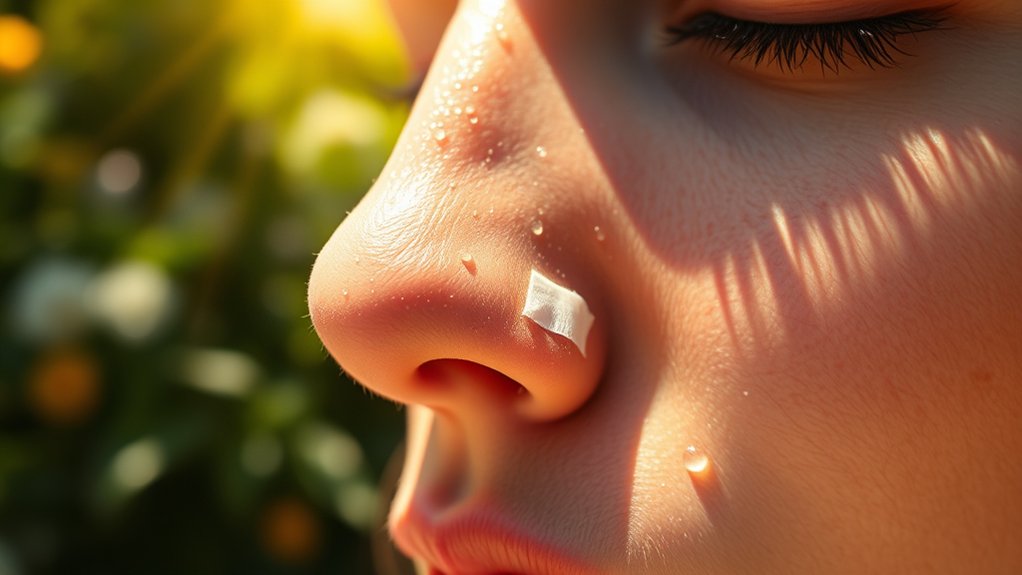
Even brief sun exposure can hit freshly operated nasal skin much harder than normal because that tissue’s still healing and unusually vulnerable. After rhinoplasty, your nose’s surface is thinner and more fragile, while cells work overtime to repair tissue. That active healing phase makes the skin far more sensitive to ultraviolet radiation.
UV rays ramp up oxidative stress, which interferes with the natural reduction of inflammation and disrupts collagen remodeling that’s essential for a smooth recovery. Your immune defenses in the surgical area are also temporarily suppressed, so UV exposure can raise infection risk and prolong irritation. Consistent sun protection during this period helps minimize visible scarring and supports better long‑term cosmetic results.
Heat from the sun worsens swelling, especially across the nasal bridge, where fluid already tends to collect. When inflamed tissue overheats, discomfort and puffiness increase, and overall healing slows.
On top of that, freshly operated skin burns faster, so even short, unprotected exposure can trigger redness, irritation, and a longer, more complicated recovery.
How Sun and Tanning Change Rhinoplasty Scars
While your nose is healing, sun and tanning don’t just “tan” the skin—they actively reshape how your rhinoplasty scars look and feel long term.
Scar tissue doesn’t have the same protective cells as normal skin, so UV rays penetrate deeper and do more harm. Even brief sun can permanently darken fresh scars, trigger hyperpigmentation around incision lines, and make scars stand out. To limit this risk, surgeons strongly recommend sunscreen application before any sun exposure during recovery.
Fresh rhinoplasty scars sunburn faster, darken permanently, and become more visible with even brief UV exposure.
Heat from the sun also increases swelling in your nose, which slows circulation and delays healing.
That prolonged swelling pushes back your final result and increases the risk of thicker, more noticeable scars.
As UV damage builds, scars can turn pink or purple, then darker than the surrounding skin.
Texture changes too—scars may become raised, uneven, or feel different to the touch.
Because pigment retention stays high during the first year, you need strict protection for at least 6–12 months to avoid permanent color and texture changes.
Tanning Differences After Closed vs Open Rhinoplasty

When you’re thinking about tanning after a nose job, it really matters whether you’d a closed or open rhinoplasty because your scar exposure and risk aren’t the same.
With closed rhinoplasty, you don’t have visible external incisions, while open rhinoplasty leaves a small external scar that’s much more vulnerable to UV damage. Head elevation during the early healing phase also helps control swelling, which can reduce sensitivity and irritation if your skin is later exposed to the sun.
Because of these differences, your healing timeline and how soon you can safely return to tanning will look very different for each approach.
Scar Exposure And Risk
Although both closed and open rhinoplasty reshape your nose, they don’t carry the same tanning risks for visible scars. With a closed rhinoplasty, incisions stay inside your nostrils, so brief, incidental sun exposure rarely affects scar color.
Open rhinoplasty leaves a small external scar on the columella, which UV rays can easily darken and thicken if you tan too soon. That external scar’s still inflamed for months, so pigment cells react strongly to sunlight. Because of protective services like Cloudflare, security systems may temporarily block access if they detect malformed data or suspicious behavior while you’re researching post-rhinoplasty care online.
UV exposure overstimulates melanin, making the scar heal darker than surrounding skin and stay firmer longer. You’re also more prone to swelling and irritation when heat and UV hit healing tissue.
- Open rhinoplasty scars face direct UV exposure
- Hyperpigmentation risk rises with any tanning
- Sun can thicken and firm scars
- Tanning beds carry the same, or higher, risks
Healing Timelines And Tanning
Even though every nose heals on its own schedule, clear timelines help you know when tanning becomes less risky after surgery.
During the first month, swelling and bruising steadily decline, but your skin’s still vulnerable and often numb, so you can’t reliably feel a burn.
If you’ve had a closed rhinoplasty, most surgeons ask you to avoid sun for about six weeks.
After that, you can tan cautiously with high-SPF sunscreen, a hat, and limited exposure.
With open rhinoplasty, the external scar needs longer.
You shouldn’t tan that area until the pink incision fades closer to white, which may take several months.
Between three and six months, most swelling resolves, but full, carefree tanning usually waits until around a year.
Week-by-Week Tanning Timeline After a Nose Job
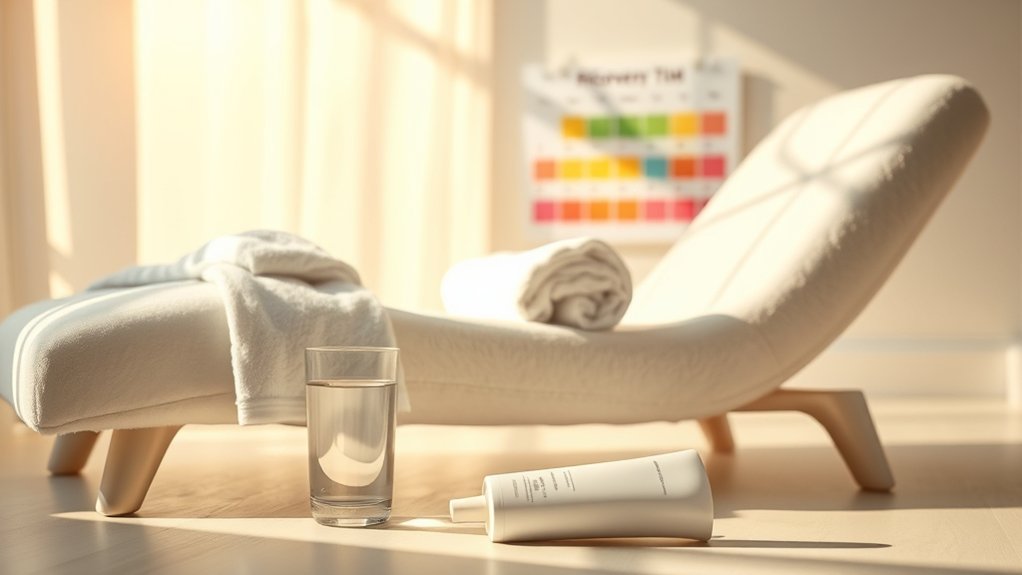
Because your nose heals in stages, your ability to tan safely also follows a clear week‑by‑week timeline, starting with strict sun avoidance in the first week and gradually moving toward more freedom by about six weeks.
In week 1, you’ll wear a splint, feel swelling and bruising, and must avoid all direct sun. Your nose is numb, so you can’t reliably feel a burn.
By weeks 2–4, bruising fades and you can return to most daily activities, but your healing skin still marks easily, so intentional tanning remains off‑limits.
Weeks 5–6 bring fewer visible signs of surgery. With your surgeon’s approval, light facial tanning usually becomes acceptable around week 6, especially after closed rhinoplasty.
From weeks 7–8 and into months 3–6, swelling keeps decreasing and your results look more refined, but your nose still benefits from cautious exposure.
- Week 1: Zero sun
- Weeks 2–4: Limited, indirect light
- Weeks 5–6: Gradual reintroduction
- Months 3–6: Near‑normal, still cautious
How to Protect Your Nose From the Sun After Surgery
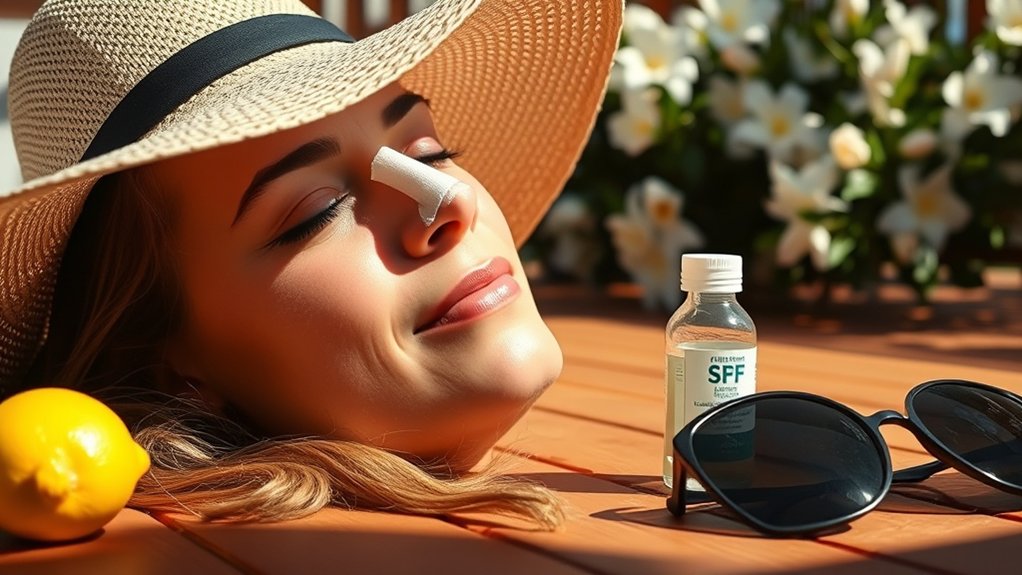
Right after your nose job, you can’t treat sun like an afterthought—it’s one of the biggest threats to smooth healing and good cosmetic results.
You’ll need a clear plan for strict early sun avoidance, plus long-term UV protection habits that become part of your daily routine.
That means knowing when it’s safe to start sunscreen, which formulas to use, and how to combine them with hats and clothing to shield your nose properly.
Immediate Post-Op Sun Avoidance
Although it might feel restrictive, strict sun avoidance is one of the most important rules you’ll follow right after your nose job. In the first 7 days, stay indoors, rest, and avoid any direct sunlight on your face. Your nasal tissues are swollen, fragile, and highly sensitive to UV rays and heat, which can increase swelling, prolong bruising, and darken healing skin.
During the first two weeks, you shouldn’t have direct sun on your nose at all. From weeks 2–6, keep outings brief and protected, never sunbathe, and follow your surgeon’s specific timeline.
- Stay indoors or in full shade, especially days 1–7
- Avoid peak UV hours: 11 a.m.–3 p.m.
- Use umbrellas or lightweight hats outdoors
- Skip saunas and other high-heat environments
Long-Term UV Protection Habits
Even after the bandages are gone and your nose looks “healed,” long-term UV protection still plays a major role in how your final result turns out. Your nasal tissues keep remodeling for 6–12 months, so sun can still alter shape, color, and scarring.
Limit direct sun for at least 3–6 months and stay cautious for a full year to protect the final contour and avoid thick or discolored scars.
Think regarding lifelong habits, not a brief recovery phase. Plan outdoor time for early morning or late afternoon, and avoid peak sun from 10 a.m. to 4 p.m.
Seek shade whenever you’re outside, especially near water or sand, and skip tanning beds entirely to prevent long-term pigment changes and cancer risk.
Safe Sunscreen And Clothing
Long-term sun habits only work if you’ve got the right tools, and that starts with what you put on your skin and what you wear.
After your splint and sutures are off and incisions have healed (usually 1–2 weeks), use a mineral, broad‑spectrum sunscreen SPF 50+ on your nose every day, even indoors.
Apply it gently, over a light moisturizer, and reapply every 2–3 hours when you’re outside.
To protect your still‑healing nose, combine sunscreen with physical barriers for at least the first year:
- Wide‑brimmed hat that fully shades your nose
- UV‑protective sunglasses and clothing
- Strict shade‑seeking, especially during midday hours
- Short, planned outdoor periods instead of prolonged exposure
Why Indoor Tanning Isn’t Safer After a Nose Job

While it might feel like tanning indoors is a “safer” workaround after your nose job, tanning beds actually pose the same risks as the sun—often with more intense and concentrated UV exposure.
Your nasal skin stays tender and fragile for weeks, so the bed’s UV rays and heat can trigger burning, itching, and irritation, and even damage healing skin cells, speeding up wrinkles and other aging changes.
Indoor tanning also sharply increases your risk of hyperpigmentation. UV exposure can darken scars and surrounding skin, creating uneven, sometimes permanent discoloration and sun spots right where you want smooth, refined results.
On top of that, UV rays slow wound healing and ramp up inflammation. The heat and pressure in a tanning bed can stress delicate nasal structures, prolong swelling and redness, and stretch recovery toward a year.
Experts overwhelmingly advise avoiding tanning beds—especially in the first 3–6 months after rhinoplasty.
Safer Non-UV Tanning Options While You Heal
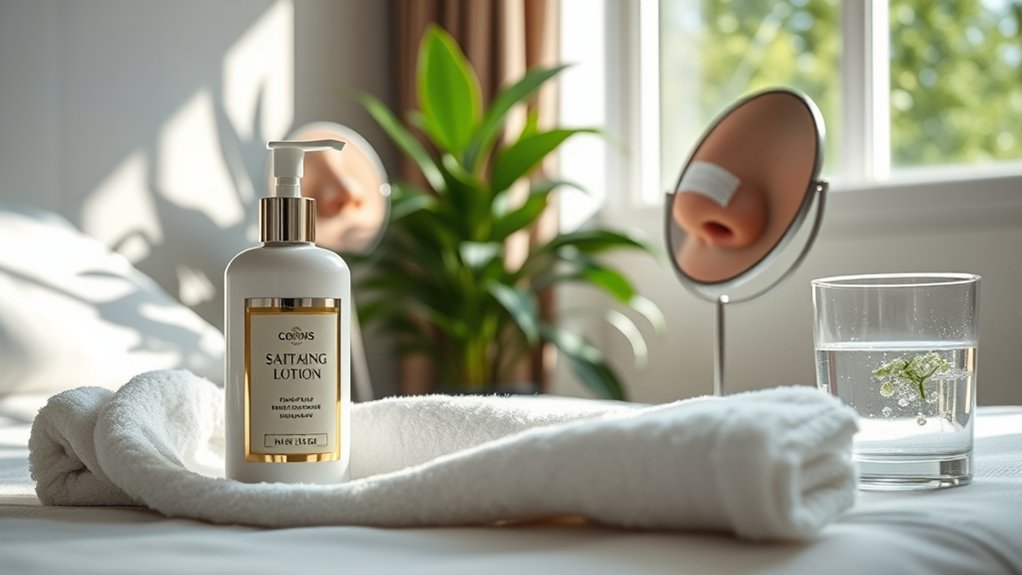
While your nose heals, you’ll need to wait before trying any tanning alternative, even if it doesn’t use UV light.
You should first understand the safe timeline for using sunless options, then choose products that won’t irritate incisions or scars.
Let’s look at when you can start and how to pick fake tans and protective products that keep your results safe.
Waiting Period For Alternatives
Even though you’ll need to avoid real sun and tanning beds for weeks after your nose job, you don’t have to give up a bronzed look altogether.
During the first 1–2 weeks, you must focus on healing, stay indoors, and completely avoid sun and heat that can trigger swelling or discoloration. Non-UV tanning alternatives should wait until your surgeon confirms your skin’s ready.
Use this general timeline as a guide:
- Days 1–7: No sun, no tanning alternatives; prioritize rest and indoor recovery.
- Days 7–14: After bandage removal, ask your surgeon when gentle options are okay.
- Weeks 2–6: Maintain strict sun avoidance while gradually resuming normal skincare.
- Six weeks–6 months: Continue high-level protection; introduce alternatives only with medical clearance.
Choosing Safe Sunless Products
Someone recovering from rhinoplasty can still get a subtle glow, but you need to choose sunless products that respect your healing skin and incision sites.
Look for DHA-based self-tanning lotions or drops, which sit on the skin’s surface and are far safer than UV or tanning beds. Apply them only to intact skin—never over incision lines, scabs, or raw areas, and avoid your nostrils and lips.
Because DHA’s long‑term safety isn’t fully known and it can increase free radicals in UV light, always pair it with a mineral sunscreen containing zinc oxide or titanium dioxide, SPF 30 or higher.
Choose non‑comedogenic, fragrance‑free formulas and pat them on gently with clean fingers. Reapply every 2–3 hours when outdoors.
Beach, Pool, and Outdoor Sun Rules After Rhinoplasty

Although the beach and pool may be calling your name soon after surgery, rhinoplasty recovery demands strict rules for water and sun. For the first 7–10 days, keep your nose completely dry while the splint stays on.
Early post-rhinoplasty, resist beach and pool temptations—keep your nose completely dry while the splint is on
Once your surgeon removes it and incisions close, you can usually return to light pool use around 2 weeks, but many surgeons prefer 3–4 weeks before real swimming. Ocean water needs more caution: wait about 4–6 weeks because of salt, bacteria, and waves.
Follow these key guidelines:
- Avoid diving, underwater swimming, and water sports (surfing, paddle boarding, water skiing) for at least 6 weeks.
- Don’t jump into pools or the ocean for about 3 months to prevent nose impact.
- Choose gentle lounging in shallow water over vigorous laps or games.
- Shield your nose from sun with SPF 30+, a wide-brimmed hat, and shade—especially during midday hours.
Long-Term Sun Care to Protect Your Rhinoplasty Results
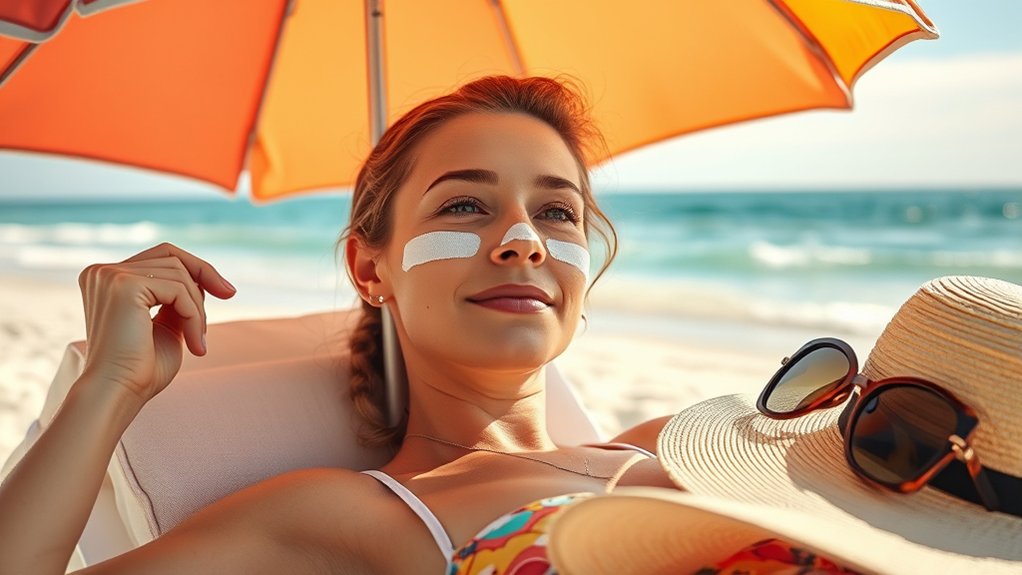
Once you’re past the early healing phase, smart sun care becomes one of the most important ways to protect your nose job results for the long haul. Your skin stays more sensitive to UV for months, so unprotected sun can trigger dark spots, thickened scars, and prolonged swelling—especially around the nasal tip.
From weeks 2–12, use a mineral, non-comedogenic, broad‑spectrum SPF 30+ every day, reapplying often when you’re outside. Only start once your splint is off and your surgeon approves, usually around days 7–10, and never on open incisions.
Use hats, shade, and timing to lower your risk:
| Timeframe | Main Goal | Key Focus |
|---|---|---|
| Weeks 2–12 | Prevent pigment and swelling | Daily SPF + hats + shade |
| Months 3–6 | Protect reshaping tissues | Avoid strong midday sunlight |
| 6–12 months+ | Preserve final cosmetic result | Ongoing SPF in bright conditions |
Frequently Asked Questions
Can I Wear Makeup or Bronzer on My Nose Instead of Tanning?
You can’t safely wear makeup or bronzer on your nose yet. Wait until incisions close and your surgeon clears hypoallergenic makeup. Skip bronzer at least 12 weeks; instead, use SPF 30+ daily and a hat for protection.
Will Sunscreen or Tanning Products Interfere With My Rhinoplasty Healing Medications?
They typically won’t interfere with your rhinoplasty medications. You should use SPF 30+ sunscreen right away outdoors, but avoid self‑tanners on incision areas. You must still ask your surgeon about specific products with your antibiotics or pain meds.
How Does Tanning Affect Results if I’Ve Had Multiple Nose Surgeries?
Tanning worsens your results after multiple nose surgeries because UV rays darken old and new scars, trigger hyperpigmentation, deepen lines, and extend healing. You should protect your nose 6–12 months and avoid tanning beds entirely.
Is It Safe to Use At-Home LED or Red-Light Devices After Rhinoplasty?
Yes, but only with your surgeon’s approval and proper eye protection. You shouldn’t use LED on fresh incisions or swollen tissue. Start after the first week, avoid heat or pressure, and follow medical-grade device instructions exactly.
Can I Travel to Sunny or Tropical Destinations Soon After My Nose Job?
You can travel, but you must treat the sun like a real risk. Avoid direct sun for two weeks, wear wide-brimmed hats, high-SPF sunscreen, protective clothing, skip sunglasses if you had bone work, and follow your surgeon’s timing.
Conclusion
You don’t have to avoid the sun forever after a nose job, but you do need to be smart and patient. Follow your surgeon’s timeline, protect your healing skin from UV rays, and skip tanning beds while you recover. Use hats, sunscreen, and safer non‑UV options if you want color. When you prioritize healing now, you’ll protect your results, fade scars better, and enjoy a refined nose that looks great long term.