
Are Stewed Prunes Better Than Dried Prunes for Constipation?
You get similar constipation relief from both stewed and dried prunes because they contain comparable fiber and sorbitol. Dried prunes have stronger clinical evidence and may work a bit faster, while stewed prunes are softer, higher in water, and often easier on sensitive digestion. Aim for about 50 grams of dried prunes or ½–1 cup of stewed prunes daily. If you’re unsure which to choose, the next sections will help you decide.
Key Takeaways
- Stewed and dried prunes have similar fiber and sorbitol, so both can effectively relieve constipation.
- Dried prunes have stronger clinical evidence and may work slightly faster than stewed prunes.
- Stewed prunes are gentler on digestion due to higher water content and may suit people with sensitive stomachs or dental issues.
- Typical effective amounts are about 50 g dried prunes daily or ½–1 cup stewed prunes, adjusted to individual tolerance.
- Stewed prunes are not clearly “better,” but can be preferable for palatability and comfort, while dried prunes have more research support.
Stewed vs Dried Prunes: Which Is Best for Constipation?
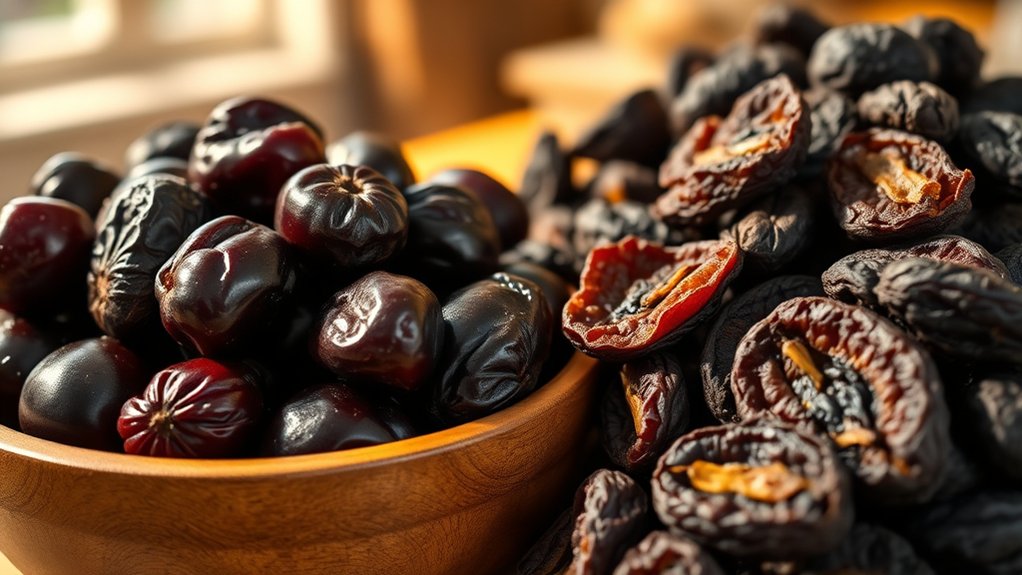
When you’re choosing between stewed and dried prunes for constipation, the key difference isn’t how well they work, but how they’re prepared and how your body tolerates them.
Both forms deliver similar amounts of fiber and sorbitol, the main laxative components, so you can expect relief from either if you take enough consistently. Stewed prunes also provide a naturally sweet fruit syrup that some people find more pleasant to consume regularly.
Stewed and dried prunes offer comparable fiber and sorbitol, so consistent intake from either can ease constipation
Dried prunes have the strongest clinical backing. In a randomized trial, about 10–12 dried prunes per day (50 g twice daily, 6 g fiber) increased complete spontaneous bowel movements and improved stool consistency more than psyllium, earning dried prunes a spot as a first-line option for mild to moderate constipation.
Stewed prunes, however, are softer, more hydrating, and often easier to digest.
If chewing is difficult, your gut is sensitive, or you prefer a spoonable texture, you may find ½–1 cup of stewed prunes works better for you than an equivalent portion of dried fruit.
How Do Prunes Actually Relieve Constipation?
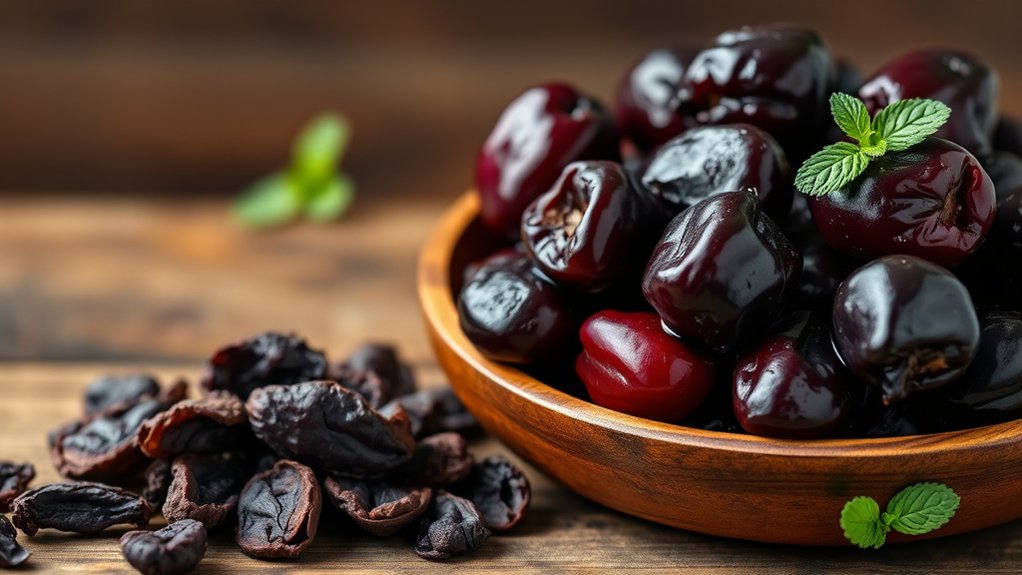
When you eat prunes, their mix of soluble and insoluble fiber adds bulk to your stool and helps it move smoothly through your gut.
At the same time, natural laxative compounds like sorbitol and certain plant acids draw water into the intestines and gently stimulate bowel activity. Prunes are more effective than psyllium for mild to moderate constipation in some studies, likely because of this combined fiber and sorbitol effect.
Together, these actions support healthier digestive motility so you can pass stools more comfortably and regularly.
Fiber Content And Function
Fiber is the real engine behind prunes’ constipation‑relieving power, and both dried and stewed prunes deliver plenty of it. Dried prunes offer about 7 g fiber per 100 g, so just 4–5 prunes give you roughly 3 g. Stewing doesn’t strip this benefit—1 cup of pitted stewed prunes still packs about 7.7 g fiber, keeping their effect on your bowels strong. And because prunes also contain sorbitol, a natural sugar alcohol that draws water into the colon, they can further soften stools and enhance their laxative effect.
| Fiber type | Key constipation benefits |
|---|---|
| Insoluble fiber | Adds bulk, softens stools, promotes regularity |
| Soluble fiber | Slows digestion, supports gut function, steadier flow |
| Combined action | Draws water in, increases frequency, prevents backup |
Because prunes contain about half soluble and half insoluble fiber, they both bulk and hydrate stool, helping you pass it more comfortably and consistently.
Natural Laxative Compounds
Although fiber does a lot of the heavy lifting, prunes’ real constipation‑fighting edge comes from a package of natural laxative compounds that work together in your gut.
Sorbitol, a natural sugar alcohol, pulls water into your colon, softening stools and helping them move out more easily. It teams up with chlorogenic acid to increase stool frequency and encourages beneficial bacteria to grow. California Prunes are also naturally rich in potassium, which supports normal muscle and nerve function, including the contractions that move food through your intestines.
Prunes’ pectins add extra soluble fiber that specifically helps stool hold water and stay soft.
Some of the compounds in prunes also act as prebiotics, feeding “good” microbes that support regularity over time, although research’s still early.
Phenolic compounds, including chlorogenic and neochlorogenic acids, act as antioxidants, protecting gut cells and modestly improving blood sugar, indirectly supporting comfortable bowel habits.
Digestive Process And Motility
Those natural laxative compounds don’t work in isolation—they team up with prunes’ hefty fiber content and water‑drawing effects to change how your gut moves.
In one cup, you’re getting about 12.4 grams of fiber, nearly half your daily needs. Insoluble fiber passes through largely unchanged, adds bulk, and helps push stool along, while soluble fiber slows digestion just enough to improve absorption and create a smooth, gel‑like texture.
Sorbitol then pulls water into your colon, softening stool without sudden urgency. Prune juice also contributes fluid that helps prevent dry, hard stools, a common trigger for constipation in children. Studies show this combo increases stool weight and raises complete spontaneous bowel movements to around 3.5 per week, outperforming psyllium.
Chlorogenic acid and other plant compounds further nudge your intestines to contract rhythmically, improving both stool frequency and consistency.
Fiber and Digestion: Do Stewed or Dried Prunes Work Better?
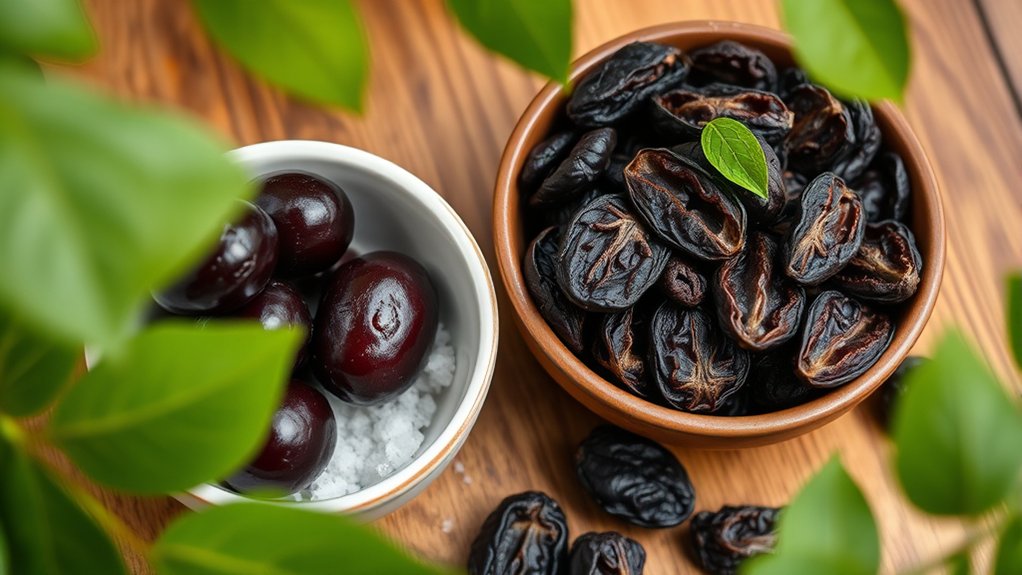
When you’re choosing between stewed and dried prunes, you’ll want to look at how their fiber content compares and how each one actually feels in your gut.
You might find that softer, rehydrated stewed prunes sit more comfortably, while dense dried prunes pack the same clinically tested fiber dose in a smaller portion.
From there, it helps to know the ideal daily amount of each form so you can get constipation relief without going overboard.
Fiber Content Comparison
Even though both stewed and dried prunes deliver similar types of fiber, their concentration and hydration differ in ways that can affect constipation relief. You get a mix of soluble and insoluble fiber from both, but the amounts per bite aren’t identical.
About 4–5 dried prunes give you roughly 3 grams of fiber, while 1 cup of stewed prunes provides about 7.7 grams, spread through a more watery portion.
- Dried prunes are more fiber‑dense per gram because drying removes water.
- Stewed prunes keep comparable total fiber per 100 g, but added water dilutes that fiber.
Both forms still supply enough soluble and insoluble fiber to bulk and soften stool, while pairing with sorbitol to support regularity.
Digestibility And Comfort
Fiber content tells only part of the story; how your body handles that fiber matters just as much for constipation relief.
Stewed prunes keep their soluble and insoluble fiber, sorbitol, and chlorogenic acid, but their softened texture and higher water content make them easier to digest. You chew less, tolerate them better, and gain extra hydration, which can reduce dryness‑related discomfort.
Dried prunes offer more concentrated fiber and sorbitol in a smaller volume, which can improve stool consistency and frequency but may feel heavy or chewy if you have sensitive digestion or chewing issues.
Both forms increase stool weight and regularity without causing diarrhea at usual portions. If you choose stewed prunes, drink the cooking liquid to keep water‑soluble benefits.
Optimal Daily Amount
Although prunes are famous for their fiber, the dose that actually helps your bowels move depends on more than just grams on a label.
Research usually targets around 6 grams of fiber and a hefty dose of sorbitol, which you’ll get from roughly 50 grams of dried prunes (about 10–12 prunes) daily. That’s typically split into two servings.
A practical starting plan:
- Begin with 3 prunes in the morning and 3 in the evening.
- If your bowels remain sluggish after several days, increase to 5–6 prunes twice daily.
- Stewed or dried, aim for the same total amount; adjust portion size slightly if you add water or sugar.
You shouldn’t need more than 10–12 prunes a day for mild–moderate constipation.
Laxative Compounds in Prunes: Does Cooking Change the Effect?
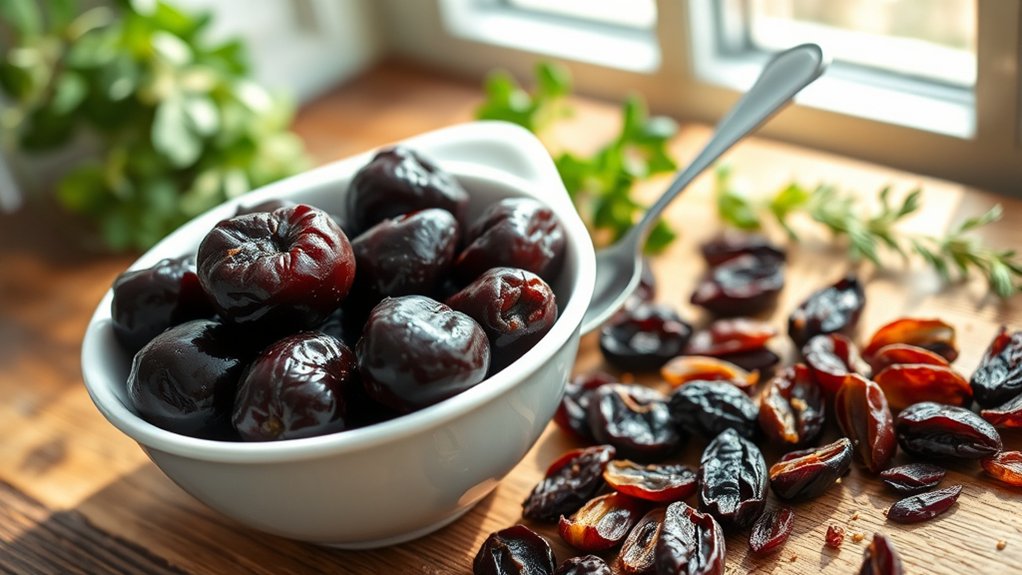
When you compare stewed prunes to dried prunes, the key laxative compounds—sorbitol, fiber, and phenolic acids—stay largely intact, but cooking can subtly shift how strongly they act.
Drying already concentrates sorbitol and fiber in whole prunes; stewing mainly adds water and softens the texture, which can make them easier to eat and digest without stripping these compounds.
Sorbitol’s osmotic effect doesn’t disappear with heat, and because it’s poorly absorbed in your small intestine, it still reaches your colon to draw in water.
Fiber remains present as well, continuing to add bulk and softness to stools while slowing glucose absorption.
Phenolic compounds, including neochlorogenic and chlorogenic acids, are relatively heat-stable, so they keep stimulating gut motility and supporting beneficial bacteria.
Which Works Faster: Stewed or Dried Prunes for Constipation?
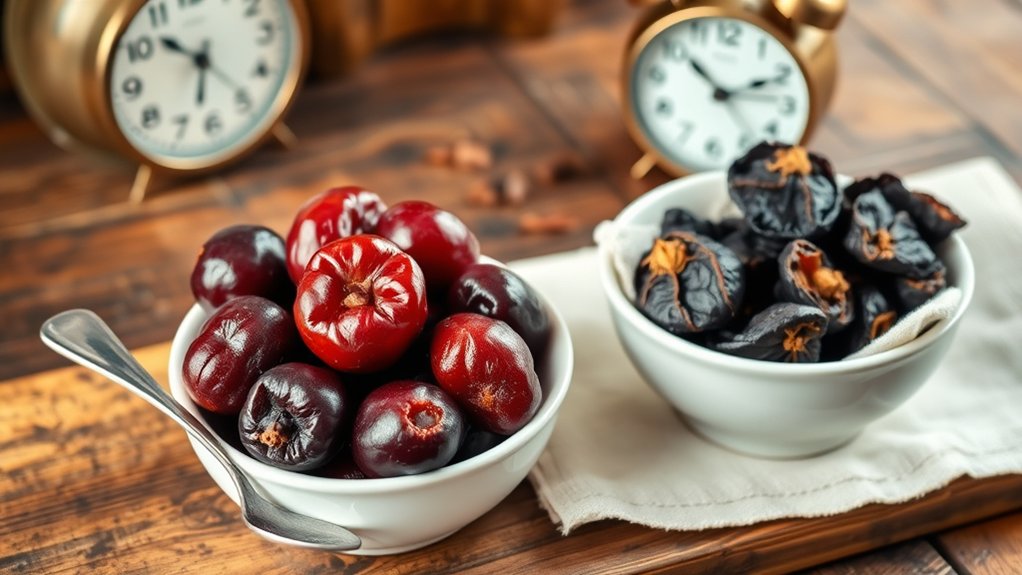
You’ve seen that cooking doesn’t strip prunes of their key laxative compounds, but that doesn’t automatically mean stewed and dried prunes work at the same speed.
When you look at actual data, only dried prunes have been tested for how quickly they improve constipation.
In a clinical trial, people eating about 50 g of dried prunes twice daily had more complete spontaneous bowel movements per week than those taking psyllium (3.5 vs 2.8).
They also reported better stool consistency and earlier symptom diary improvements. That tells you dried prunes can act relatively quickly over days to weeks.
Stewed prunes, on the other hand, don’t have head‑to‑head or time‑to‑first‑BM studies.
Any claim they work faster is still speculative.
- Dried prunes: proven weekly CSBM gains vs psyllium
- Stewed prunes: traditional, but only anecdotal for speed
- Net takeaway: dried prunes are the only “faster” option supported by research
Stewed Prunes vs Prune Juice: What’s Better for Regularity?
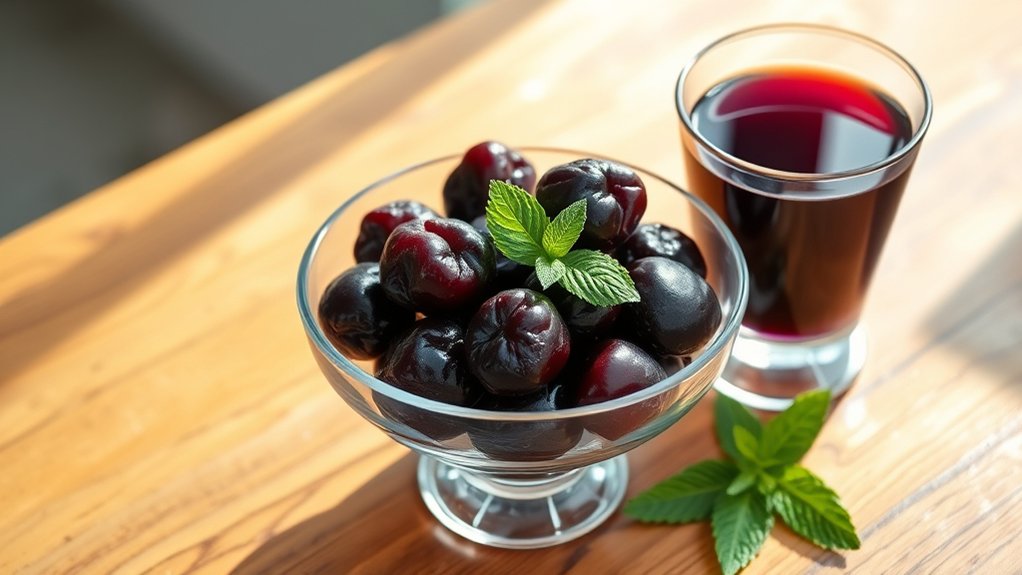
So where does that leave you if you’re deciding between stewed prunes and prune juice for staying regular? If you want the strongest, steady laxative effect, stewed prunes usually win. They keep more fiber than juice—both insoluble fiber to ease stool passage and soluble fiber to slow digestion and support smoother, more consistent bowel movements.
One prune gives about 3 grams of fiber, so 5–6 stewed prunes pack substantial bulk plus about 6 grams of sorbitol, still below the level that typically causes diarrhea.
Five to six stewed prunes deliver hefty fiber plus sorbitol—enough to get you moving, not rushing.
Prune juice does supply sorbitol and can act faster, especially if you’re sensitive to fiber or don’t tolerate solids well, but it lacks the fiber density that sustains regularity.
Studies find prunes at least as effective as common fiber supplements and often preferred for natural relief. Practically, ½–1 cup of stewed prunes daily, including the stewing liquid, offers a gentle, reliable option.
Does Stewing Prunes Change Their Nutrition for Constipation Relief?
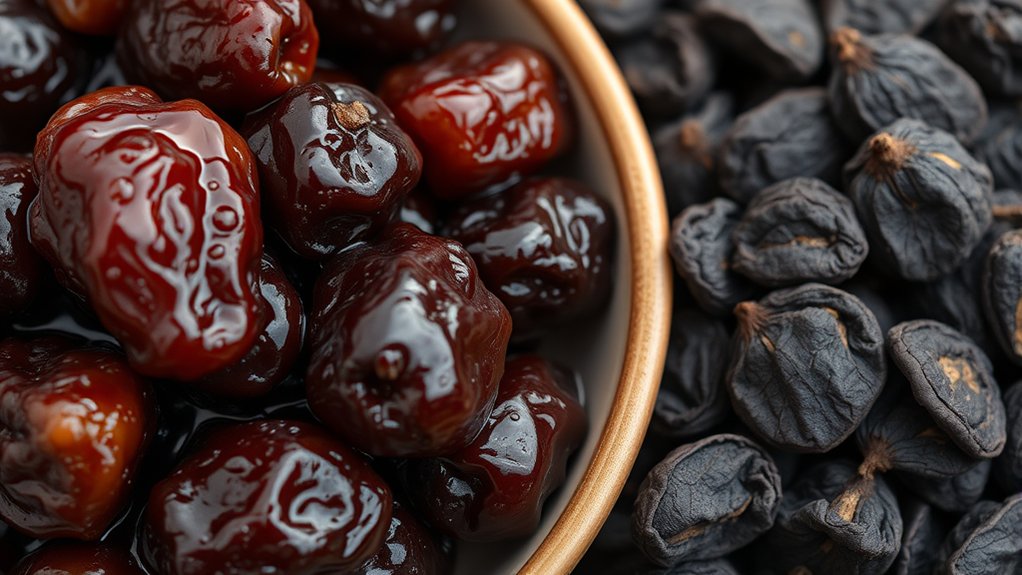
Although stewed prunes look and taste different from the dried version, stewing doesn’t strip away the nutrients that matter for constipation relief. You still get about 3 grams of fiber in 4–5 prunes, with a helpful mix of insoluble fiber to keep things moving and soluble fiber to smooth digestion.
Stewing just rehydrates that fiber; it doesn’t reduce the total amount or change its benefits.
Sorbitol, the natural sugar alcohol that draws water into your colon, also sticks around. In fact, some of it moves into the cooking liquid, which may make it easier for your body to use.
Chlorogenic acid, a heat-stable plant compound that works alongside sorbitol to boost stool frequency, likely remains intact too.
When you stew prunes, you mainly change texture and flavor, not their constipation-fighting core:
- Fiber content
- Sorbitol availability
- Chlorogenic acid support
How Many Prunes Should You Eat Daily for Safe Relief?
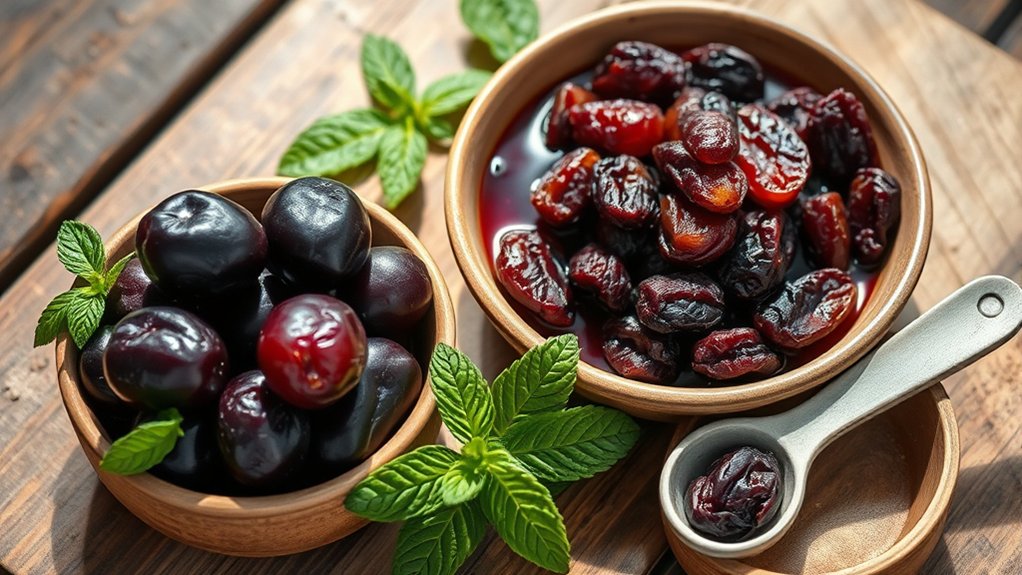
Wondering how many prunes it actually takes to get things moving without going overboard? For most adults with mild to moderate constipation, 50 grams of dried prunes twice a day (about 5–6 prunes per dose, 10–12 total) has solid evidence behind it.
In a clinical trial, that 100-gram daily amount provided about 6 grams of fiber and improved bowel movements more than psyllium.
If you’re new to prunes or eat little fiber, start lower. Try 3 prunes in the morning and 3 in the evening for a week, then increase toward 5–6 twice daily if needed.
Each prune gives roughly 3 grams of fiber plus sorbitol, a natural laxative sugar alcohol.
Stay under roughly 20 grams of sorbitol a day to avoid diarrhea; 5–6 prunes contain about 6 grams.
As long as you increase gradually, most people tolerate these amounts well.
Who Should Choose Stewed Prunes, and Practical Tips to Stay Regular?
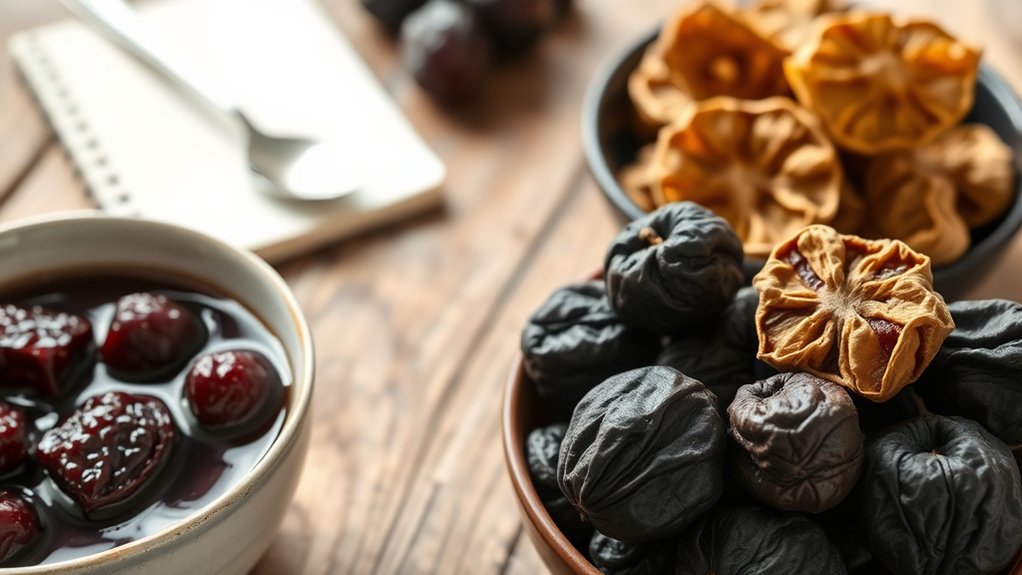
If you struggle with constipation but find dried prunes too chewy, hard to digest, or tough on sensitive teeth or gums, stewed prunes are often the better choice—and they’re just as effective.
Stewing keeps the fiber, sorbitol, and minerals that make prunes so helpful, but softens the texture and boosts hydration, which can make them easier on your gut.
You’ll likely do best with stewed prunes if you:
- Have dental issues, dentures, or jaw pain
- Experience bloating or discomfort with very dense, dried fruit
- Prefer warm, spoonable foods over chewy snacks
Aim for ½–1 cup of stewed prunes daily, starting on the lower end and increasing slowly so your digestion can adjust.
Use unsulfured, sun-dried prunes, simmer them gently, and always eat the fruit and the cooking liquid together to capture water‑soluble vitamins.
Skip freezing; instead, refrigerate a batch and use it within several days.
Frequently Asked Questions
Can Prunes Interfere With Constipation Medications or Fiber Supplements?
Prunes don’t typically interfere with constipation meds or fiber supplements. You can safely combine them, since their sorbitol and fiber work similarly. Start with small amounts, drink water, and ask your clinician if you’re on complex regimens.
Are Stewed or Dried Prunes Better for Children With Constipation?
Stewed and dried prunes work similarly, but you’ll usually find stewed prunes better for constipated children because they’re softer, hydrating, and easier to eat. Start small, increase slowly, and watch for gas or loose stools.
Do Prunes Worsen Symptoms in People With IBS or Sensitive Guts?
They can. You might find prunes’ fiber, sorbitol, and chlorogenic acid trigger gas, cramping, or diarrhea if you’ve got IBS or a sensitive gut. Start with 3–4 prunes, increase slowly, and monitor symptoms.
Is It Safe to Eat Prunes Daily for Months or Years?
Yes, you can safely eat prunes daily for months or years. Stick to about 5–6 prunes a day, increase slowly, drink plenty of water, and cut back if you notice gas, cramping, or diarrhea.
Can Prunes Help Prevent Constipation Caused by Travel or Sudden Routine Changes?
Yes, prunes can help prevent travel or routine-change constipation. You’ll get sorbitol and fiber that keep stools soft and frequent. Eat 5–6 dried or ½–1 cup stewed daily, start lower, drink water, and adjust gradually.
Conclusion
You don’t have to choose one “perfect” prune. Stewed and dried prunes both ease constipation by delivering fiber and natural laxative compounds, just in slightly different ways. If you need something gentler, warm, and easier to digest, stewed prunes are a great pick. If you prefer convenience and a stronger effect, dried prunes or prune juice may suit you better. Start small, stay hydrated, and listen to your body as you find your best routine.