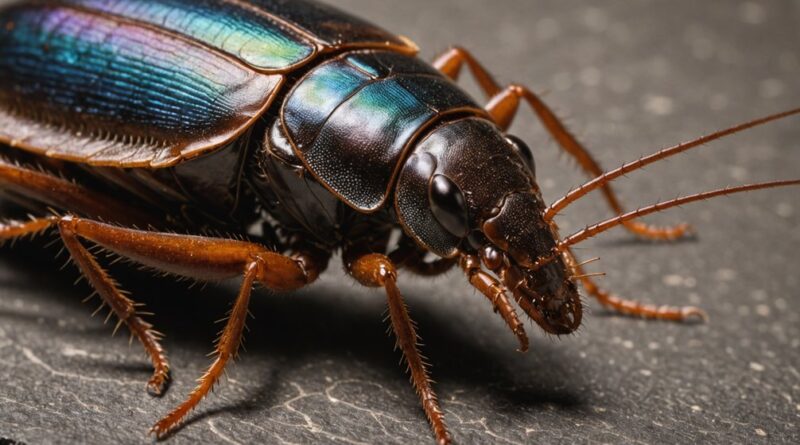
What Does a Cockroach Look Like?
You’ll recognize a cockroach by its flat, oval, shiny body, usually brown to nearly black, with a small head hidden under a shield-like plate. It has long, restless antennae, six spiny, jointed legs, and often two pairs of wings that may lie flat over the back. Its quick, darting movement and low, flattened profile set it apart from beetles or crickets, and there’s a lot more to notice once you know these basics.
Key Takeaways
- Cockroaches have flat, oval bodies with three regions (head, thorax, abdomen) and a small head hidden under a shield-like pronotum.
- They are usually light brown to reddish-brown or nearly black, with a shiny, leathery-looking exoskeleton.
- Adults typically have two pairs of wings lying flat over the back, though some species barely fly and nymphs are wingless.
- Cockroaches have six long, spiny legs with hooked claws and soft pads that let them run quickly and climb walls or ceilings.
- They are distinguished from beetles and crickets by their flat shape, rapid straight-line running, long antennae, and lack of large hind jumping legs.
Key Features of a Cockroach’s Body
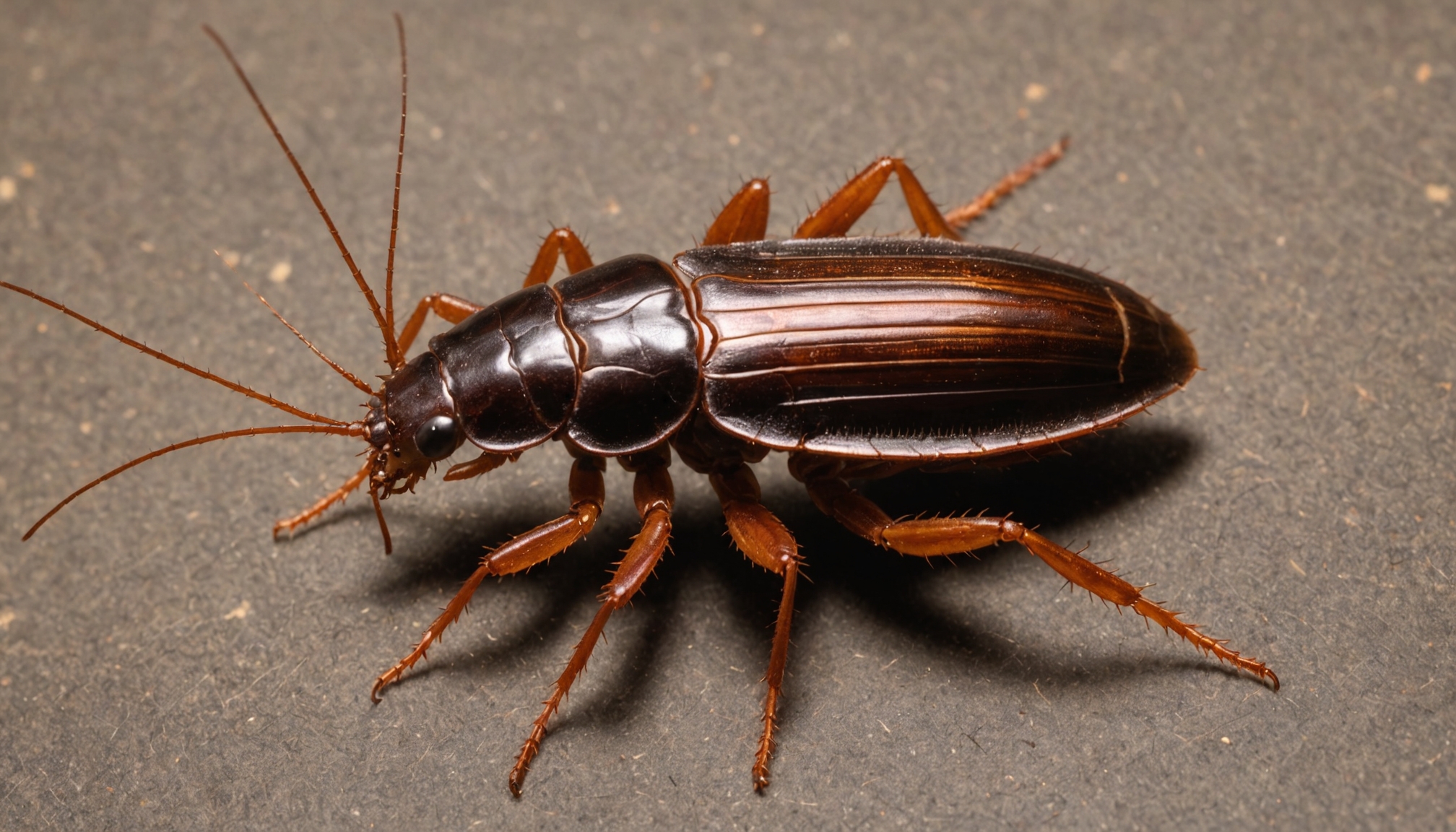
At a glance, a cockroach’s body looks like a compact survival machine, built to squeeze, scuttle, and sense danger in almost any environment. You’ll notice a flat, oval shape, flattened top to bottom so it can slide into tight cracks. Its body divides into three main regions: a small, downward-facing head; a three-part thorax; and a long, ten-segmented abdomen.
Flexible membranes link each segment, so the whole body bends and twists as it moves. The head tucks under a shield-like pronotum, while long, whip-like antennae constantly sweep for food and threats. Well-developed compound eyes and two simple eyes (ocelli) help it detect changes in light and movement. Nymphs look similar to adults but are paler and lack wings.
Six long, jointed, spiny legs power its speed. Pads on the feet let it run up walls and across ceilings. Most species also carry two pairs of wings laid flat along the back.
Cockroach Exoskeleton: Their Built-In Armor
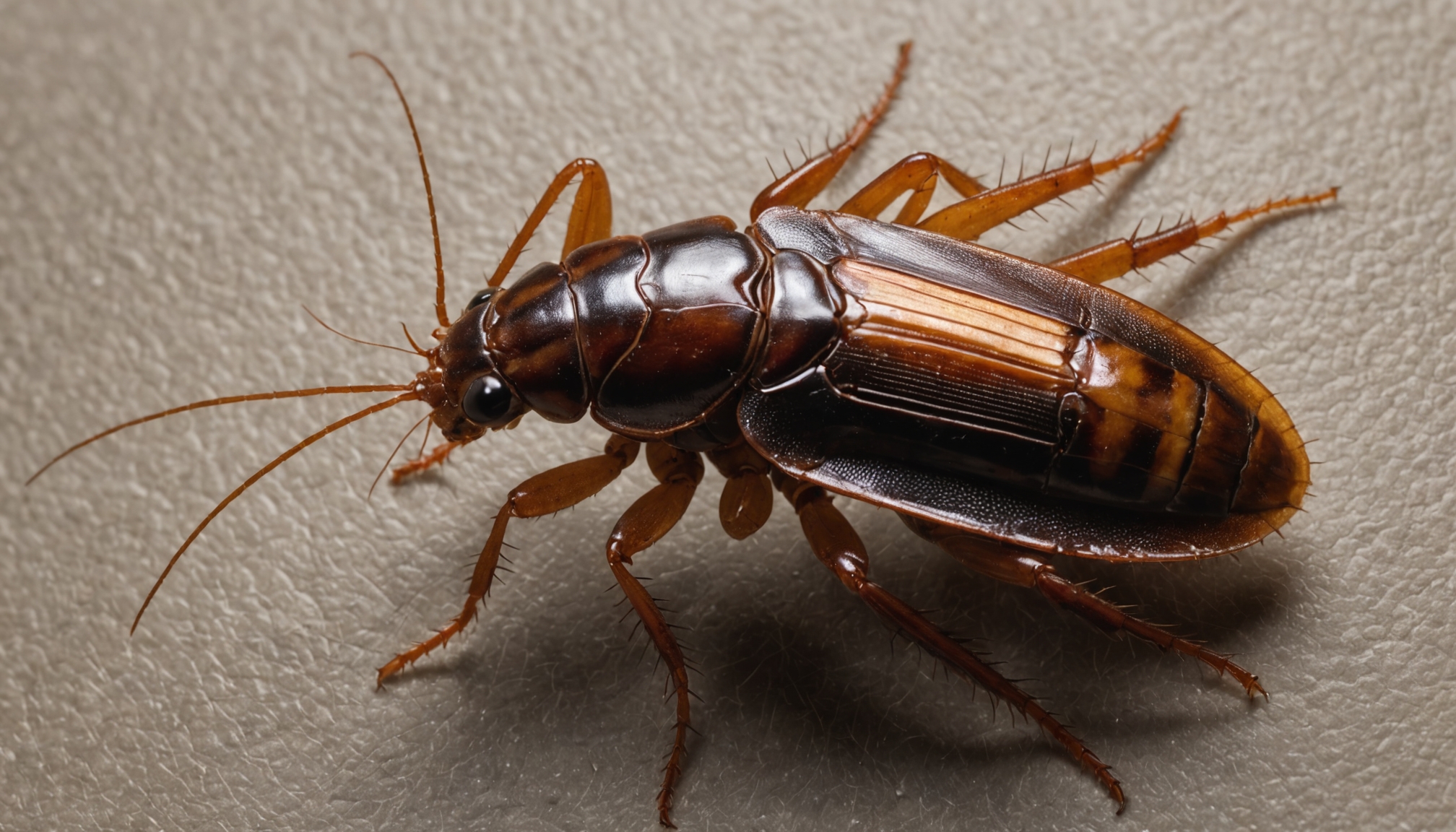
When you look closely at a cockroach, you’re seeing a tough armor-like shell made of chitin that protects its organs like a built-in shield. This shell carries a thin wax layer that repels water, helping the insect survive in damp kitchens and dry attics alike. Beneath that hard exterior, the exoskeleton anchors powerful muscles that drive its fast legs and sudden bursts of movement. This rugged outer layer has helped cockroaches survive as one of the oldest insects, with a lineage stretching back hundreds of millions of years.
Tough Armor-Like Shell
Though it looks simple at a glance, a cockroach’s shell is actually a tough, chitin-based suit of armor that protects nearly every part of its body, even the eyes. This built-in armor helps cockroaches survive in an incredible range of habitats for millions of years.]
When you look closely, you don’t see soft skin; you see a hard, layered shield about as thick as a human hair, built to survive pressure and impact.
Picture this armor in action:
- A shiny black or brown, leathery back plate stretching from head to tail.
- Segmented panels that flex so the roach can bend, twist, and run.
- A shell that endures crushing forces hundreds of times the roach’s weight.
- Tiny embedded sensors that let it “feel” air currents and looming danger through its armor.
Water-Repellent Wax Layer
Beneath that tough armor, a cockroach wears an invisible raincoat: a thin, waxy layer that makes its shell almost completely waterproof. When you look closely at its surface, you’re seeing chitin covered by this slick coating, which stops water from soaking in and keeps the body from swelling or weakening. This same barrier helps them survive in various environments, from dry indoor spaces to damp sewers and basements.
This hydrophobic shield lets a roach move through wet pipes or damp basements without waterlogging.
You’ll also see how the smooth, slightly leathery look works with this wax. The flattened body and tight seams between segments leave few gaps where moisture can sneak in.
Even the flexible joints stay water-repellent, so the insect can twist and squeeze into cracks while that glossy barrier continues to block water and contaminants.
Support for Powerful Muscles
Even before you notice their speed, a cockroach’s exoskeleton is quietly working as a rigid frame that anchors and powers its muscles. You’re not just seeing armor; you’re seeing a living skeleton on the outside, built from chitin plates that muscles pull against like cables on a suspension bridge. Each plate, membrane, and joint helps convert tiny contractions into explosive motion. These same structures allow cockroaches to compress their bodies to fit through gaps as small as 3–5 millimeters while still maintaining mobility.
Picture this:
- Long, arching dorsal tergites where leg and wing muscles attach, bracing every sprint and jump.
- Ventral sternites forming a tough belly shield that absorbs impacts while legs drive forward.
- Thin, flexible intersegmental membranes bending like hinges so the body can twist and flatten.
- Cross‑linked, hardened regions acting as natural weight plates, letting muscles push against 900‑body‑weight pressure without failing.
Cockroach Legs and How They Move So Fast
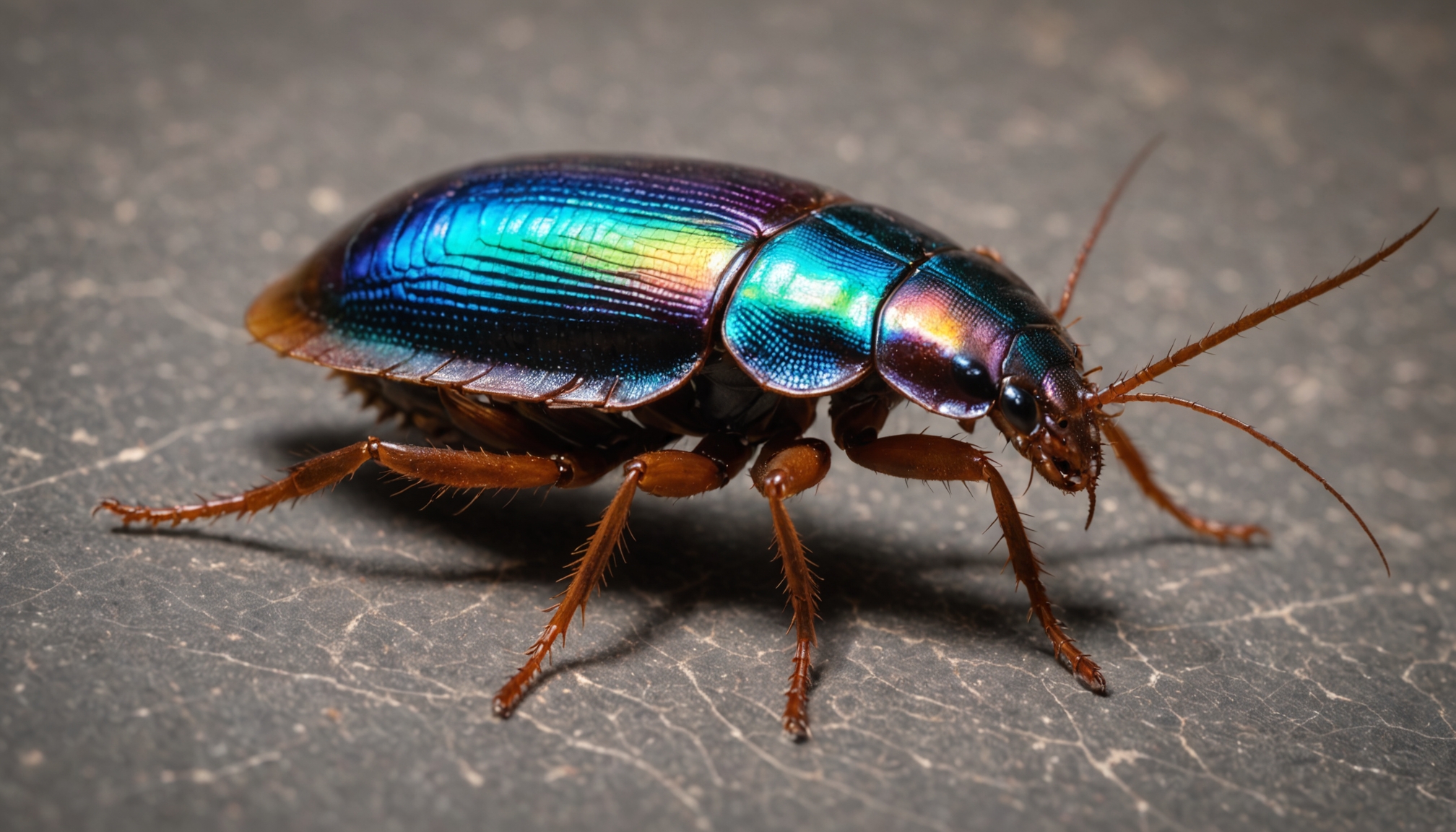
When you look closely at a cockroach’s legs, you’ll notice they’re covered in sharp spines and end in hooked claws that grip almost any surface.
You also see soft pads on the tarsi that act like built‑in suction cups, letting them scale walls and even ceilings at full speed.
Understanding how these spiny legs, claws, and pads work together helps you see why cockroaches move so fast and rarely lose their footing.
Spiny Legs And Claws
Three pairs of spiny, jointed legs turn a cockroach into a surprisingly fast and agile runner. When you look closely, you’ll see six slender legs jutting from the thorax, each bristling with tiny spikes and ending in sharp claws.
Those 18 joints let every leg bend and grab with precision as the insect darts away.
- Imagine the short front legs braking hard, their spines scraping for grip as the roach suddenly slows or pivots.
- Picture the middle legs fine‑tuning speed, their clawed tips tapping like tiny cleats.
- See the long hind legs thrusting back, spines digging in to launch the body forward.
- Visualize all six legs firing in an alternating rhythm, claws clutching rough surfaces as the roach streaks past.
Pads For Speedy Climbing
Although a cockroach’s legs look spindly at first glance, they hide high‑performance climbing gear in the form of tiny pads near the feet. You’ll find these pads on the tarsi, where plantulae and pulvilli press against surfaces to create friction, letting roaches walk on walls and even ceilings.
On smooth glass, those pads make the difference between sprinting upward and sliding down.
You can see the effect by comparing species. American cockroaches cling to slick surfaces with ease, while Oriental cockroaches, which lack some adhesive pads, struggle to climb.
As a roach runs, its springy, jointed legs act like mini pogo sticks, and the pads grip just enough each step to keep it stable while it blasts forward at astonishing speeds.
Antennae, Eyes, and Other Cockroach Senses
Few insects rely on their senses as heavily as cockroaches, and their antennae, eyes, and other sensory organs work together to keep them alive in the dark, cluttered environments they prefer.
Cockroaches fuse antennae, eyes, and hidden sensors into a survival network tuned for dark, cluttered worlds
When you see a roach, those long, threadlike antennae act like flexible radar masts. They sweep the air and nearby surfaces, packed with tiny hair sensilla and other mechanoreceptors that let the insect smell, taste, and feel its surroundings even in total darkness.
- Picture the antennae: two whip-like cords, always in motion, reading air currents, textures, and chemical traces.
- Imagine the eyes: large compound domes with more than a thousand lenses, plus two simple ocelli sensing shifts in light.
- Look at the rear: short, paired cerci on the abdomen that feel the faintest air movement from an approaching predator.
- Under the head, the mouthparts grind food while receptors simultaneously sample flavor and texture.
Cockroach Wings and What Their Flight Looks Like
Cockroach wings don’t just sit there as stiff covers; they form a flexible, two-layered system that protects the body and, in many species, powers flight. You’ll see two pairs: the tougher forewings on top and the thinner, fanlike hind wings underneath.
Most adults hold them flat over the back, and in some species they stretch well beyond the abdomen, with wingspreads over 12 cm.
You’ll notice strong differences between sexes. Males usually have two functional wing pairs and often fly to locate females.
Females in some species stay wingless or show only short, useless wings, while female American cockroaches have wings just reaching the abdomen and males’ wings extend past the tip.
Nymphs never have wings; they gain them only after several molts, so most of a roach’s life is actually wingless.
When adults do fly, the flight looks quick, somewhat clumsy, and usually covers short distances.
Colors and Sizes of Household Cockroaches
Most household cockroaches fall into a fairly narrow range of colors and sizes, which makes it easier to tell one species from another once you know what to look for.
Most household roaches share similar colors and sizes, so small details can quickly reveal which species you’re seeing.
Most you’ll see indoors run from light brown to nearly black, with a shiny, almost oily, leathery body. Color often reflects habitat and species, so you can learn a lot just by noticing shade and size.
Picture these common household species:
- A light brown German cockroach, about 1/2 inch long, roughly the length of a penny, with pale nymphs that darken as they mature.
- A larger American cockroach, 1½–2 inches long, reddish-brown and among the longest cockroaches you’re likely to encounter inside.
- A very dark Oriental cockroach, almost black with a glossy finish, longer and leaner than a German cockroach.
- A brown-banded cockroach, small and dark brown, with two distinct yellowish bands across its back near the head.
If you want to go deeper on telling species apart by appearance alone, CockroachCare.com covers how to tell cockroach species apart, including the markings, size differences, and behavioral clues that separate German, American, Oriental, and Brown-Banded cockroaches.
How to Identify Cockroaches vs. Look-Alike Bugs
Although a skittering shape on the floor can look like “just another bug,” cockroaches have a few reliable traits that set them apart from beetles, crickets, earwigs, and water bugs. You’ll notice a flat, oval body that looks pressed down, not domed like a beetle or rounded like a cricket. The small head tucks under a shield-like pronotum, and the mouthparts angle downward and backward.
Watch how it moves. Cockroaches run quickly in straight lines with abrupt stops, instead of hopping like crickets or strolling like earwigs. Even in dim light, that steady, darting run stands out, especially when temperatures reach 70°F or higher.
Check for missing features: no earwig pincers, no huge cricket hind legs, no water bug “raptor” front legs, and no beetle-style wing covers meeting in a hard line.
When in doubt, collect a sample and contact your county’s Cooperative Extension or a licensed pest professional.
For a side-by-side visual comparison of cockroaches against the bugs most commonly mistaken for them, CockroachCare.com covers what a cockroach looks like in detail, with species-specific photos and key identification markers for each common household type.
Conclusion
Now that you know what a cockroach looks like—from its armor-like exoskeleton and spiky legs to its antennae, wings, and size—you can spot one quickly and tell it apart from look-alike bugs. Use these details to check dark corners, kitchens, and bathrooms. When you recognize them early, you can act fast, prevent an infestation from growing, and keep your home cleaner, safer, and more comfortable.