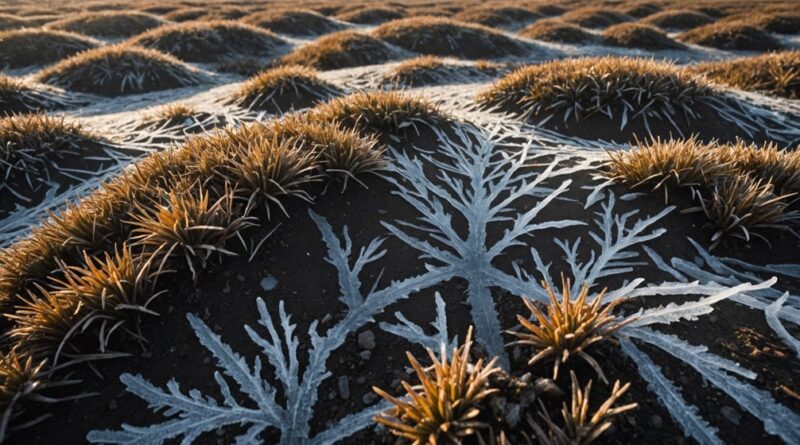
What Is the Temperature Below the Frost Line?
Below the frost line, you’re in soil that stays just above freezing all year. It normally sits a few degrees above 32°F (0°C), often around 40–50°F (4–10°C), depending on your climate, soil type, and moisture levels. This zone doesn’t swing wildly with the weather because it’s buffered by the earth’s stored heat. If you want to understand how this affects your home, pipes, and foundations, the next parts will clarify that.
Key Takeaways
- Below the frost line, soil temperature generally remains above 0°C (32°F) year-round, even during the coldest winter periods.
- Typical temperatures just below the frost line range roughly from about 2°C to 10°C (36°F to 50°F), depending on local climate and depth.
- This relatively stable temperature results from geothermal heat from the Earth’s interior and insulation provided by overlying soil layers.
- Seasonal air temperature changes have minimal impact below the frost line; temperature fluctuations there are small and slow.
- Exact temperature below the frost line varies by region, soil type, moisture content, and proximity to heated structures or surface insulation like snow.
What Do We Mean by the Frost Line?
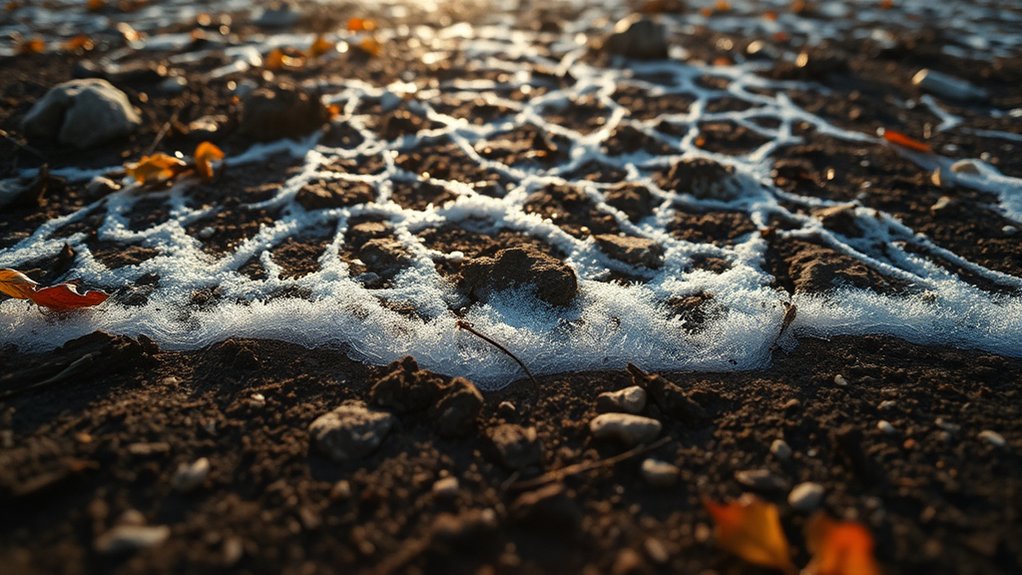
The frost line is the maximum depth in the ground where soil water is expected to freeze during a typical winter, marking the boundary between frozen and unfrozen earth. You’ll also hear it called frost depth, freezing depth, or ground freezing depth. It represents the deepest point that freezing temperatures normally reach in the soil each year.
The frost line marks how deep winter cold penetrates the ground before soil water stops freezing
You determine the frost line by looking at climate, soil type, and local conditions. Colder climates and lighter, more conductive soils let frost penetrate deeper. Snow cover, asphalt, and nearby heated buildings insulate the ground and can make the frost line shallower. In most regions, temperatures below the frost line stay above 0°C (32°F) even during the coldest part of winter.
The frost line isn’t the same everywhere. Across the contiguous United States, it ranges from practically zero in warm places like Florida to 5 feet or more in colder states such as Minnesota.
Near the poles, the concept merges into permafrost, where the ground can remain frozen year-round.
Is Soil Below the Frost Line Above Freezing?
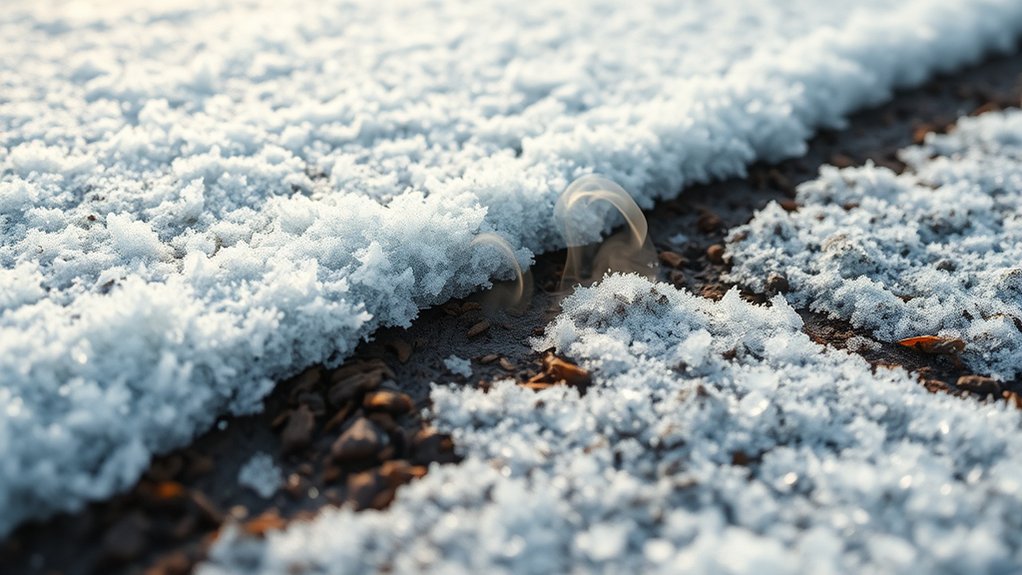
When you go below the frost line, you’re entering soil that stays above 32°F (0°C) even in the coldest months. You’ll see that this layer benefits from stable subsurface heat that prevents it from freezing like the surface does. Local jurisdictions specify minimum frost-line depths to ensure foundations and other shallow structures remain in this reliably unfrozen soil. Understanding this constantly unfrozen zone helps you predict how the ground will behave around foundations, pipes, and other buried structures.
Constantly Unfrozen Temperatures
Even in the coldest part of winter, soil just below the frost line stays unfrozen and remains above 0°C (32°F).
Once you’re beneath that depth, the ground no longer experiences the freeze–thaw swings that affect surface layers. Water in the pores stays liquid, so the soil doesn’t expand into ice and then contract again. This stability is helped by the fact that ground-level temperatures can be colder than official air readings, allowing frost to form above while deeper soil stays liquid.
You can rely on this constantly unfrozen zone because:
- Thermal lag: Deeper soil responds slowly to changing air temperatures, so short cold snaps don’t push it below freezing.
- Insulating layers: Snow, vegetation, and pavement reduce how far surface cold can penetrate, helping keep sub-frost-line soil above 0°C.
- Regional depth differences: Whether your frost line is 18 inches or 5 feet, soil beneath it remains unfrozen year-round.
Stable Subsurface Heat
Stable heat beneath the frost line keeps soil temperatures above freezing all year. Once you go deeper than the local frost line, the ground no longer tracks rapid air temperature swings. Lower soil layers retain warmth from warmer seasons, helping insulate the ground below the frost line from extreme surface cold.
Near the surface, soil warms and cools quickly, but deeper layers respond slowly, so they stay consistently above 32°F (0°C), even during long cold snaps.
You can think of this zone as a thermal buffer. Air temperature, freeze duration, and soil type still matter because they determine where that frost line sits.
Snow cover, pavement, and nearby heated buildings limit how far freezing penetrates, protecting the stable layer below. That’s why foundations, water lines, and other critical structures must extend past the frost line to avoid freeze–thaw damage.
Why Soil Below the Frost Line Stays Warmer
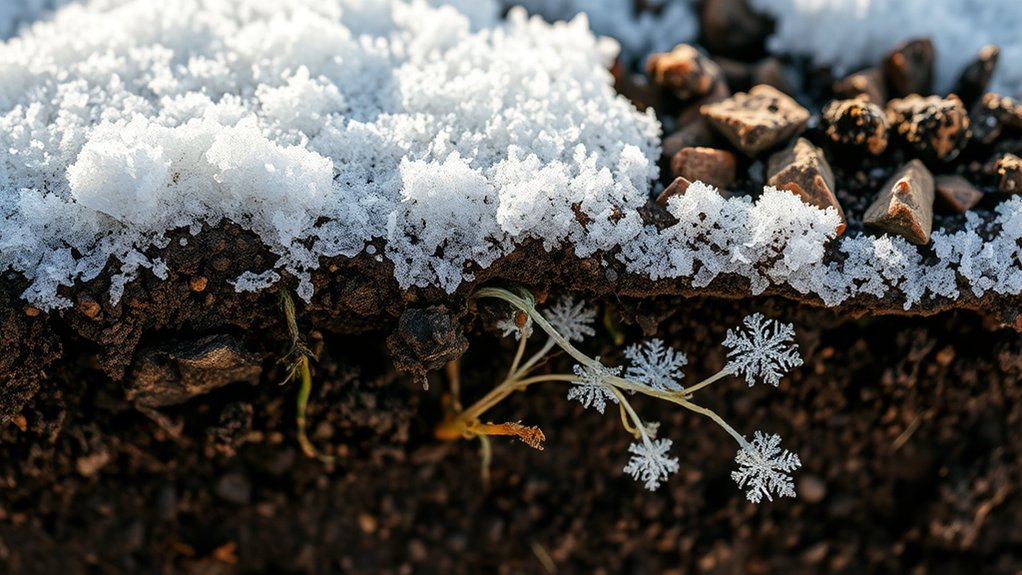
When you look below the frost line, you’re entering a zone where temperatures stay relatively constant year-round. Seasonally frozen ground affects over half of the Northern Hemisphere, making this stable subsurface layer an important factor in how buildings, utilities, and landscapes are designed. You don’t see the same dramatic swings you feel in the air because the soil above acts as a thick insulating blanket. This natural insulation slows heat loss from the ground’s interior, so deeper layers stay warmer even in the coldest months.
Constant Subsurface Temperatures
A few feet below the surface, soil temperatures stop chasing daily weather and instead hover near the area’s annual average air temperature.
Once you’re below the frost line, short cold snaps or heat waves barely matter. Temperature swings shrink with depth, so the ground remembers climate, not yesterday’s forecast.
You can think about this stable zone in a few key ways:
- In many temperate regions, soil around 6 feet deep stays near 50–55°F year‑round, while Fairbanks holds near 0°F and Bangkok near 85°F.
- Seasonal “temperature waves” fade as they move downward; by about 25–30 feet, yearly variation is tiny—often under 0.3°C.
- Above roughly 500 feet, surface climate still dominates; the deeper geothermal warming hasn’t taken over yet.
Insulating Effect Of Soil
Even though soil isn’t a great insulator in the way foam boards are, the ground above the frost line still acts like a thick thermal blanket that protects what’s below.
Soil’s thermal conductivity is modest—about 0.5 to 2.5 W/m·K—so it moves heat slowly. That slow transfer lets deeper geothermal warmth leak upward just enough to keep temperatures below freezing, while cold from the surface creeps down only gradually.
Moisture also matters. Wet soil has higher specific heat capacity, so it absorbs more energy before it can freeze, slowing the advance of the freezing front.
Dry gravel, with higher conductivity and lower heat capacity, loses heat faster and freezes more quickly, which is why saturated, dense soils tend to keep subsurface layers comparatively warmer.
Frost Line Depth in Different U.S. Regions
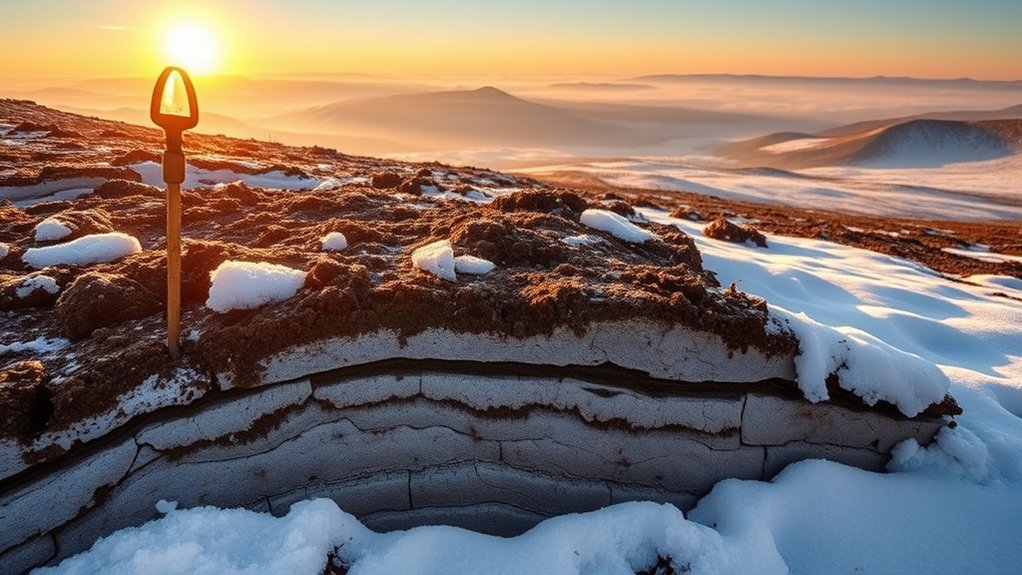
Across the United States, frost line depth shifts dramatically with climate, so you can’t rely on a single nationwide number.
In the Northeast, you’ll see some of the deepest frost penetration: southern New Jersey typically needs 30″ footings, while northern areas require 36″. Extreme cold snaps in the broader region can drive frost down toward six feet. Local codes often change by zip code, so inspectors become your primary reference.
Northeast frost depths run deep—30″ to 36″ or more—so local code inspectors are essential guides
In the Midwest, requirements range from 24″ in Wichita to 36″ around Kansas City and Overland Park. Minnesota jumps to 42″ south of St. Cloud and 60″ to the north, with the coldest pockets exceeding 96″.
Further south and west, frost lines usually stay shallow—often under 12″ in major western cities and under a foot across much of the South.
- Use contour frost maps only for planning.
- Check your exact zip code.
- Extend footings 3–4″ below code minimums.
How Soil Type and Moisture Affect Frost Depth

While outdoor air temperature drives whether the ground can freeze at all, soil type and moisture largely decide how deep that frost will go and how much damage it can cause. You’re really looking at two main questions: can water move, and can the soil hold enough of it?
Silty soils are the most frost‑susceptible because they combine permeability and capillarity, pulling water into the freezing zone and feeding ice lens growth. Silty sands behave similarly and often show heavy ice lens development.
In contrast, clays don’t let water move easily, so they usually heave less even though they hold a lot of moisture.
Sandy and gravelly soils often freeze deepest, especially when they’re at least about 1% moisture, but they don’t support strong capillary rise. That’s why moisture migration, not just moisture presence, controls heave.
When groundwater or stored soil moisture can continually feed freezing fronts, frost penetrates deeper and exerts greater uplift forces.
How Snow, Pavement, and Buildings Affect Frost Depth
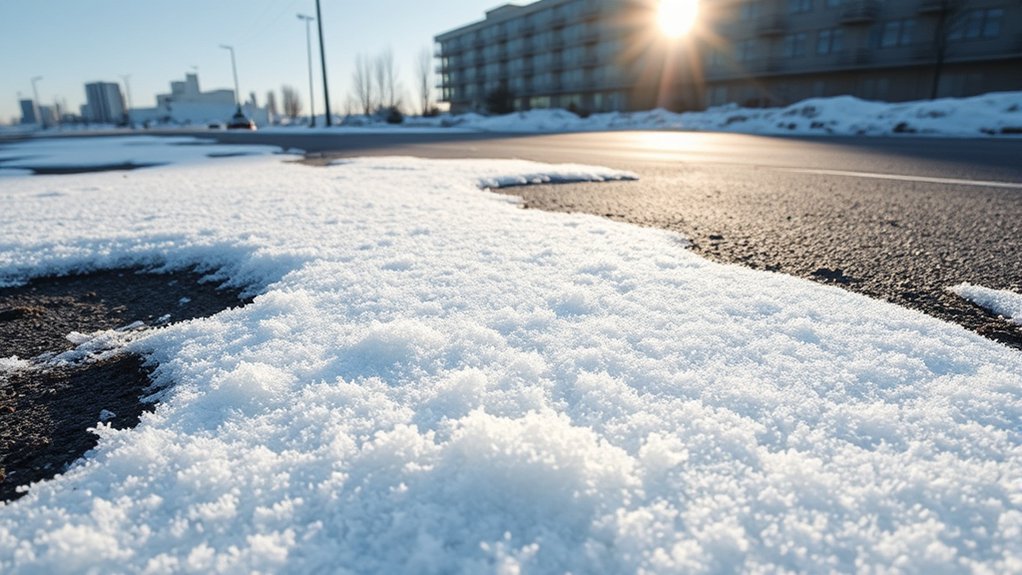
Although air temperature and soil type set the stage for freezing, the surface you see—snow, pavement, or buildings—often decides how deep the frost line actually goes.
When you leave snow undisturbed, it acts like a blanket. That insulation keeps soil temperatures hovering near 0°C, so frost may reach only about half as deep as in nearby snow-cleared pavement. Where snow is plowed away, each freezing degree day can drive frost roughly 0.36 cm deeper.
Pavement changes the picture again. Dark asphalt can run slightly warmer than the air, so the freezing front at the surface lags behind, yet the lack of insulation still lets frost penetrate deeply, closely tracking the site’s freezing index.
Buildings and other sealed surfaces complicate things further, especially in dense urban areas, where limited snow cover and widespread pavement usually allow the frost line to extend deeper than in rural, snow-covered ground.
- Snow insulation
- Pavement heat balance
- Surface sealing in cities
How Builders Use Frost Line Depth in Foundations
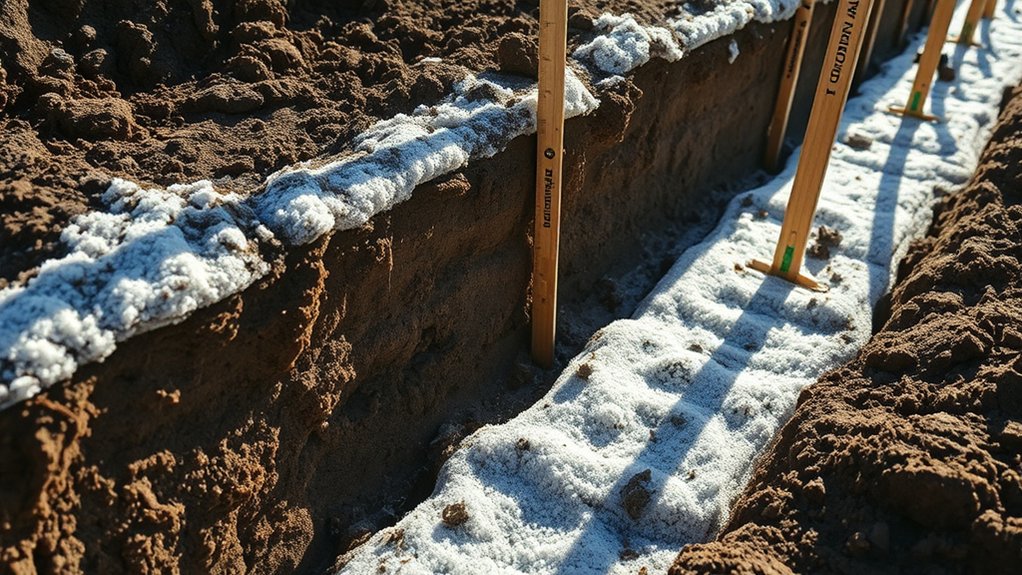
Snow cover, pavement, and buildings may set the frost depth in the ground you’re standing on, but builders treat that depth as a hard design line for every footing and slab.
Local codes adopt frost line values from the IRC and IBC, so your shallow foundation must extend at least that deep—whether that’s 5 inches in the Deep South or 100 inches up north. In a 28‑inch frost zone, for example, the bottom of your footing or slab sits 28 inches below grade on soil with adequate bearing capacity, never on frozen ground.
You’ll also see alternatives that still respect frost behavior.
Frost‑protected shallow foundations use insulation and geothermal heat to keep soil above freezing, so your slab might sit only 16 inches deep.
Builders may place footings on solid rock, use well‑drained gravel backfill and non‑frost‑susceptible material, and add rebar or cleats to resist frost uplift.
How to Estimate Frost Depth at Your Home
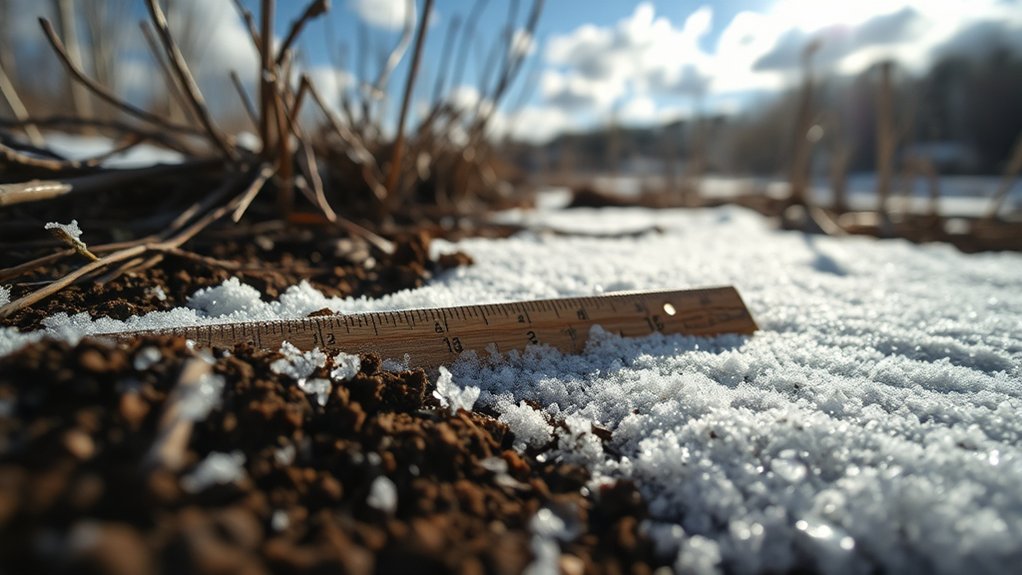
One reliable way to estimate frost depth at your home is to combine official code values with field data and mapping tools, then add a small safety margin.
Estimate frost depth by blending code requirements with real‑world data and maps, then add a small safety margin
Start with your city or county building department and look up frost depth in the municipal code, often under “Table R301.2.” For example, Michigan requires at least 42 inches, while parts of North Carolina require 12 inches, but local conditions can push you deeper.
Use maps and ZIP‑code tools to refine your estimate, then go 3–4 inches beyond it for extra protection.
1. Check official sources
Confirm the required footing depth with the local building inspector and ask for maximum frost depth and footing details.
2. Use maps and online tools****
Compare National Weather Service, NSIDC, Decks.com, and APEX Pergola data for your ZIP code.
3. Account for site conditions****
Consider soil type, pavement, and exposure; where data’s uncertain, err on the deeper side.
How Climate Change Is Shifting Frost Lines and Ground Temps
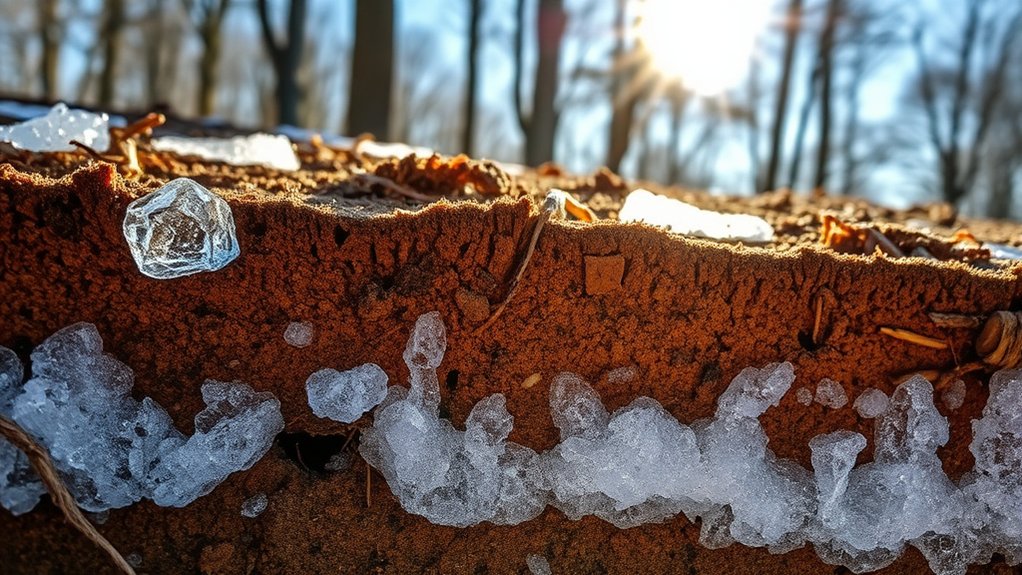
As winters trend warmer and swings between freeze and thaw grow sharper, the traditional frost line you’d design around is quietly moving upward and becoming less predictable. Under high greenhouse gas scenarios, maximum frost depth shrinks from about 100 cm to 60–70 cm after 2040.
Fewer freezing degree days and a falling air-freezing index (AFI) mean frost just doesn’t bite as deep. Added winter precipitation can warm near-surface soil by about 1°C, shaving frost depth even more.
You can’t assume older AFI tables still apply. Updated 1981–2010 normals already show climate-driven shifts in soil freezing across the lower 48 states.
Yet shallower frost doesn’t remove risk: frost still forms in frost-susceptible layers, so you may see more frequent, bumpier heaves and messy thaw softening. More rapid freeze–thaw cycling—especially in places like New England—demands closer monitoring, numerical modeling, and in-ground sensors to track your site’s evolving frost behavior.
Frequently Asked Questions
Can Utilities Like Water and Sewer Lines Safely Run Above the Local Frost Line?
You generally can’t run them above the frost line safely. You’d risk freezing, bursts, and costly repairs. You must bury lines below code‑mandated depths or add proven insulation and heat tracing designed for your climate.
How Deep Should Geothermal Loops Be Placed Relative to the Frost Line?
You should place geothermal loops several feet below the local frost line, typically 6–10 feet deep. That way, you tap stable, above-freezing ground temperatures, boost system efficiency, and avoid damage from seasonal freeze–thaw ground movement.
Does the Frost Line Affect Tree Root Depth and Winter Plant Survival?
Yes, it directly affects both. You’ll find many tree roots grow below the frost line to avoid freeze‑thaw damage. When roots stay in unfrozen soil, plants keep access to liquid water and usually survive winter better.
Can Basements Stay Warmer in Winter Because They Extend Below the Frost Line?
Yes, basements can stay warmer in winter because they extend below the frost line. You benefit from the soil’s stable, above-freezing temperature, which reduces heat loss, moderates temperature swings, and lowers heating demands.
How Does the Frost Line Influence Underground Storage of Food or Emergency Supplies?
It lets you use the ground as a natural refrigerator. You bury caches below the frost line, where temperatures stay above freezing and stable, so food and supplies avoid freeze‑thaw damage and spoil more slowly year‑round.
Conclusion
When you understand the frost line, you can make smarter choices about your home and yard. Below that depth, soil usually stays above freezing because the earth naturally stores and releases heat. If you know your local frost depth—and how soil, snow, and structures affect it—you’ll plan foundations, pipes, and plantings that last. As climate change slowly shifts frost lines, staying informed helps you protect your property and adapt with confidence.