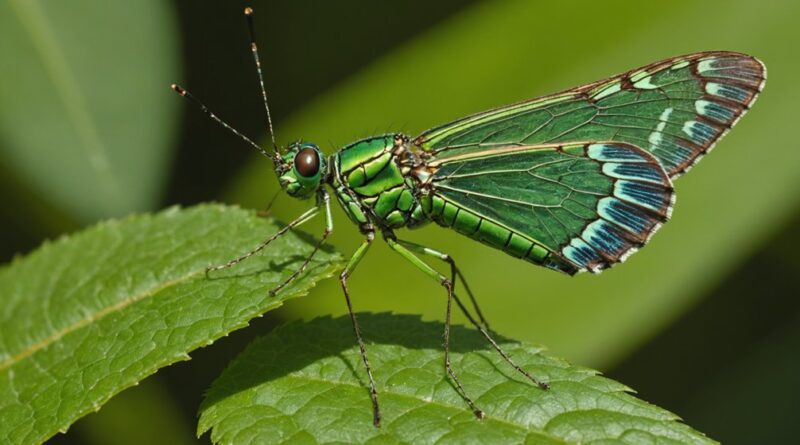
What Are Some Differences Between Nymphs and Adults in Insects?
You’ll notice insect nymphs look like smaller versions of adults but with softer bodies and no working wings. Nymphs grow by molting several times, shedding their exoskeleton as they increase in size. Their wing pads, if present, stay flat and non-functional until the final molt. Adults have fully hardened exoskeletons, functional wings (in winged species), and complete reproductive organs, so only they can breed. If you keep going, you’ll see how these differences affect behavior and habitat.
Key Takeaways
- Nymphs are immature stages that molt repeatedly and grow; adults are fully developed, no longer molt, and have reached their final body size.
- Nymphs often lack wings or have small wing pads; adults typically have fully formed, functional wings for flight or gliding.
- Nymphs have softer, more flexible cuticles and incomplete genitalia; adults possess a hardened exoskeleton and fully developed reproductive organs.
- Nymphs may share diets with adults but often differ in feeding intensity, behavior, or efficiency, reflecting their growth needs.
- Nymphs and adults can occupy different habitats or microhabitats, especially in aquatic insects, leading to distinct ecological roles.
Insect Life Cycles: From Nymphs to Adults
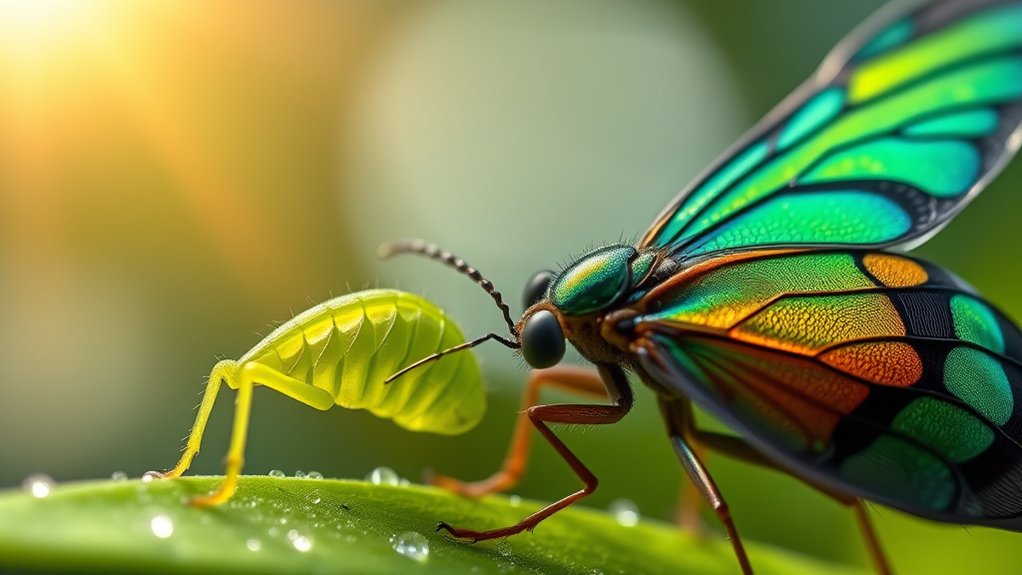
As insects with incomplete metamorphosis grow, they follow a straightforward path from egg to nymph to adult without ever passing through a pupal stage. You see only three stages: egg, nymph, and adult. In species with incomplete metamorphosis, nymphs resemble adults because they share a similar overall body plan, unlike insects that undergo complete metamorphosis and have a distinct larval stage.
When the egg hatches, a nymph emerges that already looks like a tiny version of the adult, with a similar body form and the same types of mouthparts and limbs.
You’ll notice that early nymphs, called instars, often differ slightly in color and shape from later ones. As the nymph grows, its rigid exoskeleton becomes too tight, so it molts repeatedly—sometimes 5 to 60 times, depending on the species.
With each molt, it gains more adult characteristics, including developing wings in winged species. During this time, nymphs usually share the same habitat and food sources as adults.
After the final molt, the insect becomes an adult, stops growing, and focuses on reproduction.
Examples of Insects That Have Nymphs

As you explore insects with nymph stages, you’ll see many familiar hemimetabolous examples like grasshoppers, crickets, cicadas, and aphids. These nymphs typically resemble the adults but lack wings and develop through several moults without a pupal stage. You can compare these mostly land-based species with aquatic nymph insects such as dragonflies, damselflies, mayflies, and stoneflies.
Common Hemimetabolous Examples
Although “nymph” might sound like a niche term, many of the insects you regularly see are hemimetabolous species that grow through nymph stages instead of a pupal stage. When you watch grasshoppers, cockroaches, or true bugs, you’re often seeing nymphs that already look like mini adults but still lack wings or mature reproductive organs. Because their young and adults often use different resources or habitats, hemimetabolous insects can gain an evolutionary advantage by reducing competition between life stages.
You can organize some key examples like this:
| Order | Familiar examples | Key nymph–adult difference |
|---|---|---|
| Orthoptera | Grasshoppers, katydids | Nymphs wingless; adults may have functional wings |
| Blattodea | Cockroaches, termites | Nymphs lack full wings; adults fully winged (species‑dependent) |
| Mantodea | Praying mantises | Nymphs smaller, wingless; adults winged, reproductive |
Hemiptera and lice (Phthiraptera) also show this pattern: nymphs resemble adults but stay wingless with thinner exoskeletons until their final molt.
Aquatic Nymph Insects
Many of the most striking nymphs actually live underwater instead of on land. When you examine mayfly and stonefly nymphs, you’ll notice a clear head, thorax, and abdomen, three pairs of segmented legs, antennae, and wing pads that haven’t expanded yet. These aquatic juveniles help recycle nutrients from pond bottoms into the food web, making them important bioindicators of ecosystem health.
Mayflies usually have two or three long tails; stoneflies always have two, plus tiny hooks on each claw for gripping in clean, flowing streams.
Dragonfly and damselfly nymphs look very different from their aerial adults. Both are predators, but dragonfly nymphs have stout bodies and a hinged, spear-like labium for seizing prey, while damselfly nymphs are slender with three leaf-like gills in a tripod at the abdomen tip.
Water bug nymphs already resemble adults, using grasping front legs and, in giants, a snorkel-like breathing tube.
Key Differences Between Nymphs and Adult Insects
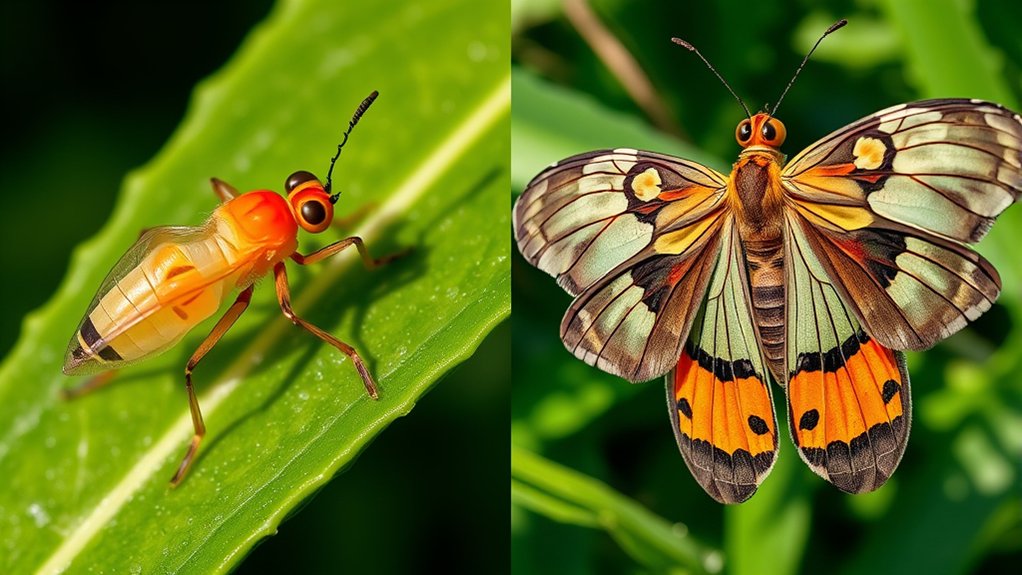
When you compare nymphs to adults, you’ll notice clear shifts in physical appearance, especially in body proportions and coloration. Nymphs of hemimetabolous insects typically share similar lifestyles and mouthparts with adults, reflecting their gradual development through incomplete metamorphosis.
You’ll also see major changes in wings and mobility, as many insects go from wingless, limited movers to fully capable fliers.
Finally, you can track how reproduction and growth separate these stages, with nymphs focused on molting and adults focused on mating.
Physical Appearance Changes
As nymphs progress toward adulthood, their physical appearance shifts in clear, measurable ways, even though they broadly resemble the adult form. You’ll notice size changes first: nymphs start smaller and increase through successive molts until the final molt produces the full-sized adult.
In ametabolous insects like silverfish, nymphs look almost identical to adults, just scaled down so much that dissection may be needed to tell them apart.
Look closely at proportions and details. Nymph heads, thoraxes, and abdomens are all recognizable, but the body’s overall shape can differ slightly. Their compound eyes function, yet usually aren’t as developed as in adults, improving with each molt.
Nymph cuticles stay softer and often paler, while adult exoskeletons harden and colors become more stable and distinct.
Wings And Mobility
Beyond changes in body shape and coloration, one of the clearest separations between nymphs and adults shows up in their wings and how they move. As a nymph, an insect either has no wings or only small wing buds that grow a bit with each molt. Those wings don’t work until the final molt, when the insect becomes an adult.
You’ll notice this contrast most in hemimetabolous insects. Aquatic nymphs like dragonflies and mayflies stay in water, moving with legs and using gills to breathe.
At adulthood, they emerge onto land, shift to air-breathing, and gain true flight. Adults can then travel widely, crossing between habitats and dispersing over large areas—something grounded or aquatic nymphs simply can’t match.
Reproduction And Growth
Although nymphs often look like smaller versions of adults, they differ sharply in how they grow and reproduce. Nymphs don’t have functional external genitalia, so they can’t mate or lay eggs. With each molt, they increase in size, passing through several instars while keeping the same basic body plan and diet as adults. Their main job is feeding to fuel growth and repeated shedding of the exoskeleton.
You see a complete shift at the final molt. Juvenile hormone levels drop, gene expression switches (from Broad to E93), and adult genitalia form.
Once adult, the insect stops growing entirely; no further size change is possible. Adults enter a terminal, reproduction-focused phase, often feeding less while investing most energy in mating and egg‑laying.
Nymph and Adult Appearance Differences
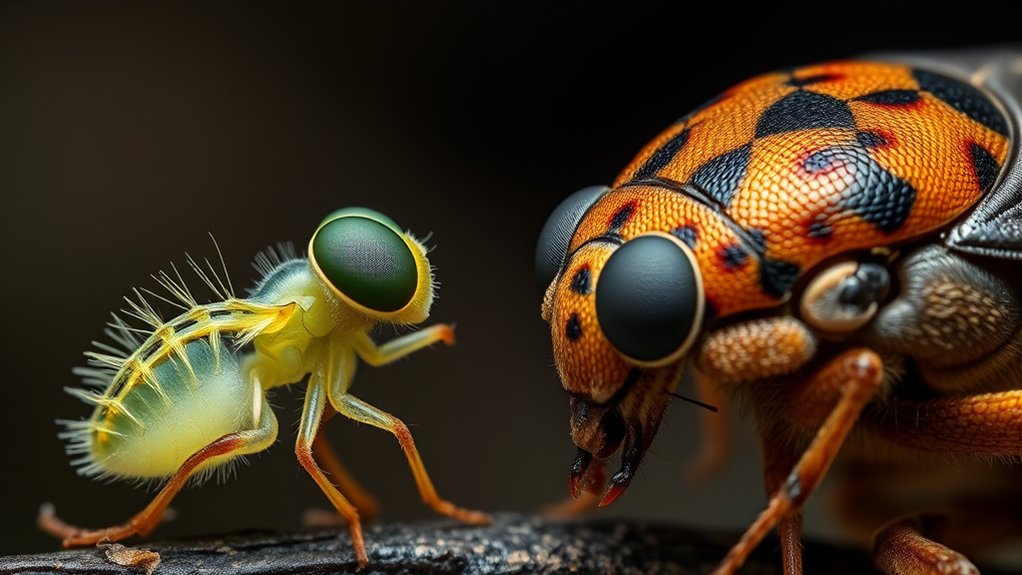
When you compare nymphs and adults in insects, the most striking differences lie in size, exoskeleton hardness, and the completion of reproductive structures. You’ll notice nymphs are much smaller, especially in the earliest instars, where they can look almost unlike the adult.
With each molt, they grow and gradually resemble miniature adults, but they don’t reach full size until the final molt, after which adults stop growing entirely.
You’ll also see clear differences in the exoskeleton. Nymphs have thinner, softer cuticles that can stretch and are shed repeatedly as they expand.
Nymphs wear flexible, shedding skins, trading softness for growth until adulthood locks in a hardened exoskeleton
Adults, in contrast, develop a fully hardened exoskeleton once they’ve completed their last molt.
Body proportions shift too. Nymphs keep the same basic head–thorax–abdomen layout, but adults show the final, stable shape and coloration.
Finally, nymphs lack fully developed external genitalia; only adults possess complete, functional reproductive structures.
Nymph vs Adult Wings and Flight
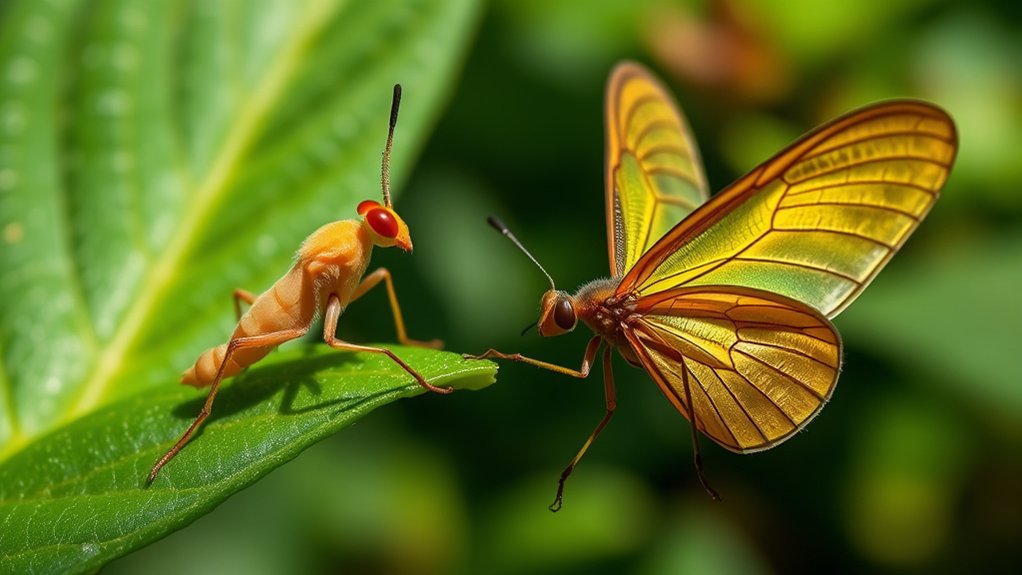
Alongside changes in body size and shape, the step from nymph to adult shows up most dramatically in the wings and the ability to fly. As a nymph, an insect only carries small, flattened wing buds or pads on its thorax. These pads stay pressed against the body, lack full venation, and don’t support any flight. They’re filled with hemolymph and connect to the main body cavity, but they remain incomplete, two‑dimensional structures.
With each instar, you’d see those wing pads enlarge and become more obvious, yet they still can’t lift the insect into the air. Only at the final molt do adult wings emerge, expand through hemolymph pressure, and then harden into functional, three‑dimensional flight organs with a complete vein network.
From that point, the insect qualifies as an adult: fully winged, capable of flight, and no longer limited to crawling or swimming like its nymphal form.
Growth and Molting From Nymph to Adult
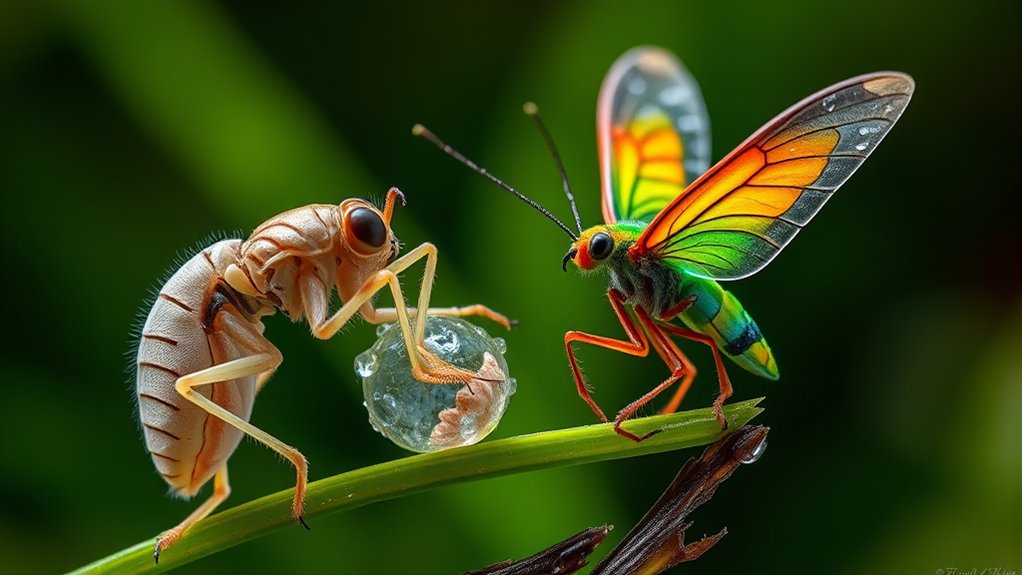
As an insect nymph grows, its rigid exoskeleton can’t stretch, so the only way to get bigger is to periodically shed that outer layer in a process called molting, or ecdysis. Hormones trigger each molt when the nymph’s body hits the limits of its current cuticle.
You see growth as a series of steps: after every shed, the new exoskeleton briefly stays soft, then hardens and darkens while the nymph hides.
Each stage between molts is an instar. Most insects pass through about 4–8 instars, though some mayflies and stoneflies add many more, especially in cool water where growth slows.
With every instar, the nymph looks more like the adult, gradually enlarging and developing external genitalia.
- Instar number can be fixed (like 5–6 in grasshoppers) or variable.
- Weight dips at molting, then quickly surpasses the old maximum.
- Growth rates decline as size increases.
- The final molt produces a sexually mature adult and ends molting.
Feeding and Mouthparts in Nymphs vs Adults
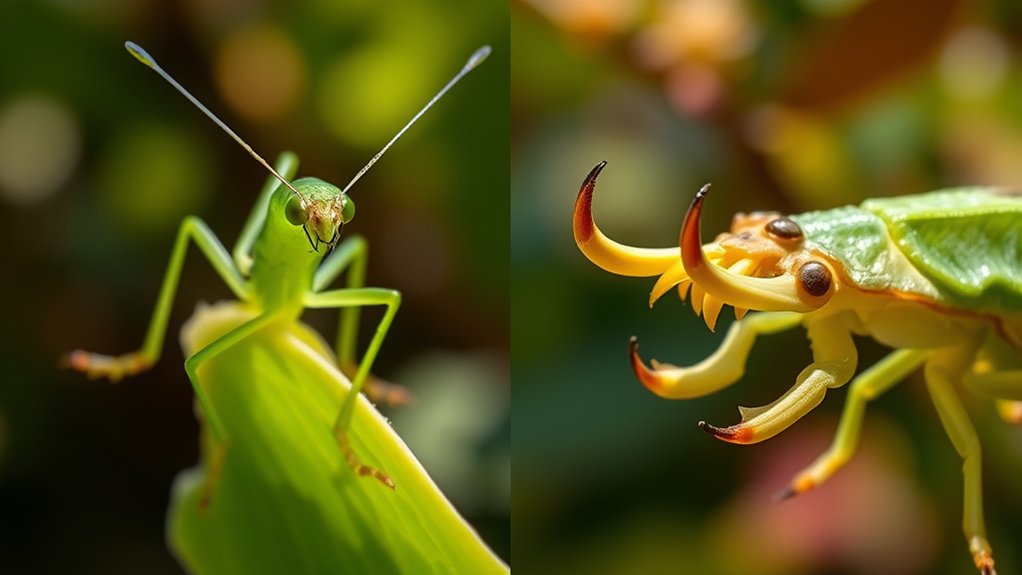
Although nymphs and adults often share the same basic diet, their feeding behavior and mouthparts reflect the very different worlds they occupy. In hemimetabolous insects, you usually see nymphs eating what adults eat: aphid nymphs and adults tap the same phloem, grasshopper nymphs chew the same leaves, and stick insect nymphs browse the same plants, damaging crops at every stage.
Dragonfly nymphs, though, hunt underwater prey, while adults switch to catching flying insects.
Dragonfly nymphs stalk underwater prey, then emerge as aerial hunters, snatching insects on the wing
You also see gradual shifts in mouthparts. Nymphs with piercing‑sucking stylets already resemble adults, simply enlarging with each molt until the final winged form. In bed bugs, nymphs and adults share blood‑feeding stylets, but nymphs feed more successfully when they cluster near recently fed adults that help them locate hosts.
In contrast, complete metamorphosis brings drastic changes: a leaf‑chewing caterpillar becomes a butterfly with a siphoning proboscis, or a maggot becomes a house fly with a sponging mouth.
How Nymph and Adult Habitats Differ
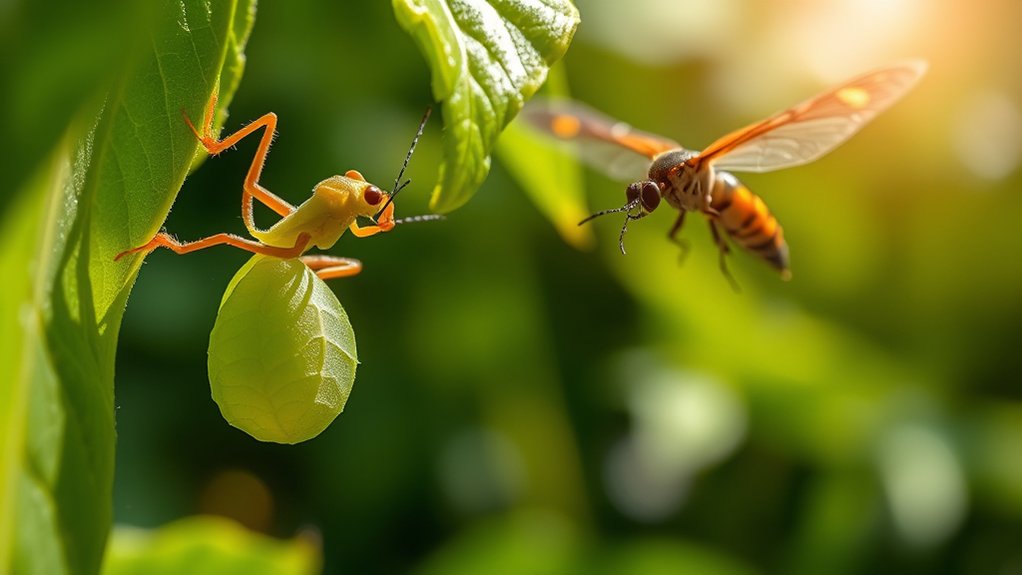
While nymphs and adults may belong to the same species, they often live in strikingly different worlds. You see this most clearly in insects with aquatic nymphs, like dragonflies and damselflies. Their young hunt underwater, then crawl onto plants or rocks, shed their skins, and shift to a fully terrestrial life focused on flying, mating, and dispersing.
In many terrestrial insects, you don’t see such dramatic shifts. Grasshoppers, true bugs, cockroaches, stick insects, earwigs, and silverfish keep their nymphs and adults in broadly similar soil, litter, or foliage habitats, though small body size and lack of wings still limit where nymphs can go.
Even when they share the same plant or log, microhabitats often differ:
- Aphid nymphs cluster on leaf undersides; adults fly away.
- Thrips nymphs hide in crevices; adults visit flowers.
- Mantid nymphs hunt low; adults perch higher.
- Termite nymphs tunnel inside wood; adults move outside.
Why Nymph–Adult Differences Matter for Ecology and Pest Control
Even when nymphs and adults look similar, their different roles in feeding, moving, and reproducing reshape both ecosystems and pest pressures. You see this clearly in hemimetabolous insects such as true bugs: nymphs stay put and pierce plant tissues, driving leaf curling, wilting, and early-season stress, while adults shift more energy to dispersal and egg‑laying. That means nymphs often cause most of the sap‑sucking damage, but adults decide how far and fast the outbreak spreads.
You also have to track population dynamics. Multiple nymphal instars stretch out vulnerable windows for predators and well‑timed sprays, yet warmer conditions speed nymph development and trigger rapid surges of winged adults.
Overlapping generations and overwintering nymphs keep pressure on crops year‑round.
For pest management, you target nymphs when they’re clustered and less mobile, then use mating disruption or adulticides against dispersing adults, fitting everything into an integrated, stage‑specific strategy.
Frequently Asked Questions
How Do Nymph and Adult Insects Differ in Vulnerability to Insecticides and Predators?
You’ll find nymphs usually more vulnerable: softer exoskeletons, constant feeding, frequent molts, weaker mobility, and higher predator risk. Adults often resist contact insecticides better, may feed less, fly away, and face lower predation overall.
Can Nymphs Transmit Diseases to Humans or Crops Like Adults Do?
Yes, they can. You’ll see nymphs of true bugs, lice, scale insects, cockroaches, and termites transmit pathogens to humans and crops, but adults usually spread disease more widely because they fly farther and feed more.
How Can I Identify Insect Nymphs in My Home or Garden?
You identify nymphs by spotting smaller, softer-bodied insects with absent or tiny wings. Check they share locations and food with adults. In ponds, look for aquatic juveniles. When unsure, compare photos or ask local extension services.
Do Climate Change and Seasons Affect Nymph and Adult Stages Differently?
Yes, they’re affected differently. You’ll see warmer seasons speeding nymph growth, shifting molting schedules, and altering survival, while adults may change emergence timing, mate sooner or longer, migrate differently, and sometimes suffer mismatched food or habitat availability.
Are Nymphs or Adults More Important to Target in Integrated Pest Management?
You usually target nymphs first because they’re more vulnerable, clustered, and drive long-term plant damage. Then you hit adults to stop dispersal and reproduction. You’ll get best IPM results by combining pressure on both stages.
Conclusion
You’ve seen how nymphs and adults live very different lives, even though they’re the same insect. When you recognize changes in body shape, wings, feeding, and habitat, you can better identify species and predict what they’ll do next. That knowledge helps you protect crops, manage pests, and understand ecosystems. By watching nymphs grow and molt into adults, you’re really watching evolution in fast‑forward, right in your backyard.